Viktualienmarkt shopping guide
Munich: Viktualienmarkt and Altstadt food tour
What can I buy at the Viktualienmarkt?
The Viktualienmarkt sells fresh produce, Bavarian regional products, artisanal cheeses, smoked meats, honey, Lebkuchen spice mixes, flowers, herbs, and handmade goods. It is Munich's best source for edible souvenirs and genuinely local food products. Prices are higher than a supermarket but quality is consistently good. Most stalls open Monday–Saturday 08:00–18:00 or 20:00.
The Viktualienmarkt: Munich’s living market
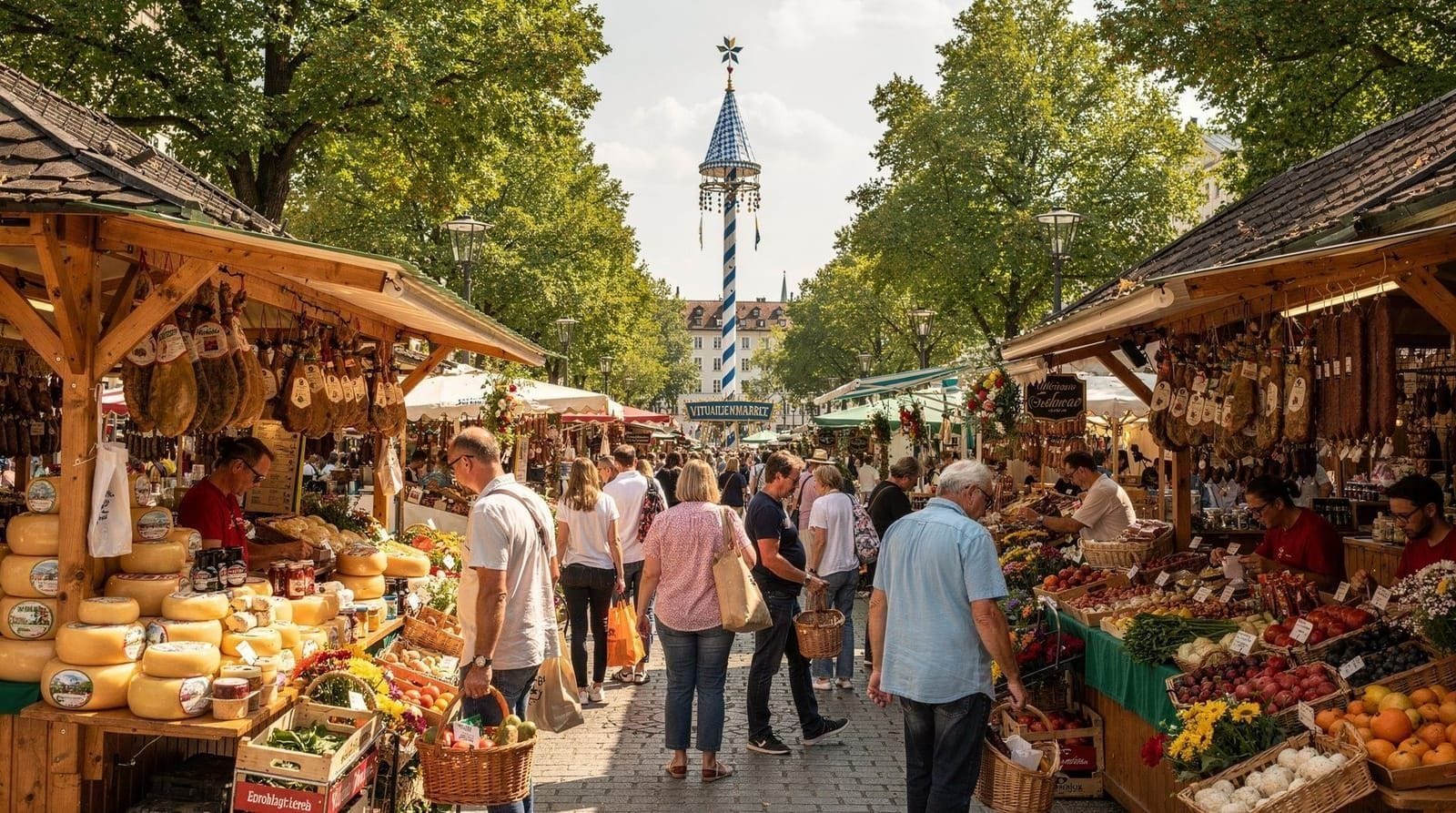
The Viktualienmarkt has been Munich’s central food market since 1807, when it was relocated from its original position on Marienplatz to its current site. It covers approximately 22,000 square metres in the heart of the Altstadt, contains around 140 permanent stalls, and — unusually for a market of its historical significance — is still a genuine working market rather than a tourist attraction that happens to sell food.
Local residents shop here. Chefs from Munich’s restaurants buy here. The produce prices are higher than a supermarket (the location alone justifies a premium) but the quality, and the selection of products unavailable in standard retail, make it a legitimate shopping destination rather than a performance.
This guide is focused on the Viktualienmarkt as a shopping destination — what to buy, which stalls are worth your time, and how to navigate the market efficiently. For a broader portrait of the market including its history and beer garden, see the Viktualienmarkt food guide.
| Where | Central Altstadt, 3-minute walk south of Marienplatz |
| Cost | Free to browse; a curated shopping basket runs €30–80 |
| Time needed | 45–90 minutes for focused shopping |
| Getting there | Walk from Marienplatz, or U-Bahn/S-Bahn to Marienplatz |
| Best time | Weekday mornings — least crowded, most fully stocked |
Orientation: how the market is laid out
The Viktualienmarkt is not a single row of stalls but a dense cluster spread across an irregular square. Navigating it on a first visit feels chaotic until you understand the rough logic:
- Northern edge (closest to Marienplatz): flower stalls, fruit and vegetable stands, some packaged goods
- Centre: the maypole (Maibaum), the beer garden, baked goods
- Eastern side: fish stalls, poultry, delicatessen specialists
- Southern and western edges: cheese, meat, honey, specialty regional products
- Periphery: some souvenir stalls (lower quality than the core food stalls)
The market has eight statues of popular Munich entertainers from earlier centuries distributed around the square — these serve as useful navigation landmarks.
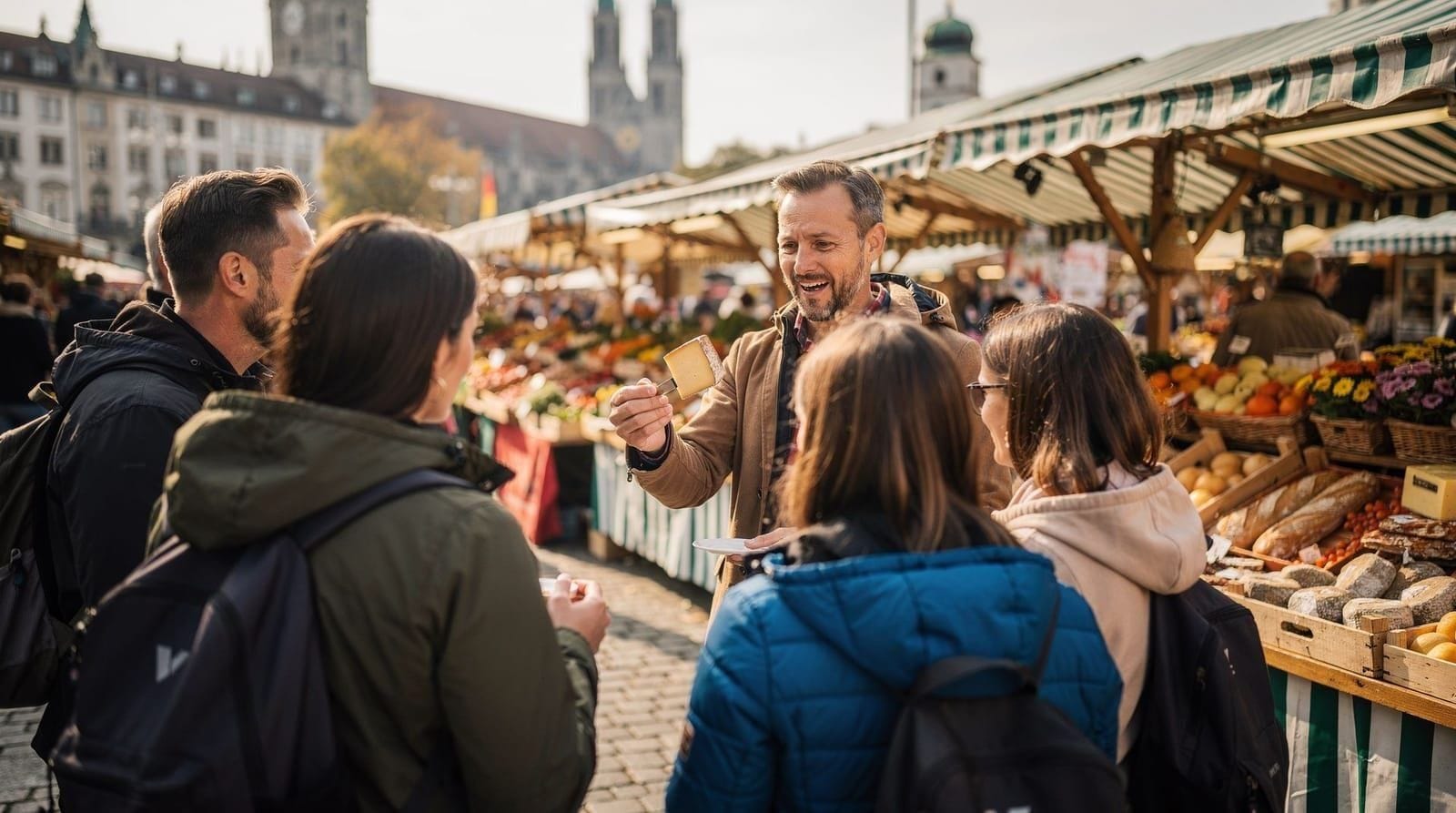
A guided food tour through the Viktualienmarkt and Altstadt is a good way to get oriented on a first visit — the guide will introduce you to the best stalls and give context for the regional products.
What to buy: the best products
Bavarian honey
One of the best purchases at the Viktualienmarkt. A specialist honey stall on the southern side of the market sells honeys from multiple Bavarian apiaries — forest honey (Waldhonig, dark and resinous), meadow honey (Wiesenhonig, lighter and floral), and seasonal varieties. Expect to pay €8–15 for a 250g jar depending on the type. These are not available in supermarkets.
Bavarian honey travels well and makes an excellent, genuinely local gift. Check that the label indicates the specific region of origin — “Bayerischer Honig” from a named beekeeper is the real article.
Regional and mountain cheeses
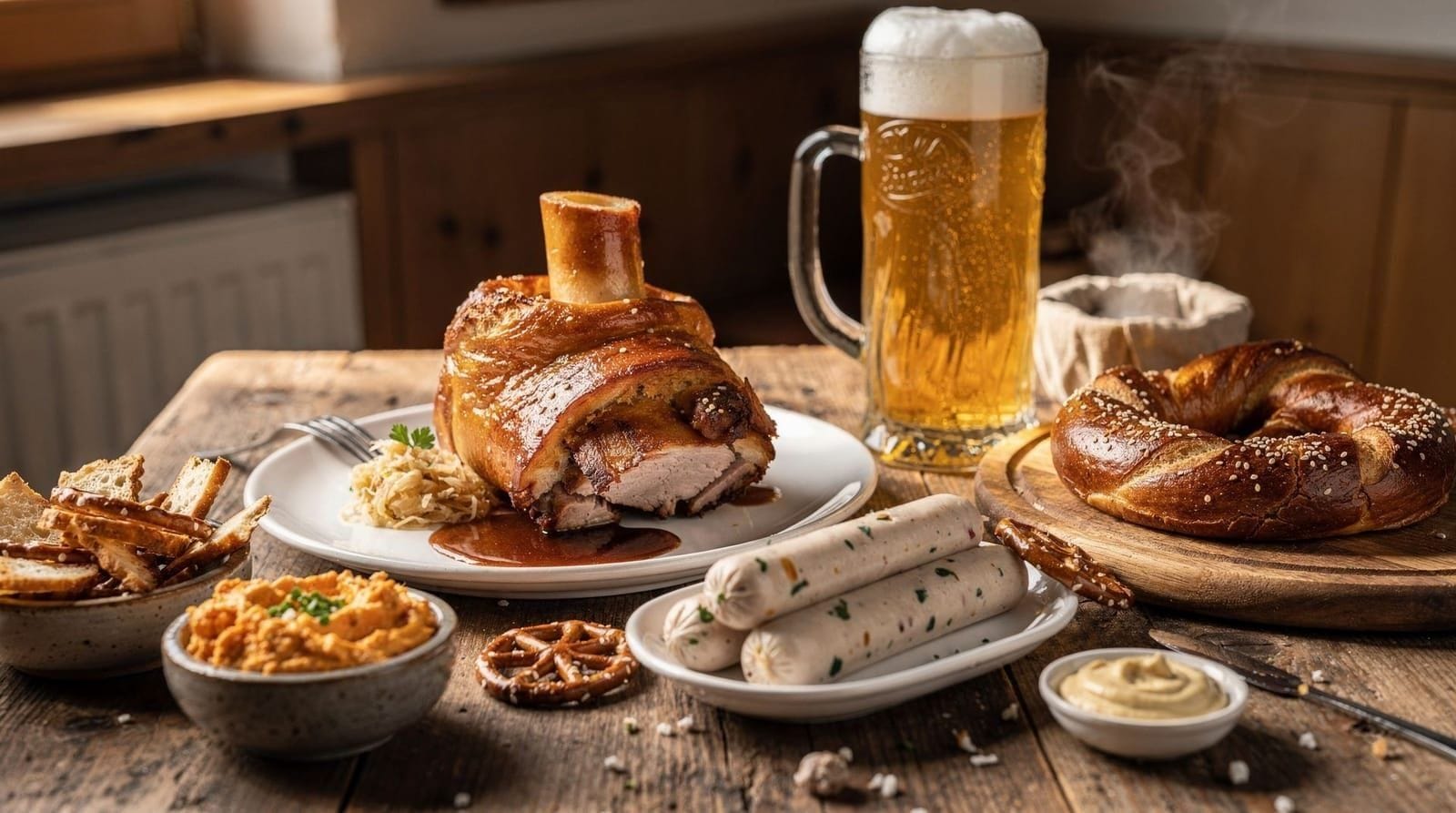
The Viktualienmarkt has several cheese specialists that stock Bavarian mountain cheeses rarely found outside the region. Obatzda — the spreadable cheese mixed with butter, onion, and paprika, served as a snack — is a market staple and something you cannot buy outside Bavaria in this form.
Look for: Bergkäse (mountain hard cheese, sharper and more complex than standard Emmental), Limburger (pungent, not for the faint-hearted), and Romadur (a Bavarian soft cheese). The stall with the red and white striped awning in the central market area is widely cited as the best general cheese vendor.
Pre-packaged versions in sealed vacuum bags travel on flights without issue. Unwrapped cheese is less practical.
Smoked fish
The fish stalls on the eastern edge are among the market’s oldest vendors. Smoked trout from Bavarian lakes, smoked salmon, and pickled herring are the staples. Smoked trout is local, high quality, and distinctly Bavarian — a far better purchase than generic imported smoked salmon. A whole smoked trout runs approximately €8–12 depending on size.
Note that fresh or smoked fish in unsealed form is not practical for flights. If you want to take fish home, look for properly vacuum-sealed products.
Lebkuchen ingredients and ready-to-eat versions
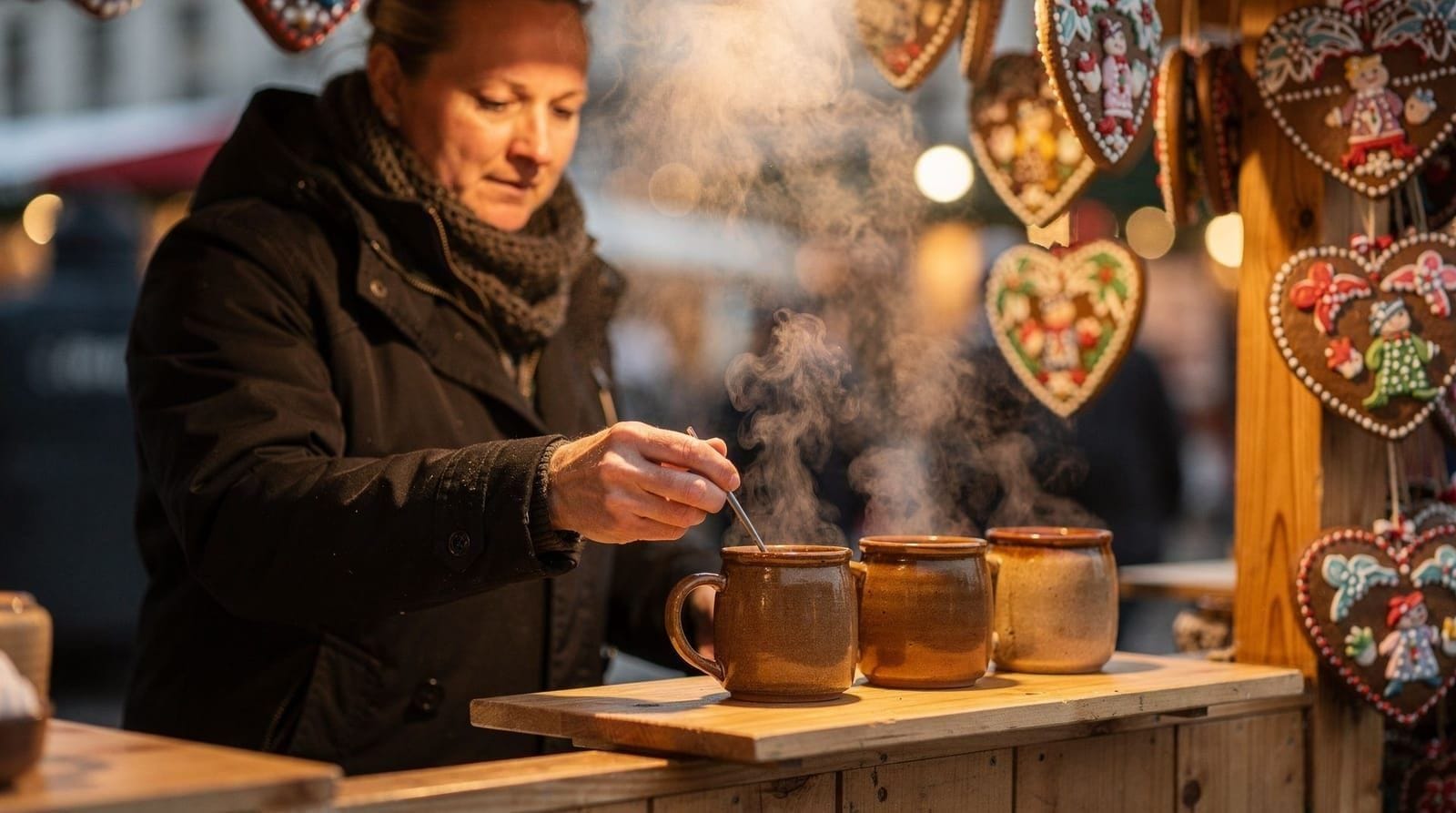
Lebkuchen (the Bavarian spiced gingerbread) is one of Munich’s genuine regional food products, with its centre in Nuremberg. The Viktualienmarkt has stalls selling whole Lebkuchen, Lebkuchen spice mixes (for baking at home), and honey-based versions that are significantly better than the mass-produced versions in supermarkets. The heart-shaped decorated Lebkuchen sold on cords are more ornamental than edible; the plain glazed rounds are the ones worth eating.
Lebkuchen travels well, stores for weeks, and is one of the best-value edible souvenirs in Munich.
Exotic fruit and specialty produce
Several stalls at the Viktualienmarkt specialise in unusual and tropical produce that sits alongside Bavarian staples — fresh truffles in season, unusual mushroom varieties, exotic fruits. These stalls exist to serve restaurant buyers and curious home cooks. Prices are high but the quality and selection are better than anything available in Munich’s supermarkets.
Fresh flowers and herbs
The flower stalls along the northern edge are well supplied and reasonably priced by Munich standards. Fresh herbs in pots, edible flowers, and seasonal cut flowers are available year-round. For visitors, cut flowers are not a practical purchase, but potted herbs are a reasonable takeaway for those with kitchen access.
The beer garden at the centre
The Viktualienmarkt beer garden occupies the centre of the market, shaded by old chestnut trees, and operates as a genuine Munich institution rather than a tourist attraction. A different brewery rotates through the concession annually — Augustiner, Hofbräu, Paulaner, Löwenbräu, Spaten, and Hacker-Pschorr take turns — which makes it the only beer garden in Munich where you drink from a different major brewery each year.
Prices are standard Munich beer garden rates: a Masskrug (1 litre) of lager costs around €10–12 in 2026. Food stalls around the perimeter provide Brotzeit (Bavarian snacks) — pretzels, radishes, Obatzda, cold meats. You bring your own food from the market stalls or buy from the surrounding vendors.
The beer garden is covered separately in the Viktualienmarkt food guide and the best beer gardens in Munich.
What to avoid
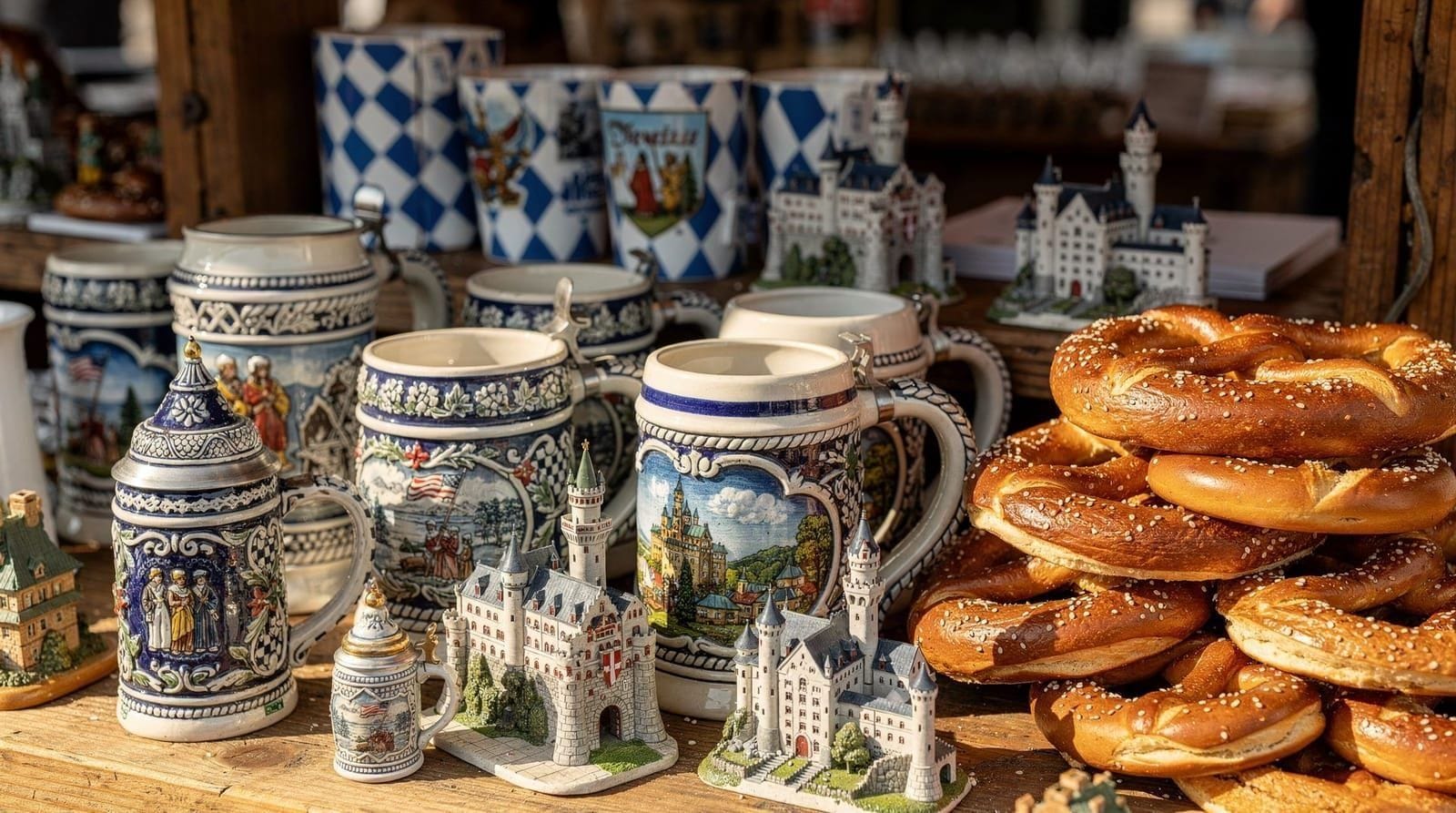
The souvenir stalls at the market perimeter: The eastern and northern edges of the Viktualienmarkt have stalls selling generic Munich souvenirs — branded merchandise, low-quality mass-produced gift items. These are not representative of the market’s character and are overpriced relative to the same items in the tourist shops near Marienplatz (which are themselves overpriced). If you want Bavarian souvenirs, see the best souvenirs Munich guide for better options.
Pre-assembled gift boxes: Several stalls sell pre-assembled gift baskets or boxes of “Bavarian specialties.” These are typically assembled from commercial products at a significant markup. Buying the component items individually from the specialist stalls gives much better quality and value.
Practical visiting information
- Hours: Monday–Saturday 08:00–18:00 (some stalls until 20:00). Closed Sundays.
- Best time to visit: Weekday mornings are least crowded and most fully stocked. Saturday mornings are busiest. Avoid arriving after 17:00 on weekdays — some stalls begin packing up.
- Getting there: 3-minute walk south from Marienplatz. U-Bahn/S-Bahn to Marienplatz (multiple lines).
- Payment: Cash preferred at most stalls; cards accepted at some. Carry €50+ for a serious shopping visit.
- Language: Basic German is appreciated at the stalls but English is understood at virtually all of them.
For the Christmas market version of the Viktualienmarkt and its seasonal stalls, see the Munich Christmas markets guide.
Viktualienmarkt vs Dallmayr vs a Munich supermarket
Visitors sometimes ask where to actually buy their Bavarian food souvenirs if they have limited time. The three realistic options in central Munich each have a different character.
| Viktualienmarkt | Dallmayr | Supermarket (e.g. Rewe, Edeka) | |
|---|---|---|---|
| Character | Working outdoor market, ~140 stalls | Formal multi-floor delicatessen | Everyday grocery store |
| Price level | Mid-to-high, stall-dependent | Premium | Standard |
| International shipping | Rare, ask individual stalls | Yes, for packaged goods | No |
| Best for | Fresh, unpackaged regional products, atmosphere | Polished gift boxes, guaranteed shipping | Budget basics, packaged Bavarian mustard/beer |
For most visitors, the Viktualienmarkt is the right choice for anything you’ll consume or gift within days of buying it, Dallmayr is the right choice if you specifically need something shipped home, and a supermarket is the practical fallback for a cheap bottle of local mustard or beer to pack in a suitcase.
A focused one-hour shopping route
If time is tight, a sensible sequence through the market runs: start at the honey stall on the southern side for a jar that travels well, move to the cheese specialists nearby for vacuum-packed Bergkäse or a fresh Obatzda if you’re eating it that day, continue to a Lebkuchen stall for a shelf-stable sweet souvenir, and finish at the flower or herb stalls on the northern edge if you have kitchen access during your stay. This route avoids backtracking and takes most shoppers under an hour, including a coffee stop. For a more thorough version covering the market’s food culture and history in full, see the Viktualienmarkt food guide.
Frequently asked questions about Viktualienmarkt shopping
Is the Viktualienmarkt worth visiting for non-food items?
Largely no. The market’s strength is entirely in food and food-adjacent products. The craft and souvenir stalls at the edges are lower quality than what you will find in the specialist shops on Sendlinger Straße or at the permanent Bavarian craft retailers in the Altstadt.
How much should I budget for a shopping visit to the Viktualienmarkt?
Budget €30–80 depending on what you buy. A jar of honey (€10), a selection of regional cheeses (€20–25), and some Lebkuchen (€8–12) gives you a well-curated selection of take-home Bavarian food products for around €50. Add a Masskrug at the beer garden (€10–12) for the complete experience.
Can I get Bavarian products shipped internationally from Viktualienmarkt stalls?
Most stalls do not offer international shipping. Several specialist food retailers in Munich with online shops (including some Viktualienmarkt vendors) do ship internationally — ask at the stall directly. For internationally shipped Bavarian products, retailers like Dallmayr (on Dienerstraße, nearby) have established international delivery.
What is Dallmayr and how does it relate to the Viktualienmarkt?
Dallmayr (Dienerstraße 14–15, a 2-minute walk north of the Viktualienmarkt) is Munich’s most famous delicatessen — a large, multi-floor food hall founded in 1700. It carries many of the same regional Bavarian products as the Viktualienmarkt stalls but in a more formal, department-store environment. Quality is very high, prices are premium, and international shipping is available for packaged goods. The two complement rather than duplicate each other.
Is there an English-language food tour of the Viktualienmarkt?
The Viktualienmarkt gourmet food tour runs in English and covers the best stalls with tastings included. It is one of the best ways to understand the market’s geography and be introduced to the vendors by someone who shops there regularly.
How does the Viktualienmarkt differ from Christmas market stalls?
The Viktualienmarkt operates year-round and focuses on fresh produce and regional food products. The Christmas market stalls that appear in the Altstadt from late November are seasonal and focus more on crafts, gifts, roasted nuts, mulled wine, and seasonal decorations. The Christkindlmarkt food stalls are a supplement to, not a replacement for, the Viktualienmarkt’s year-round offer. See the Munich Christmas markets guide for the seasonal option.
What is the best time of year to shop at the Viktualienmarkt?
The Viktualienmarkt is most interesting in spring (April–May) when Bavarian asparagus (Spargel) season begins — white and green asparagus are a Bavarian obsession and the market is the best source of fresh regional varieties. Autumn (September–October) brings Oktoberfest-season crowds but also the harvest of mushrooms, game meats, and autumn produce. Summer has the best fruit selection. The market in December takes on a Christmas character with seasonal stalls operating alongside the permanent vendors.
Is the Viktualienmarkt accessible for wheelchair users?
The market is largely flat and on paved ground, making wheelchair access straightforward for the main aisles. Some of the tighter areas between stalls can be congested on busy days. The beer garden tables have some accessible positions. The nearest accessible U-Bahn/S-Bahn stations (Marienplatz) have lifts.
Are dogs allowed at the Viktualienmarkt?
Yes. Munich is a dog-friendly city and well-behaved dogs on leads are welcome at the Viktualienmarkt. The beer garden has a less consistent policy — some seating areas are more tolerant than others. Check with the specific beer garden area if this is a concern.
What famous food stalls should I not miss?
The honey specialist near the southern end is the most consistently praised single stall. The fish vendors on the eastern side — particularly those selling freshly smoked trout — are a distinctly Bavarian offer. The Obazda (Bavarian cheese spread) vendors near the centre are essential for sampling a dish that does not travel. The seasonal mushroom and game stalls in autumn are worth a specific detour in October.
Should I shop at the Viktualienmarkt or wait for the Munich Christmas markets?
They serve different purposes and, if your trip allows, are worth doing both rather than choosing one. The Viktualienmarkt’s permanent stalls sell fresh, year-round regional products — cheese, honey, smoked fish — that the Christmas markets don’t really offer. The Christmas markets add crafts, mulled wine, and roasted nuts as a seasonal layer on top. If you are visiting in late November or December, the Munich Christmas markets guide covers how the two overlap around the Viktualienmarkt itself, which runs its own advent stalls alongside the permanent vendors.
Top experiences
Bookable activities with verified prices and instant confirmation on GetYourGuide.