Würzburg
Würzburg's UNESCO Residenz palace, Marienberg fortress, Franconian wine and the northern gateway to the Romantic Road — complete day trip guide 2026.
From Munich: private guided tour to Rothenburg ob der Tauber
Quick facts
- Distance from Munich
- ~300 km (about 2 h 10 min by ICE train)
- Train fare
- €30–€55 return (book ahead on DB)
- Residenz entry (2026)
- €10 adult, free under 18 (Bavarian state museums)
- Marienberg fortress
- Free courtyard; Frankisches Museum €5 adult
- Wine region
- Franken (Franconia) — Bocksbeutel flat-bottomed bottle
The Baroque city on the Main — and the wine that goes with it
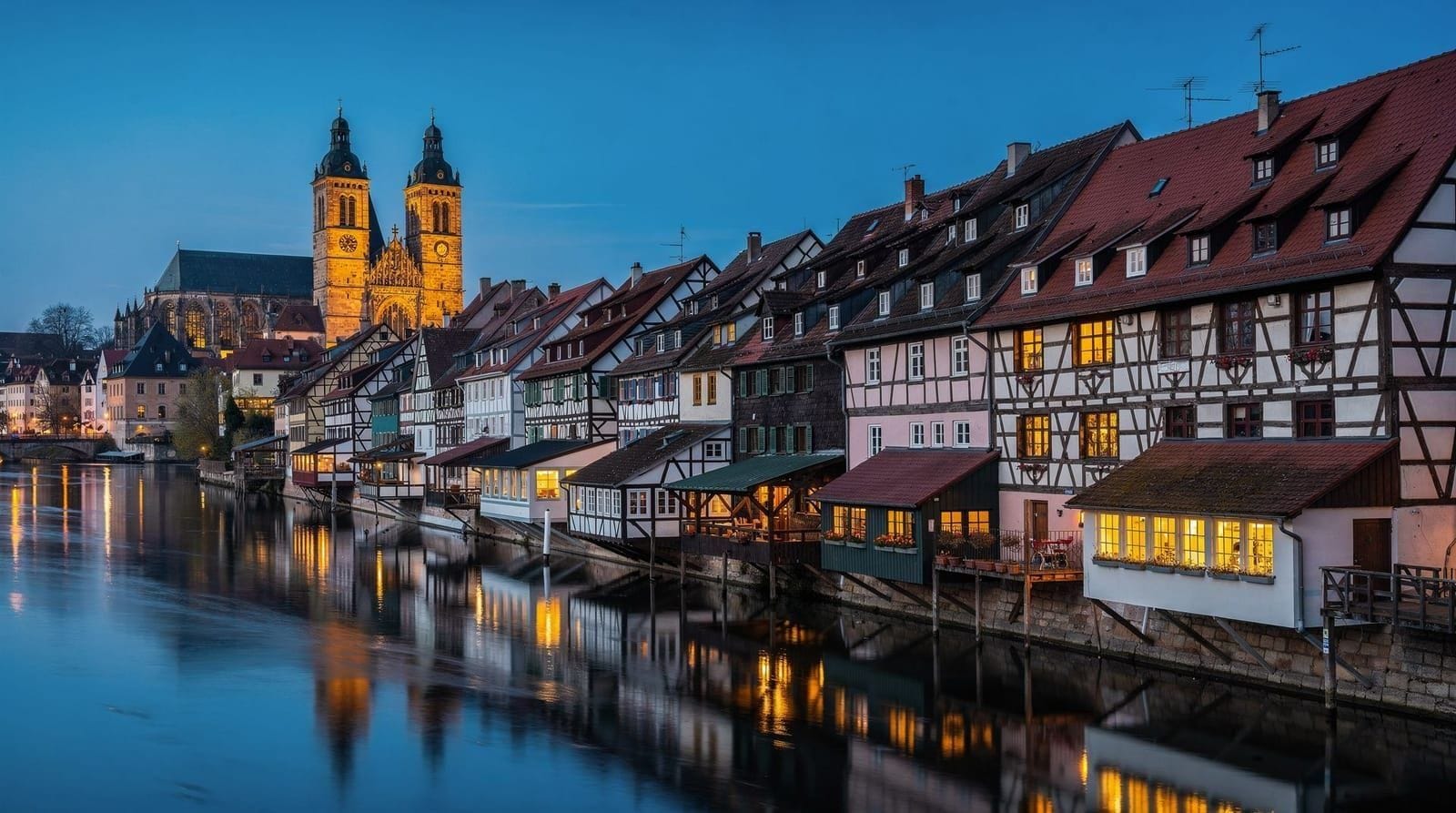
Würzburg sits in northern Bavaria on the banks of the Main River, about 300 km northwest of Munich. It is a university city of 130,000 people with a disproportionate concentration of significant architecture: the UNESCO-listed Residenz palace (one of the finest baroque buildings in Europe), the medieval Marienberg fortress across the river, and an old town that was comprehensively bombed in March 1945 and then meticulously rebuilt in the decades that followed.
The surrounding Franconian wine country — the Mainfranken wine region — produces distinctive white wines in the flat-bottomed Bocksbeutel bottle that you will not see elsewhere. Silvaner is the signature grape; Müller-Thurgau and Riesling are also planted on the steep south-facing slopes above the Main. Würzburg is also the northern starting point of the Romantic Road, making it a natural entry point for anyone planning the classic scenic route through Bavaria toward Füssen and the Alps.
From Munich, the ICE journey takes about 2 hours 10 minutes. This is longer than Nuremberg or Regensburg, but Würzburg rewards the extra travel time with a less crowded old town and a genuinely world-class attraction in the Residenz.
quickAnswer — Is Würzburg worth a day trip from Munich? Yes, particularly if you care about baroque architecture or wine. The Residenz palace’s Tiepolo ceiling fresco — the largest in the world — is a legitimate once-in-a-lifetime sight. The Main valley wine scenery and the Marienberg fortress panorama add to the case. The 2-hour train journey is the main cost; most visitors who make it rate the day highly.
| Where | ~300 km northwest of Munich, on the Main River, Franconia |
| Cost | Around €30–€55 return ICE; Residenz €10, fortress courtyard free |
| Time needed | 1 full day; overnight opens up the wine villages along the Main |
| Getting there | Direct ICE from Munich Hbf, about 2h10 |
| Best time | May–October for wine country; late June for the Weindorf festival |
Getting there from Munich
Direct ICE trains run from Munich Hauptbahnhof to Würzburg Hauptbahnhof in approximately 2 hours 10 minutes. Services run roughly every 30–60 minutes throughout the day. Fares: €30–€40 return booked 3–4 weeks ahead; €55–€75 flexible walk-on. No Bayern-Ticket discount applies — Würzburg is outside the Bayern-Ticket zone (it is in Bavaria but regional trains take 3.5+ hours).
Würzburg Hbf is about 10 minutes’ walk from the old town centre and the Residenz. The Marienberg fortress is a further 15-minute walk across the Alte Mainbrücke bridge.
By car: A9 north to Ingolstadt, then A9/A6 northwest — approximately 2 h 30 min in light traffic. Parking available at Residenz-Parkhaus (€1.80/hour) directly adjacent to the palace.
Combination trip: Würzburg sits 105 km northwest of Nuremberg (55 min by ICE). Many visitors spend a night in Nuremberg and make Würzburg a half-day or full-day add-on. Rothenburg ob der Tauber is 65 km south of Würzburg by road (about 90 min by regional train with a change).
Residenz palace and the Tiepolo fresco
The Würzburg Residenz is the centrepiece of any visit and one of the most significant baroque buildings in the world. Construction began in 1720 under the direction of Balthasar Neumann, the leading German baroque architect of his time. UNESCO added it to the World Heritage List in 1981 — the citation notes it as “one of the most homogeneous and excellent baroque palaces in the world.”
Entry and hours (2026): €10 adult, free for visitors under 18, included in the Bayern-Ticket (museum pass supplement not required). Open Tuesday–Sunday 09:00–18:00 (April to October), 10:00–16:30 (November to March). Last entry 30 minutes before closing.
The Grand Staircase is the architectural heart of the building. Balthasar Neumann engineered a single span of 18 x 30 metres with no internal supports — considered structurally impossible at the time. Above it, Giambattista Tiepolo painted the ceiling fresco between 1750 and 1753. The fresco is the largest in the world, at roughly 600 square metres, and depicts the four continents (Europe, Asia, America, Africa) allegory. It is technically and artistically extraordinary — the painting appears to extend beyond the architectural frame, and the light changes throughout the day as sun enters from different windows. Allow 20–30 minutes simply to stand and look.
During World War II, the palace was only partially damaged (the roof was hit in the March 1945 bombing). American soldiers sheltering in the building saved the interior from fire, and the frescoes survived. Tiepolo’s paintings are in remarkably good condition for 270-year-old artwork.
White Hall (Weißer Saal) and Imperial Hall (Kaisersaal) are the adjacent state rooms. The stucco work by Antonio Bossi in the White Hall — white on white, no colour — is a deliberate architectural transition from the staircase spectacle. The Kaisersaal has more Tiepolo frescoes (ceiling and walls) showing scenes of the marriage of Beatrice of Burgundy to Holy Roman Emperor Friedrich Barbarossa.
Guided tours in English run at 11:00 and 15:00 from April to October (included in entry price). The tour lasts about 45 minutes and is well worth attending for the historical context.
Court Garden (Hofgarten): The formal baroque garden behind the Residenz is free to enter and open during daylight hours. The garden is particularly good in late spring when the rose beds are in bloom. Romantic Road private day tour from Munich (via Würzburg)
Marienberg fortress
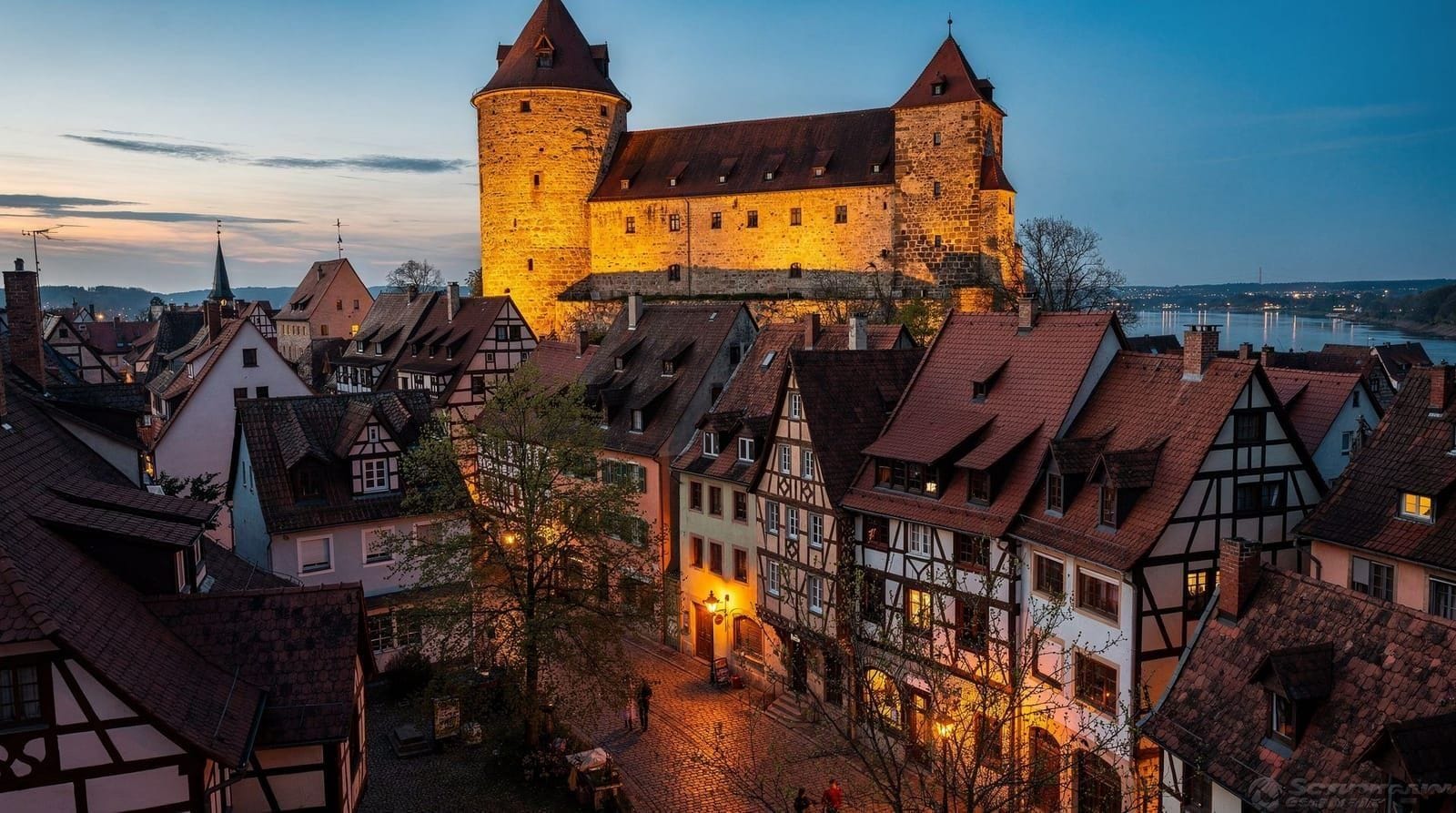
The Festung Marienberg sits on a hill on the west bank of the Main River, directly opposite the old town. It is the symbol of Würzburg and has dominated the valley since 1200 CE — first as a Celtic hillfort, then as a Frankish royal residence, then as the fortified palace of the prince-bishops of Würzburg who ruled the region for over 500 years.
Getting there from the old town: Cross the Alte Mainbrücke (Old Main Bridge), then either walk up the steep Tellsteige path (25–30 min) or take the Würzburg city bus (line 9 from Barbarossaplatz, €2.80 single, runs April–October on weekends).
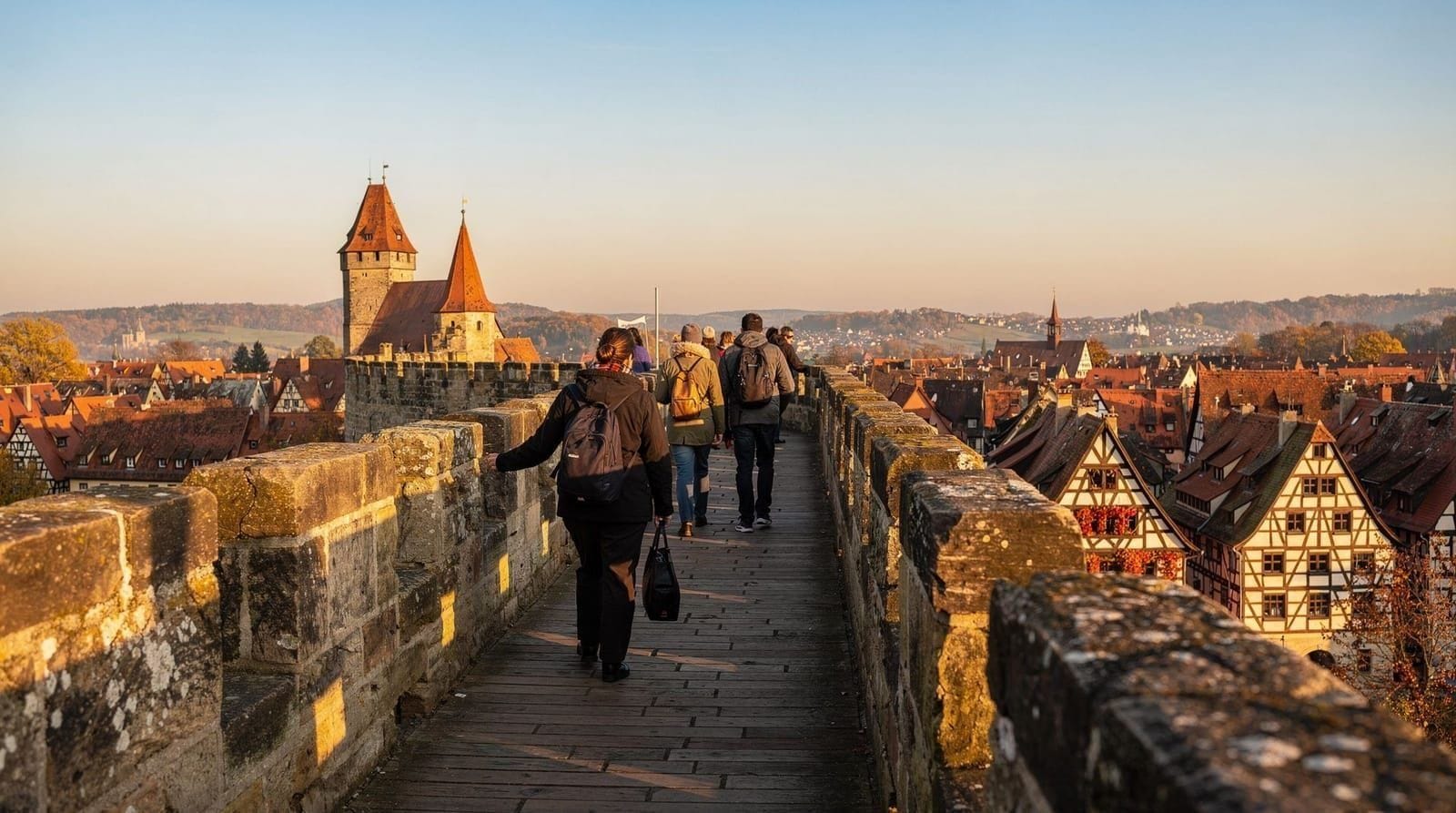
The outer courtyard is free and gives panoramic views over the Main valley, the old town and the Residenz visible in the distance. The views are better here than almost anywhere else in Würzburg.
The Frankisches Museum (Franconian Museum, €5 adult) within the fortress has a good collection of medieval Riemenschneider sculptures — Tilman Riemenschneider was a master carver based in Würzburg whose work appears throughout the Franken region. His wooden altarpieces and stone tomb sculptures are the museum’s strongest works.
The Fürstenbaumuseum (inside the prince-bishops’ residential wing, €5 adult) covers the history of the fortress and the Franconian region with a reasonably engaging permanent exhibition.
Allow 1.5–2 hours for the fortress including the walk there and back.
Alte Mainbrücke: the bridge with statues
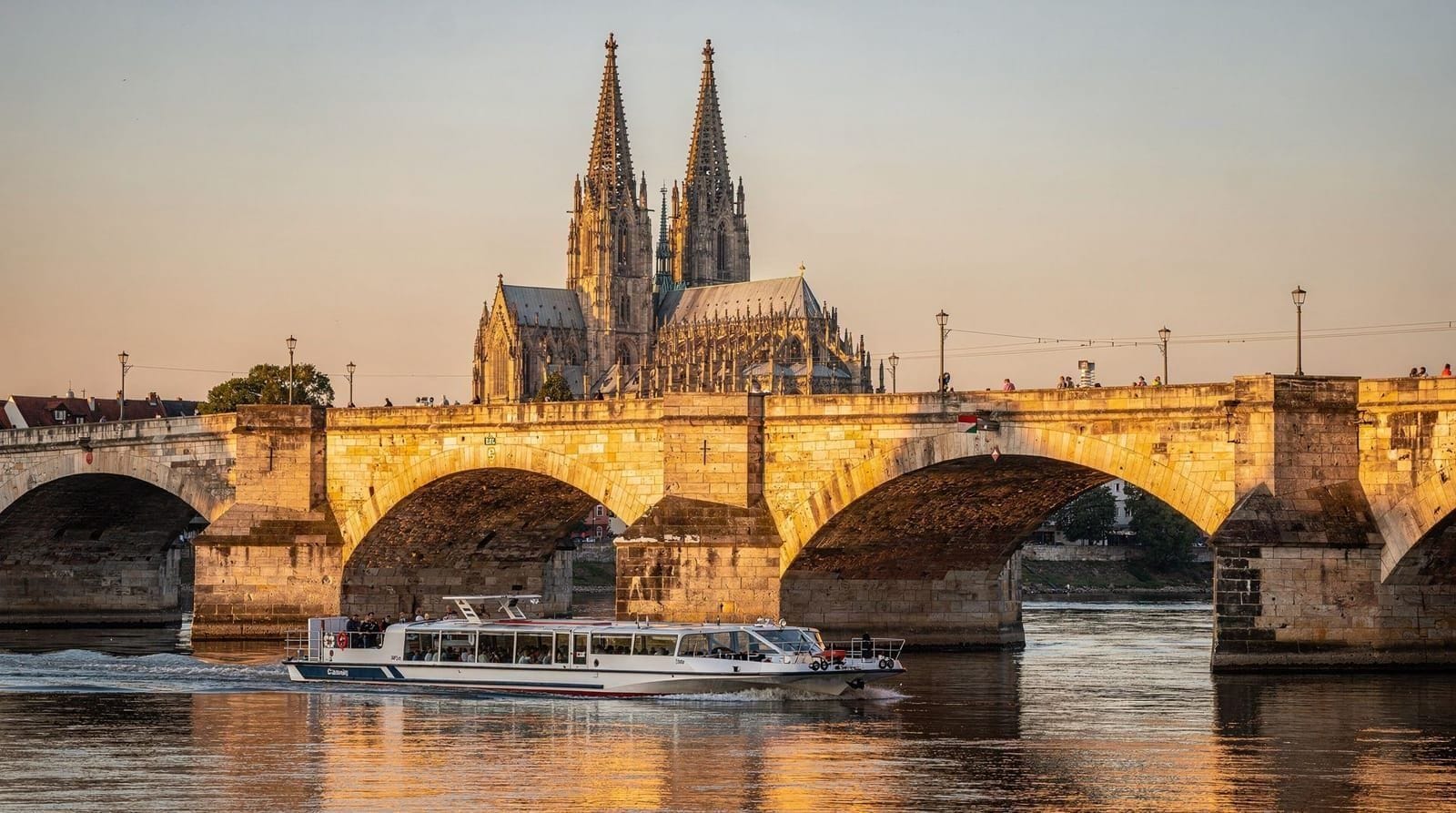
The Alte Mainbrücke (Old Main Bridge), completed in 1703, is lined with 12 baroque sandstone statues of saints and bishops. It is the oldest bridge in Würzburg and one of the most photographed spots in Franconia. In the evenings, locals and students gather on the bridge with glasses of Franconian wine from the Bürgerspital wine estate’s shop nearby — a genuine local tradition, not a tourist performance.
The bridge gives good views of both the Marienberg fortress and the old town; the light is best for photography in the morning (east-facing towards the old town) and late afternoon (west-facing towards the fortress).
Franconian wine and where to drink it
The Franken (Franconia) wine region surrounding Würzburg is Germany’s seventh-largest and one of its most distinctive. The characteristic Bocksbeutel bottle — flat, round, and historically impossible to roll down hills (which is how monks guarding their wine came up with it) — is unique to this region.
Silvaner is the flagship grape: dry, mineral, sometimes slightly earthy. Würzburger Stein (the steep vineyard visible from the Alte Mainbrücke, on the facing hill) is one of Germany’s most famous single vineyard sites, and wines from it can be extraordinary. Müller-Thurgau is the more affordable everyday wine; Riesling appears on the best slopes.
Where to drink wine in Würzburg:
- Bürgerspital wine estate (Theaterstraße 19) — the Bürgerspital is a medieval charitable foundation from 1319 that operates Würzburg’s largest wine estate. Their wine shop sells bottles from €8–€45; the attached Weinstube (wine bar) serves wine by the glass (€4.50–€8) with a short menu of Franconian food. Sit inside in the vaulted medieval hall or in the courtyard. This is the single best wine address in the city.
- Juliusspital wine estate (Juliuspromenade 19) — another historical charitable foundation (1576) with a wine bar and shop. Similar quality and range to Bürgerspital; preference is personal. Their estate wines are excellent.
- Weinhaus Stachel (Gressengasse 1) — a wine bar in a medieval courtyard near the market, dating from 1413. Good selection of Franken wines by the glass and simple food.
Weindorf (Wine Village, late June): An annual 10-day wine festival in the pavilions on the Mainkai waterfront, when most of the major Franconian estates pour wines by the glass outdoors. Dates vary; usually mid to late June. Extremely popular with locals. Romantic Road bus from Rothenburg to Munich
The Romantic Road connection
Würzburg is the official northern starting point of the Romantische Straße (Romantic Road), the 460-km tourist route running south through Bavaria to Füssen and Neuschwanstein. The route passes through medieval Rothenburg ob der Tauber (65 km south of Würzburg), Dinkelsbühl, Augsburg, and various smaller Bavarian towns before reaching the Alps.
If you are driving the Romantic Road from Munich northward, Würzburg is the natural endpoint; if you start in Würzburg and drive south, you reach Munich in about 3.5 hours with one or two stops. The Romantic Road itinerary covers the full route.
For a self-guided Romantic Road day trip from Munich by train, the usual approach is to take the ICE to Würzburg, spend half a day there, then take a local train south to Rothenburg for the afternoon (1 h 10 min by regional train). See Rothenburg ob der Tauber for that section of the route.
Würzburg’s history: bishops, wine, and bombs
Würzburg was for centuries a prince-bishopric — a territory governed simultaneously by a bishop who was also a secular ruler. The prince-bishops commissioned the Residenz, the Marienberg fortress improvements, and most of the baroque churches that still define the city. The dynasty reached its peak of power and wealth in the 18th century, which is why the Residenz is so extraordinary.
On 16 March 1945, the RAF bombed Würzburg in a 17-minute raid that destroyed approximately 90% of the city centre. The death toll was around 5,000. The old town you see today is mostly a meticulous postwar reconstruction, not original medieval fabric. The Residenz and Marienberg fortress (being stone structures on the periphery) survived better than the half-timbered residential city centre.
This history is worth knowing as you walk around — the charm is real, but it is a rebuilt charm. The Dom (Cathedral) exterior, the market square, and much of what looks medieval was reconstructed from photographs and records in the 1950s and 1960s.
Practical tips for Würzburg
Würzburg Card (€3, 24-hour museum discount card): gives reduced entry at the Residenz and Marienberg museums. Since both are already affordable (€5–€10), the savings are marginal. Not strongly recommended.
Würzburg Dom (Cathedral of St Kilian, free entry): The main cathedral, rebuilt after bombing, has a Romanesque shell with modern interior. Notable for four large Riemenschneider sculptures of bishops (northeast transept). Worth 20 minutes.
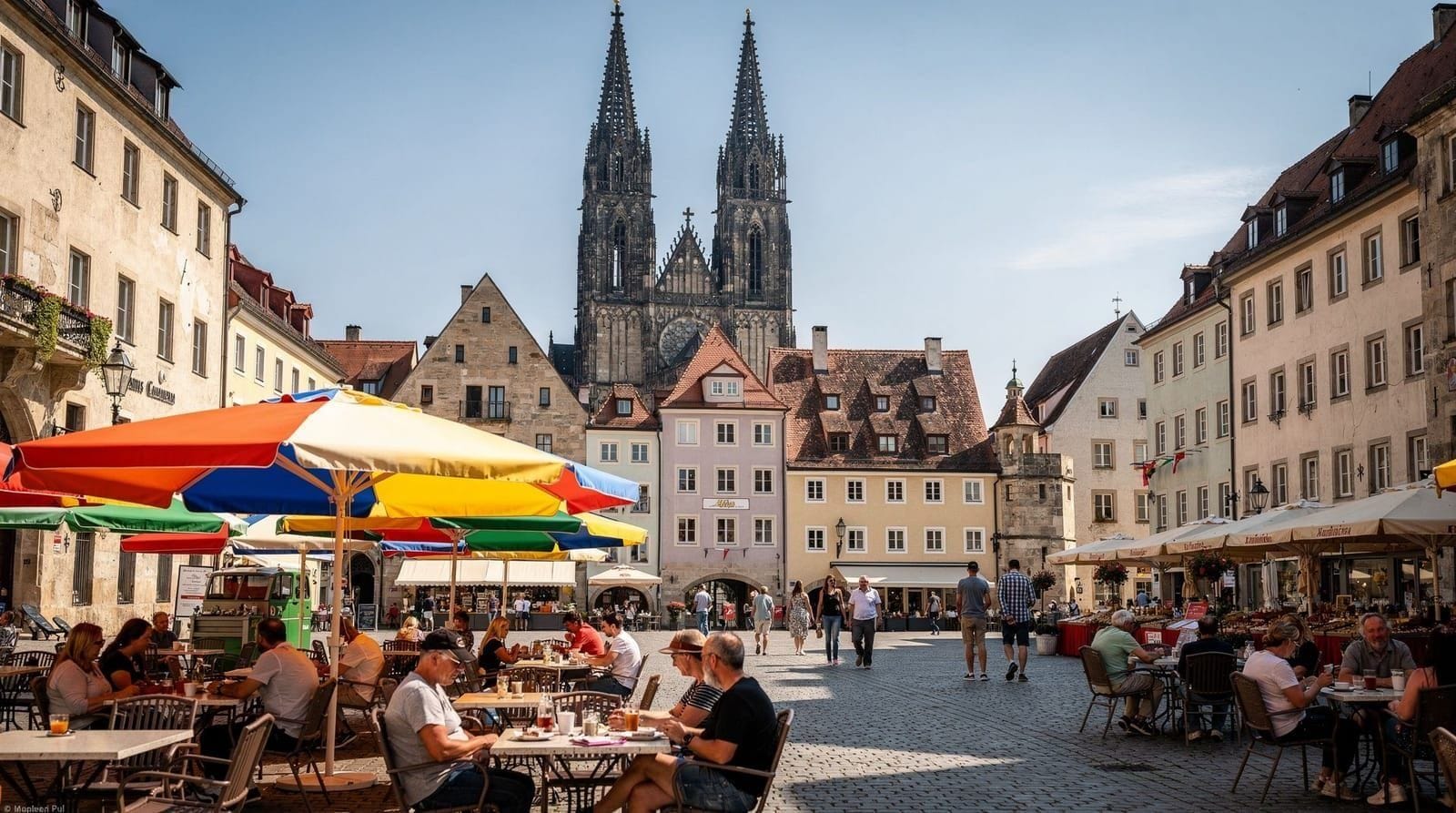
Marktplatz and Marienkapelle: The central market square with the Gothic Marienkapelle church (14th–15th century, largely original). The Adam and Eve portal figures are originals by Riemenschneider (copies now installed; originals in the Frankisches Museum).
Student population: Würzburg has around 28,000 students (Julius-Maximilians-Universität, founded 1402) who lend the city a different energy from the more tourist-oriented Rothenburg or Bamberg. The wine bars and cafes around the Sanderstraße area are popular with locals and students rather than tourists.
When to arrive: The Residenz opens at 09:00; being in the Grand Staircase before the large tour groups arrive (typically 10:00–10:30) significantly improves the experience. Plan the Residenz first, then the old town and wine bars in the afternoon.
Combining Würzburg with other day trips
- Würzburg + Rothenburg ob der Tauber (Rothenburg): 65 km south, 1 h 10 min by regional train. A natural pairing for Romantic Road enthusiasts.
- Würzburg + Bamberg (Bamberg): 105 km north, 55 min by ICE. Both are strong historic cities; spending two days (overnight in Nuremberg) covers both comfortably.
- Day trips from Munich guide: The best day trips from Munich guide ranks Würzburg as one of the higher-effort but higher-reward options — the longer train journey puts off some visitors, but those who go tend to be very satisfied.
For logistics: Day trips by train from Munich covers timetables and booking tips. For the broader Romantic Road: Romantic Road day trip from Munich covers itinerary options.
Würzburg vs Rothenburg vs Bamberg: choosing a Franconia day trip
Würzburg is one of three strong Franconia options from Munich, each rewarding a different interest.
| Würzburg | Rothenburg ob der Tauber | Bamberg | |
|---|---|---|---|
| Travel time from Munich | ~2h10 (ICE) | ~2h45–3h15 (train, 2 changes) | ~2h30 (ICE + change) |
| Signature draw | Residenz + Tiepolo fresco | Intact walled medieval town | UNESCO old town + Rauchbier |
| Character | Baroque, university city, wine | Fairy-tale medieval, touristy | Historic, beer culture, lived-in |
| Best for | Architecture and wine enthusiasts | Classic postcard Bavaria | Beer culture and old-town wandering |
Both Rothenburg and Bamberg can be combined with Würzburg on a longer Franconia trip if you have two or three days rather than a single day trip.
Sanderstraße and the everyday city
Away from the Residenz and the postcard bridge, the Sanderstraße district south of the old town gives a sense of Würzburg as a working university city rather than a museum piece. Independent bookshops, student-priced cafés, and a handful of good ethnic restaurants (a contrast to the otherwise Franconian-heavy menus in the centre) line the street, and it is where the roughly 28,000 university students actually spend their evenings rather than the tourist-facing Marktplatz. It is a 10–15 minute walk south from the Residenz and worth a detour if you have finished the main sights with an hour to spare before your train, or if you want a coffee that isn’t priced for tour groups.
Würzburg’s other Riemenschneider works
Tilman Riemenschneider, whose sculptures appear at the Marienberg fortress museum and the cathedral, was more than a talented carver — he was also mayor of Würzburg from 1520 and was imprisoned and tortured after siding with peasants in the 1525 uprising, an episode that effectively ended his career. Beyond the pieces already mentioned, his workshop’s output can be traced through several parish churches in the surrounding Franconian countryside, and the Museum am Dom (adjacent to the cathedral, entry €4.50) holds further examples alongside other regional religious art. For visitors with a specific interest in his work, the combination of the Marienkapelle originals (now in the Frankisches Museum), the cathedral transept sculptures, and the Museum am Dom pieces gives a fuller picture of Franconia’s most important late-medieval sculptor than any single site alone.
Frequently asked questions about Würzburg
How long does the train from Munich to Würzburg take?
The fastest option is the ICE from Munich Hauptbahnhof to Würzburg Hauptbahnhof, taking approximately 2 hours 10 minutes to 2 hours 20 minutes. Regional trains take 3.5+ hours via Ingolstadt and Ansbach and are not practical for a day trip. Book the ICE in advance on the DB website for fares from €30 return.
Is the Würzburg Residenz better than Neuschwanstein?
They are fundamentally different experiences. Neuschwanstein is a romantic 19th-century fantasy castle in an Alpine setting — spectacular scenery and theatrical rooms. The Würzburg Residenz is an 18th-century baroque palace with the world’s largest ceiling fresco — more architecturally significant, less cinematically dramatic. Architecture and art history enthusiasts often rate the Residenz more highly; visitors seeking Disney-style romance prefer Neuschwanstein. Both are worth visiting on a longer Bavaria trip.
Do I need to book the Würzburg Residenz in advance?
Unlike Neuschwanstein, the Würzburg Residenz does not require advance timed ticket reservations. You can buy tickets on arrival. The only times a queue forms are high summer weekends (July–August) and during major events. Weekday visits are relaxed.
What is the Bocksbeutel and where can I buy it?
The Bocksbeutel is the distinctive flat, round-bottomed bottle used exclusively for Franconian wine. You can buy Bocksbeutel wines at the Bürgerspital estate shop and Juliusspital estate shop in central Würzburg, at the market, and at most supermarkets in the region. Prices range from about €8 for everyday Müller-Thurgau to €45+ for top Silvaner from the Würzburger Stein vineyard.
What is the Romantic Road and where does it start?
The Romantische Straße is a 460-km scenic tourist route running from Würzburg in the north to Füssen (gateway to Neuschwanstein) in the south. It passes through medieval towns including Rothenburg ob der Tauber, Dinkelsbühl, and Augsburg. Würzburg is the official northern starting point, marked by a plaque near the Residenz. The route is primarily designed for car travel, though a seasonal Romantic Road Coach (operated by DER Touristik) runs the full length in summer.
Is Würzburg safe to visit with children?
Würzburg is a calm, safe university city and very manageable with children. The Residenz is impressive enough for older children (10+); younger children may find the painted rooms less engaging. The Main riverfront promenade and market square are good for families. The fortress walk to Marienberg is doable for most ages (30-minute steep path or bus option).
How does Würzburg compare to Bamberg for a Franconia day trip?
Both are strong historic cities in similar travel-time brackets from Munich. Würzburg’s strength is architecture and wine — the Residenz and the Franconian vineyards along the Main. Bamberg’s strength is its more complete UNESCO old town and its distinctive Rauchbier (smoked beer) culture, with a livelier everyday atmosphere. Combining both over two days, with an overnight in Nuremberg or Würzburg, works better than trying to see both in a single rushed day.
Can I taste wine at the actual vineyards near Würzburg, not just in the city?
Yes. The Würzburger Stein vineyard is visible from the Alte Mainbrücke and several producers along the Main valley (roughly 20–40 minutes from the city by car or regional train) offer tastings, though most require advance arrangement rather than casual walk-ins. For a simpler option without leaving the city, the Bürgerspital and Juliusspital estate Weinstuben pour their own vineyard wines by the glass with no booking needed.
Top experiences
Bookable activities with verified prices and instant confirmation on GetYourGuide.