Passau
Passau's baroque old town at the junction of the Danube, Inn and Ilz rivers — St Stephen's organ, castle views, Danube cruises. Day trip guide from Munich.
Munich to Regensburg: UNESCO World Heritage Site day tour
Quick facts
- Distance from Munich
- ~190 km (about 2 h by direct train)
- Train fare
- €19–€38 return (Bayern-Ticket valid on regional trains)
- St Stephen's Cathedral
- Free entry; organ concerts daily at noon (€5)
- Veste Oberhaus
- €9 adult (fortress + museum)
- Danube cruise to Linz
- From €22 one-way (Donauschiffahrt Wurm & Köck)
Where three rivers meet — and the baroque city that grew around them
Passau occupies one of the most dramatic urban sites in Bavaria: a long, narrow peninsula where the Danube flows in from the northwest, the Inn arrives from the south (having just crossed from Austria), and the Ilz descends from the Bavarian Forest in the northeast. The three rivers meet at the Dreiflüsseeck (Three Rivers Corner) at the tip of the peninsula, and the visible colour difference between the muddy-green Danube, the pale blue-green Inn, and the dark Ilz is one of the more striking natural phenomena you can see in a European city without leaving the shore.
The old town squeezed onto this peninsula is overwhelmingly baroque — not German baroque, but Italian baroque, built and rebuilt by Italian architects from the early 17th century onwards after a series of devastating fires destroyed the medieval city. The result is a townscape that feels more like a north Italian city than a Bavarian one: narrow lanes, tall facades in ochre and terracotta, curved streets following the contours of the peninsula. St Stephen’s Cathedral, rebuilt after the fire of 1662, contains the largest cathedral organ in the world (a claim that is straightforwardly true and worth verifying in person at the noon concert).
Passau is also the last significant German city before the Danube enters Austria. Many Danube cyclists arrive here at the end of the EV6 cycling route from Regensburg, and cruise passengers board or disembark here for Danube river journeys to Linz and Vienna.
quickAnswer — How do I get from Munich to Passau? Direct trains run from Munich Hauptbahnhof to Passau Hauptbahnhof in approximately 1 hour 55 minutes to 2 hours 10 minutes. The Bayern-Ticket (€29 for 1 person, +€8 per additional person up to 5) is valid on regional trains and covers the full journey. Fast IC trains are also available (not Bayern-Ticket) for a similar journey time.
| Where | Confluence of the Danube, Inn and Ilz, ~190 km east of Munich, on the Austrian border |
| Cost | Around €29 Bayern-Ticket return; cathedral free, fortress ~€9 |
| Time needed | A full day trip (5–6 hrs on the ground); overnight if combining with a Danube cruise |
| Getting there | Direct regional train from Munich Hbf, roughly 2 hrs each way |
| Best time | May–September; avoid March–April flood season in the lower old town |
Getting there from Munich
The straightforward option is the hourly direct train from Munich Hbf to Passau Hbf. Two types run:
- Regional trains (RB/RE): Bayern-Ticket valid, journey time ~2 hours 10 minutes. Depart roughly every 60–90 minutes. This is the most economical choice — €29 for the Bayern-Ticket covers up to 5 people all the way to Passau and back.
- IC trains: Faster (1 h 55 min), not Bayern-Ticket compatible. Fares from €19–€38 return booked in advance. Walk-on flexible fares are €50–€70 return.
Passau Hbf is about 10 minutes’ walk from the old town and the cathedral. The station is on the northern edge of the Inn riverbank, above the old town peninsula.
By car: A94 east from Munich to Mühldorf, then B12 east to Passau — approximately 2 hours in light traffic. Or A8 east to Salzburg and then north on the A3 — slightly longer. Parking in Passau: the Römerplatz garage (€1.50/hour) is the most convenient for the old town.
From Regensburg: Passau is 145 km east of Regensburg (approximately 1 h 30 min by regional train). The two cities make a natural two-day east Bavaria circuit.
The Three Rivers confluence
The Dreiflüsseeck (Three Rivers Corner) is at the very tip of the peninsula, accessible via a promenade walk from the old town in about 10 minutes. There is a viewing platform near the site of the Inn and Danube meeting, and a smaller confluence point for the Ilz (on the north side of the peninsula, near the Rathausplatz).
The colour contrast is most visible in spring and early summer when the Inn carries meltwater from the Austrian Alps and runs notably clearer and greener than the Danube. The Ilz, heavily peated from the Bavarian Forest, runs distinctly darker — nearly black in some conditions. By late summer, the water levels drop and the colour differences are less pronounced.
The best viewpoint for photography is not from the peninsula tip itself but from across the Inn on the Innkai promenade, looking east toward the confluence and the Veste Oberhaus fortress above. Alternatively, the fortress viewing platform (see below) gives an aerial perspective of all three rivers.
St Stephen’s Cathedral and the organ
The Dom St Stephan (Cathedral of St Stephen) is the most important building in Passau, and its claim to housing the largest cathedral organ in the world is genuine and verified. The current instrument, installed in stages between 1924 and 1980, has 17,974 pipes and 233 registers. It spans the full west facade inside the nave and required a complete internal structural rethink to install.
Entry: Free during visiting hours (08:00–18:00 daily, with restricted access during services). A map is provided at the entrance.
Interior: The cathedral interior is Italian high baroque from the late 17th century — all white and gold, with a flat painted ceiling (rather than a vaulted stone ceiling) that is a hallmark of the Bavarian–Austrian baroque tradition. The ceiling frescoes by Karl von Reslfeld (finished 1696) depict scenes from the life of St Stephen and various allegories. The overall effect is lighter and more exuberant than the heavier northern Gothic tradition.
Organ concerts: Daily noon concerts (Tuesday–Saturday, also some evening concerts in summer) are the practical way to hear the organ. The noon concert (12:00 sharp, about 35 minutes) costs €5 at the cathedral entrance. Arrive by 11:45 to get a seat — the cathedral fills quickly on summer weekdays. Evening concerts at 19:30 are more elaborate programs (€12–€15) and run less frequently. Check the cathedral website (dommusik-passau.de) for the current schedule.
The acoustics of the cathedral — long and narrow, with the organ at the back — mean the sound is genuinely extraordinary. Even if you have heard large organs elsewhere, the scale and tonal range of the Passau instrument is remarkable.
Veste Oberhaus fortress
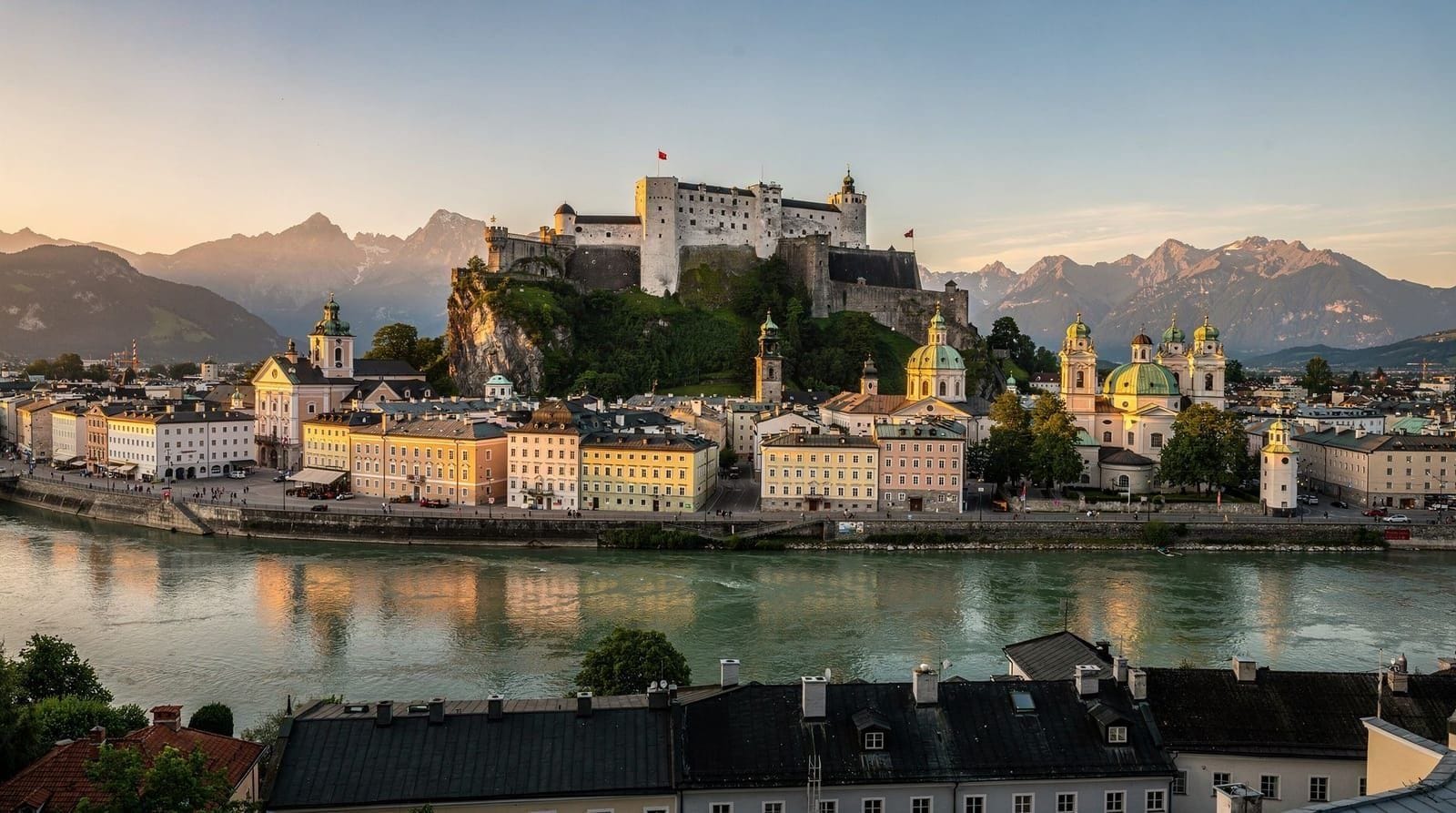
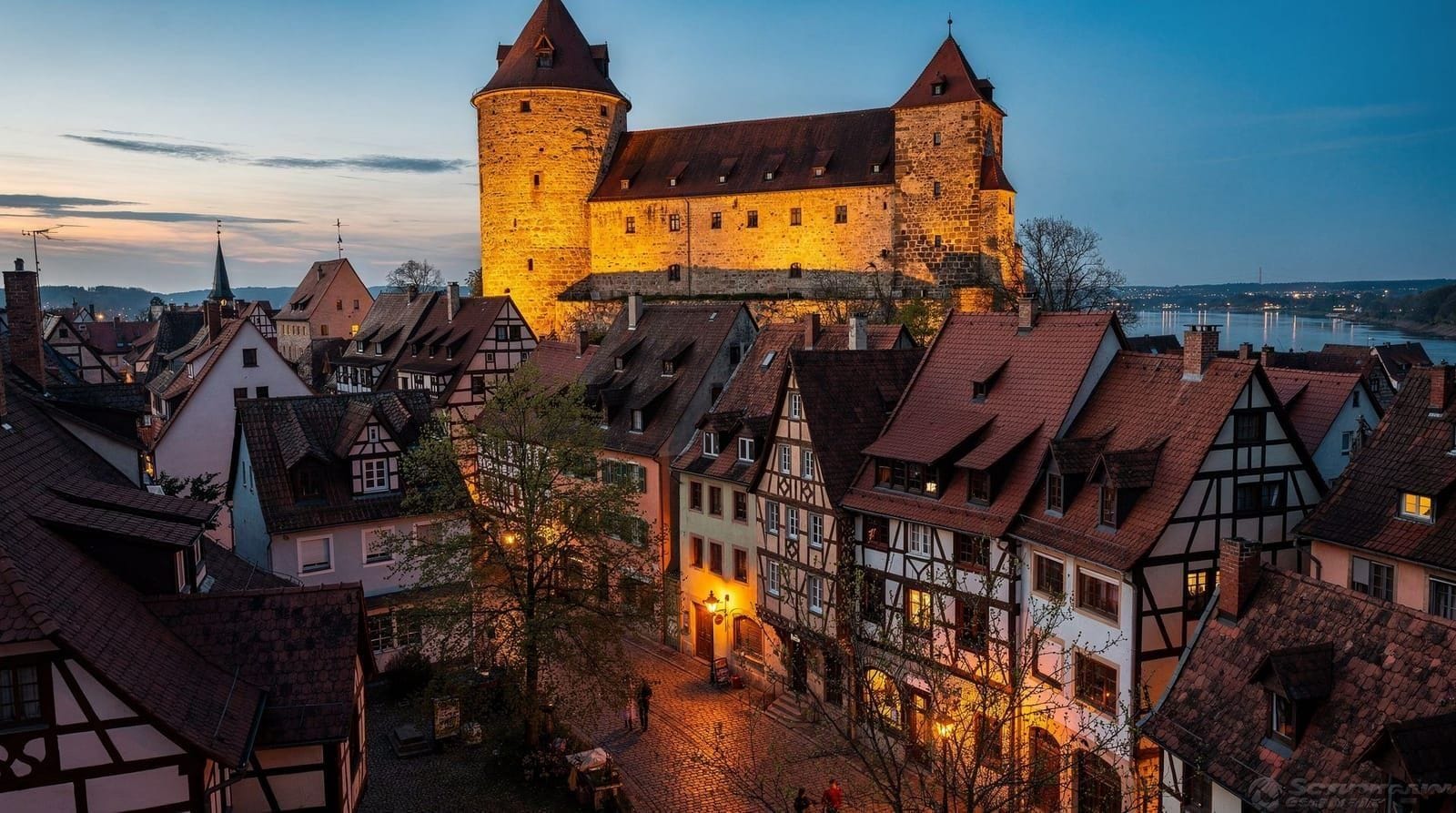
The Veste Oberhaus sits on the Georgsberg hill immediately north of the old town, on the promontory between the Danube and the Ilz. It was built by the prince-bishops of Passau from 1219 onwards as both a defensive fortress and a symbol of their authority over the city — the bishops and the citizens were frequently in conflict, and the fortress was occasionally used to overawe an uppity population.
Getting there: The fortress is a 20–25 minute steep walk up from the Rathausplatz. A seasonal shuttle bus (Bus 1, “Panorama-Bus”) runs from Rathausplatz to the fortress car park from May to October on weekends (€3.20 return). On weekdays in summer, the bus also runs. Check the VGP transport website for current schedules.
Entry (2026): €9 adult, €7 concession, includes the Stadtmuseum (Passau City Museum) housed within the fortress. The museum covers the city’s history from Roman times (Passau was the Roman fort of Boiotro), through the medieval prince-bishopric, to the 19th century.
The viewing platform at the top of the fortress tower gives what is widely considered the best panoramic view in eastern Bavaria: the confluence of all three rivers visible from above, the red-roofed old town on the peninsula below, and the surrounding hills. On clear days, you can see well into Austria to the south. The tower access is included in the fortress entry.
Allow 1.5–2 hours for the fortress, including the walk up and the museum. Guided tour of Regensburg from Munich (combine with Passau)
Danube cruises and the gateway to Austria
Passau is the main departure point for Danube river cruises heading east into Austria. The primary operator is Donauschiffahrt Wurm & Köck (Höllgasse 26, at the Innkai landing), which runs scheduled passenger services to Linz (€22 one-way, 6 hours downstream) and shorter cruises on the Three Rivers. Book at the landing stage or on their website.
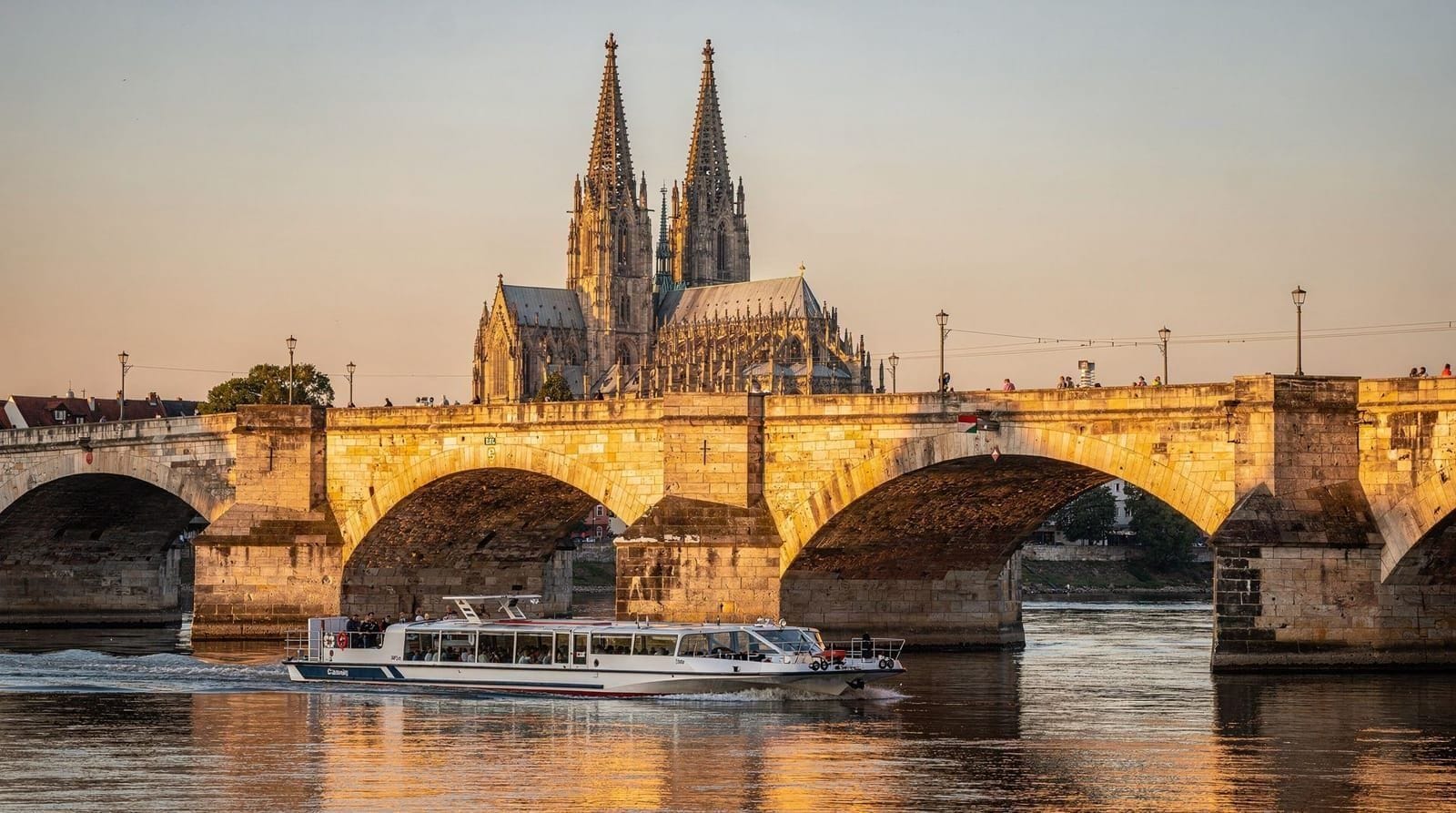
Three Rivers cruise (1 hour): Runs daily in summer at 10:30, 13:00, and 15:30 from the Steinerne Brücke landing. Adult €14. Covers the confluence, the Inn upstream into Austria briefly, and returns via the Danube and Ilz. Good for seeing the colour contrast at water level; the fortress view from the water is also excellent.
Passau to Linz by boat (full day, 6 hours downstream): A genuinely enjoyable journey through the Danube gorge between the Bavarian Forest and the Austrian uplands. Departs 09:00, arrives Linz ~15:00. Return from Linz to Passau by train (1 h 30 min, hourly service) so you can take the 16:30 or 17:30 train back to Munich. Total for this combination: a long but very rewarding day from Munich.
Danube cycling: The EV6 cycling route (Passau to Vienna, 320 km) begins in Passau. Many cyclists arrive in Passau after cycling from Regensburg (130 km, 2–3 days). The Passau cycling infrastructure is well-developed; bike hire is available at the station (Rad Lounge, Bahnhofstraße 26).
Old town: walking the peninsula
The old town occupies the peninsula between the Danube and Inn rivers and is about 1.5 km long by 300 metres wide at its broadest. Walking its length takes 20 minutes at a moderate pace; exploring the side streets adds another hour.
Rathausplatz (Town Hall Square) is the central public space, flanked by the Gothic Rathaus (Town Hall, 1298, with 15th-century additions) and its carillon tower. The water level marks on the Town Hall facade record flood levels going back to 1501 — a sobering line chart in stone. The 2013 flood, the worst in decades, reached 12.89 metres above normal river level.
Residenzplatz is the baroque square behind the cathedral, smaller than Salzburg’s equivalent but similarly composed. The Neue Residenz (New Residence of the Prince-Bishops, 1770) houses the Diocesan Museum (€5 adult) with a collection of religious art and liturgical objects from the diocese — worthwhile for the medieval Gothic items but not essential.
Schaiblingsturm (Schibling Tower) is a 14th-century round defensive tower on the north bank of the Inn, the last surviving element of the medieval city walls. It is now used for small exhibitions and can be climbed (€2).
Innkai promenade: The south bank of the Inn, between the station and the confluence, is a pleasant riverside walk with views of the old town from across the water. Several cafes have river-facing terraces here.
What to eat in Passau
Passau has a limited but decent food scene, with the waterfront restaurants naturally charging a premium for the view.
- Heilig-Geist-Stift-Schenke (Heilig-Geist-Gasse 4) — wine bar and restaurant in a medieval charitable foundation building (1226). The courtyard is particularly pleasant in summer. Franconian and Austrian wines by the glass, simple but good Bavarian food, mains €14–€22. This is the best combination of atmosphere and food quality in the city.
- Café Diwan (Innstraße 10, opposite bank) — a cafe in a bookshop on the Inn’s north bank. Excellent coffee and home-baked cakes. Good for a mid-morning break before crossing to the old town.
- Hackl-Stube (Neue Straße 7) — traditional Bavarian restaurant near the cathedral, popular with locals. Schnitzel €15, Schweinsbraten (roast pork) €17. No reservations required for lunch on weekdays.
- Cafè Bar Centrale (Rindermarkt 4) — popular with students (Passau has a university of 12,000 students), affordable lunch menus from €9, good coffee.
Avoid the waterfront restaurants directly on the Dreiflüsseeck promenade — they charge tourist premiums for views and deliver mediocre food.
Practical tips for Passau
Flood risk: Passau floods regularly, and the lower part of the old town (around the Rathausplatz and the lower lanes) can be underwater in spring. Before planning a visit in March or April, check the water level report (Hochwasser-Nachrichtendienst Bayern). The cathedral and most major attractions on the upper peninsula level are not affected, but some riverside cafes close.
Day trip length: Passau is compact; 5–6 hours is enough to cover the cathedral (with noon concert), the Veste Oberhaus, and the old town. Take the 07:00–08:00 train from Munich for an arrival by 09:00–10:00, leaving time for the noon concert and a post-lunch fortress visit before a 17:00–18:00 return.
Combination with Regensburg: Passau (east end) and Regensburg (west, 145 km) are both on or near the Danube and make a natural pairing for an east Bavaria two-day trip. Regensburg has its own UNESCO old town and the oldest stone bridge in Bavaria.
Crossing into Austria: The Austrian city of Schärding is directly across the Inn from Passau (pedestrian bridge, 5-minute walk). The town has a well-preserved baroque market square and several good cafes. Worth an hour if you want to say you have been to Austria on your Passau day. Guided one-perfect-day tour of Regensburg from Munich
Combining Passau with other trips
Passau sits at the eastern end of the Bavaria historic cities arc. Natural combinations:
- Passau + Regensburg (Regensburg): Both have UNESCO old towns on the Danube. A two-day east Bavaria trip works well by train (regional, 1 h 30 min between the cities).
- Passau + Salzburg: Passau is 130 km west of Salzburg by road; by public transport it requires routing via Munich. Not a natural same-day pairing without a car.
- Passau as Danube cruise start: Those taking a multi-day Danube cruise to Vienna typically board at Passau; the city makes a good stopover night before embarkation.
See the best day trips from Munich guide for a ranked overview of all historic city options. The day trips by train from Munich covers the Passau-specific timetable.
Shopping and souvenirs
Passau’s shopping is concentrated on Ludwigstraße and Grabengasse, the two main pedestrian lanes running the length of the peninsula. Look for glassware and ceramics from the nearby Bavarian Forest (Bodenmais and Zwiesel, about an hour east, are Germany’s traditional glass-making region) rather than generic Bavarian trinkets — several shops on Grabengasse stock genuine Bavarian Forest glass at fair prices. The Wochenmarkt (weekly farmers’ market) sets up on Rindermarkt on Tuesday and Friday mornings, good for local cheese, bread and produce if you are staying overnight and want a picnic for the Danube cruise. For a book-and-coffee stop, Café Diwan (mentioned above) doubles as a well-stocked independent bookshop with a small English-language section.
Passau month by month
Passau’s character shifts noticeably with the seasons, mostly because of the rivers themselves — flood risk, water colour and cruise schedules all move with the calendar.
| Months | Conditions | Notes |
|---|---|---|
| March–April | Highest flood risk | Lower old town lanes can flood; check hnd.bayern.de before booking |
| May–June | River levels dropping, colours vivid | Best month for photographing the Inn/Danube colour contrast |
| July–August | Warm, busy | Cathedral and fortress queues longest; book the noon organ concert seat early |
| September | Warm days, thinner crowds | Arguably the best all-round month — cruises still running, fewer coach groups |
| October | Cooling, Danube cruise season winding down | Good for a quieter old-town walk |
| November–February | Cold, some attractions on reduced hours | Fortress shuttle bus does not run; cathedral and old town still open |
Nightlife and the student scene
Passau is a university city — around 12,000 students at the University of Passau give the old town a livelier evening scene than its size would suggest, concentrated around Bräugasse and the streets near the Rathausplatz. Kowalski (Oberer Sand 1) is a long-running student bar with a terrace over the Danube, good for a beer after the fortress climb. Zauberberg (Bräugasse 12) leans toward cocktails and a younger crowd, busiest Thursday to Saturday during term time. Outside term (roughly late July to early October, and over Christmas/New Year), the atmosphere is noticeably quieter, which suits visitors who came for the rivers and architecture rather than nightlife. None of this competes with Munich’s beer halls for scale, but it is a pleasant, low-key way to end a day trip that turned into an overnight stay.
Frequently asked questions about Passau
What is special about Passau’s location?
Passau sits at the confluence of three rivers: the Danube (Europe’s second-longest river), the Inn (which drains the Austrian and Swiss Alps), and the Ilz (which flows from the Bavarian Forest). The three rivers meet at the Dreiflüsseeck at the tip of the old town peninsula. The visible colour difference between the rivers — particularly between the Inn and the Danube — is one of the more striking natural phenomena visible in a German city.
Does St Stephen’s Cathedral really have the world’s largest organ?
Yes, this is straightforwardly true and not a local exaggeration. The Passau Cathedral organ, assembled and expanded between 1924 and 1980, has 17,974 pipes and 233 registers. The Guinness World Records lists it as the largest cathedral organ in the world. Daily noon concerts (€5, approximately 35 minutes) are the practical way to hear it; arrive 15 minutes early for a good seat.
Is the Bayern-Ticket valid to Passau?
Yes. The Bayern-Ticket (€29 for one person, €8 per additional person, up to 5 people) covers all regional trains (RB/RE) from Munich to Passau and back. The journey on regional trains takes about 2 hours 10 minutes. IC trains to Passau are slightly faster but are not covered by the Bayern-Ticket.
Is Passau worth visiting compared to Regensburg?
Both have UNESCO-listed old towns and strong architectural characters, but they are quite different. Regensburg is larger, more lively, with a wider range of restaurants and a more developed tourism infrastructure. Passau is smaller and quieter, with the unique three-rivers geography, the exceptional organ in St Stephen’s, and the Veste Oberhaus fortress views. Passau rewards visitors who want something slower and less crowded; Regensburg rewards those who want more options and a bigger city feel.
Can I take a Danube cruise from Passau?
Yes. The main operator is Donauschiffahrt Wurm & Köck, running scheduled daily cruises including a 1-hour Three Rivers tour (€14, summer only) and a full-day journey to Linz, Austria (€22 one-way, 6 hours). Returning from Linz by train (1 h 30 min to Passau) and then catching the train back to Munich makes for a long but rewarding day. Multi-day Danube cruises to Vienna and Budapest also depart from Passau with various operators.
When does Passau flood and should I worry?
Passau floods regularly — the flood level markers on the Rathaus facade record events going back to 1501. Serious floods typically occur in March–April with snowmelt and after heavy summer rainfall. The lower riverside lanes and some restaurants around Rathausplatz are affected; the cathedral, fortress, and most main attractions are on higher ground and are not flooded. Check the Bavarian flood information service (hnd.bayern.de) before visiting in spring.
Is Passau worth an overnight stay or just a day trip?
A day trip covers the essentials comfortably, but an overnight stay is worth it if you want to catch an evening organ concert, walk the old town at dusk when the floodlit facades reflect in the rivers, or take an early Danube cruise the next morning without a 07:00 train from Munich. Rooms in the old town are limited and modest compared with Regensburg or Munich, so book ahead in summer.
Does Passau get very crowded?
Yes, on summer weekends and whenever river cruise ships dock — several hundred passengers can disembark at once and fill the cathedral and old-town lanes for a couple of hours. Arriving by the first Munich train (before 09:00) or visiting after 16:00, once the day-cruise crowds have moved on, gives a noticeably calmer experience of the same sights.
Can I take my bike on the train from Munich to Passau?
Yes, regional trains (RB/RE) covered by the Bayern-Ticket carry bicycles for a small extra fee (a separate bike day-ticket, around €6, bought alongside the Bayern-Ticket). Space is limited and not reservable on most regional services, so board early, especially on weekends when Danube cyclists travel in both directions. IC trains require an advance bike reservation and cost more.
Top experiences
Bookable activities with verified prices and instant confirmation on GetYourGuide.