Salzburg day trip from Munich — practical tips for doing it right
Is a Salzburg day trip from Munich actually worth it?
Yes, with conditions. Salzburg is 90–150 minutes from Munich depending on the train you take, which means a day trip is genuinely viable — you can arrive with enough time to see the city meaningfully rather than just photograph it from the train window. But the trip rewards travelers who’ve thought it through. Those who wing it often spend too much time in tourist traps (the Mirabell Garden at peak hours, the gift shops on Getreidegasse) and not enough time in the quieter corners that make Salzburg worth visiting.
The city is small — the historic Altstadt that most visitors come to see takes perhaps 45 minutes to walk corner to corner. That compactness is a feature, not a limitation: you can cover the highlights without rushing, eat well, and still catch an early-evening train back to Munich.
This guide focuses on the practical side: how to get there efficiently, what’s worth your time, and what’s overrated.
| Where | Salzburg, Austria — Altstadt, Hohensalzburg Fortress, Mirabell Gardens |
| Cost | Bayern-Ticket from around 29 EUR, fortress entry around €13 |
| Time needed | full day, roughly 10:00–19:00 |
| Getting there | regional train from Munich Hauptbahnhof, around 90 minutes |
| Best time | depart Munich by 08:00–09:00, before the day-trip crowds |
Getting from Munich to Salzburg by train
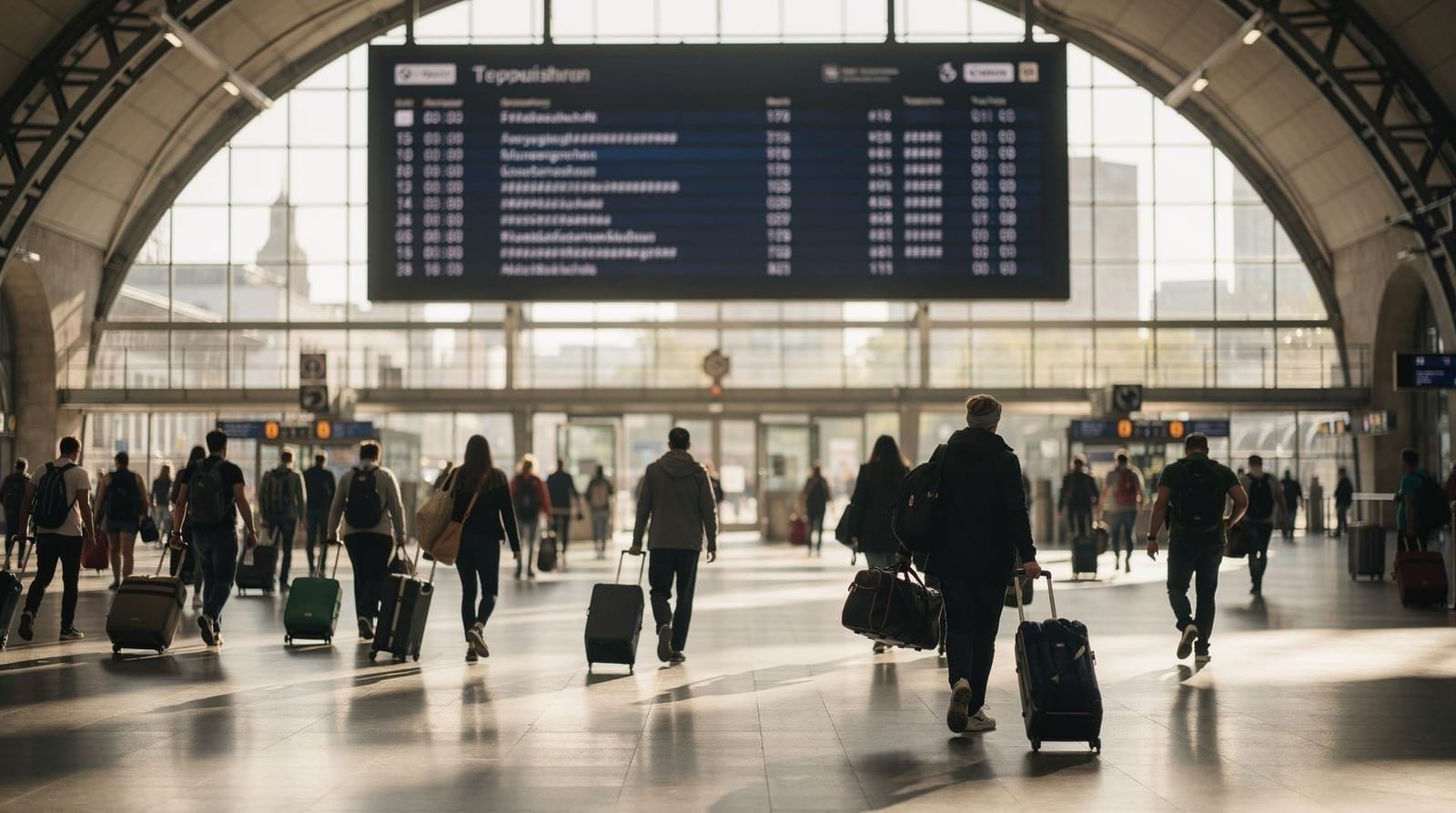
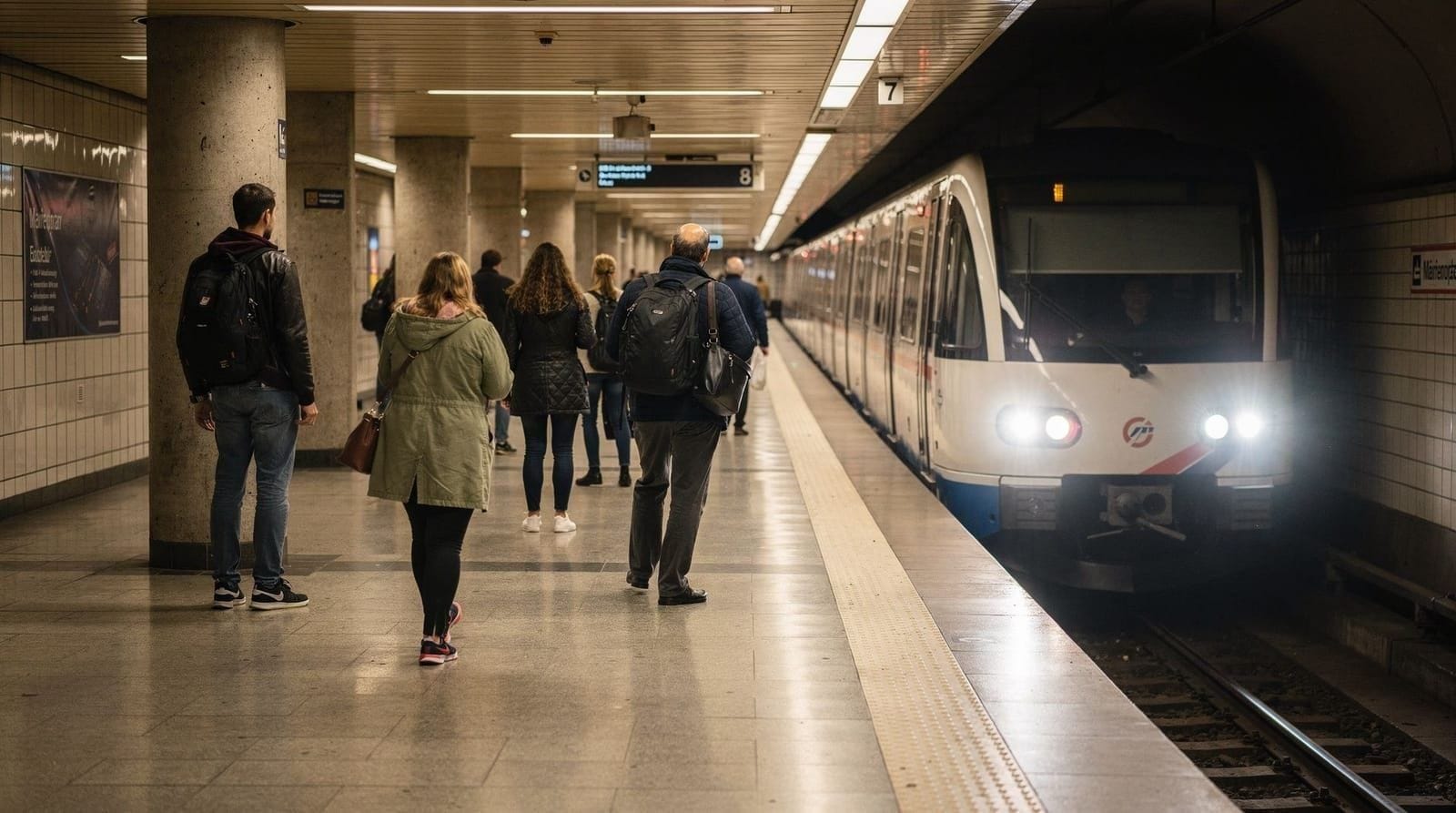
The most practical route involves the regional trains operated by Deutsche Bahn and Österreichische Bundesbahnen. Journey time from München Hauptbahnhof is approximately 90 minutes by direct regional train (RB or RE services) or up to 2 hours with a connection.
The Bayern-Ticket option
If you’re traveling from Munich and want to keep costs low, the Bayern-Ticket is the key. From 29 EUR for one person (with 2 EUR each for additional travelers up to 5 people), it covers all local and regional trains in Bavaria for the entire day — including the regional train to Salzburg. The Bayern-Ticket is not valid on ICE/IC trains.
The catch: the Bayern-Ticket covers Bavarian trains. Once you cross into Austria, you’ll need to purchase a separate ticket for any Austrian transport (within Salzburg city itself). In practice, most of Salzburg’s sights are walkable from the main station, so this is rarely an issue.
See our Munich to Salzburg day trip guide for exact train schedules and connections.
Practical train logistics
- Buy Bayern-Tickets online at bahn.de or at station machines the morning of travel (valid for the calendar day only, not 24-hour periods)
- Trains from Munich Hauptbahnhof to Salzburg Hauptbahnhof run roughly hourly
- Aim to depart Munich by 08:00–09:00 to arrive by 10:00–10:30 and have a full day
- The last comfortable return is around 19:00–20:00 to be back in Munich by 21:00–22:00
Guided tour option
If you’d prefer someone else handle the logistics, several day tour operators run guided trips from Munich to Salzburg that include transport. These are particularly useful for first-time visitors who don’t want to navigate connections independently. Salzburg day trip from Munich by train — guided
Suggested day timeline
| Time | Activity |
|---|---|
| 08:00 | Depart Munich Hauptbahnhof |
| 09:30 | Arrive Salzburg, walk to the Altstadt |
| 10:00–11:30 | Domplatz, Residenzplatz, Getreidegasse |
| 11:30–13:00 | Hohensalzburg Fortress (funicular or walk up) |
| 13:00–14:00 | Lunch — Augustiner Bräustübl or Grünmarkt stalls |
| 14:00–16:00 | Mirabell Gardens, Linzergasse/Steingasse |
| 16:00–18:30 | Free time, coffee at Café Tomaselli, last shopping |
| 19:00–20:00 | Return train to Munich |
This is a template, not a rule — Mozart fans should swap in the Geburtshaus, Sound of Music fans the filming locations. For the wider picture of how this fits among other options, see the best day trips from Munich guide and the day trips by train from Munich overview.
What to do in Salzburg on a day trip
With a full day (roughly 10:00–19:00), you have time to cover the following without rushing:
The Altstadt (Old Town)
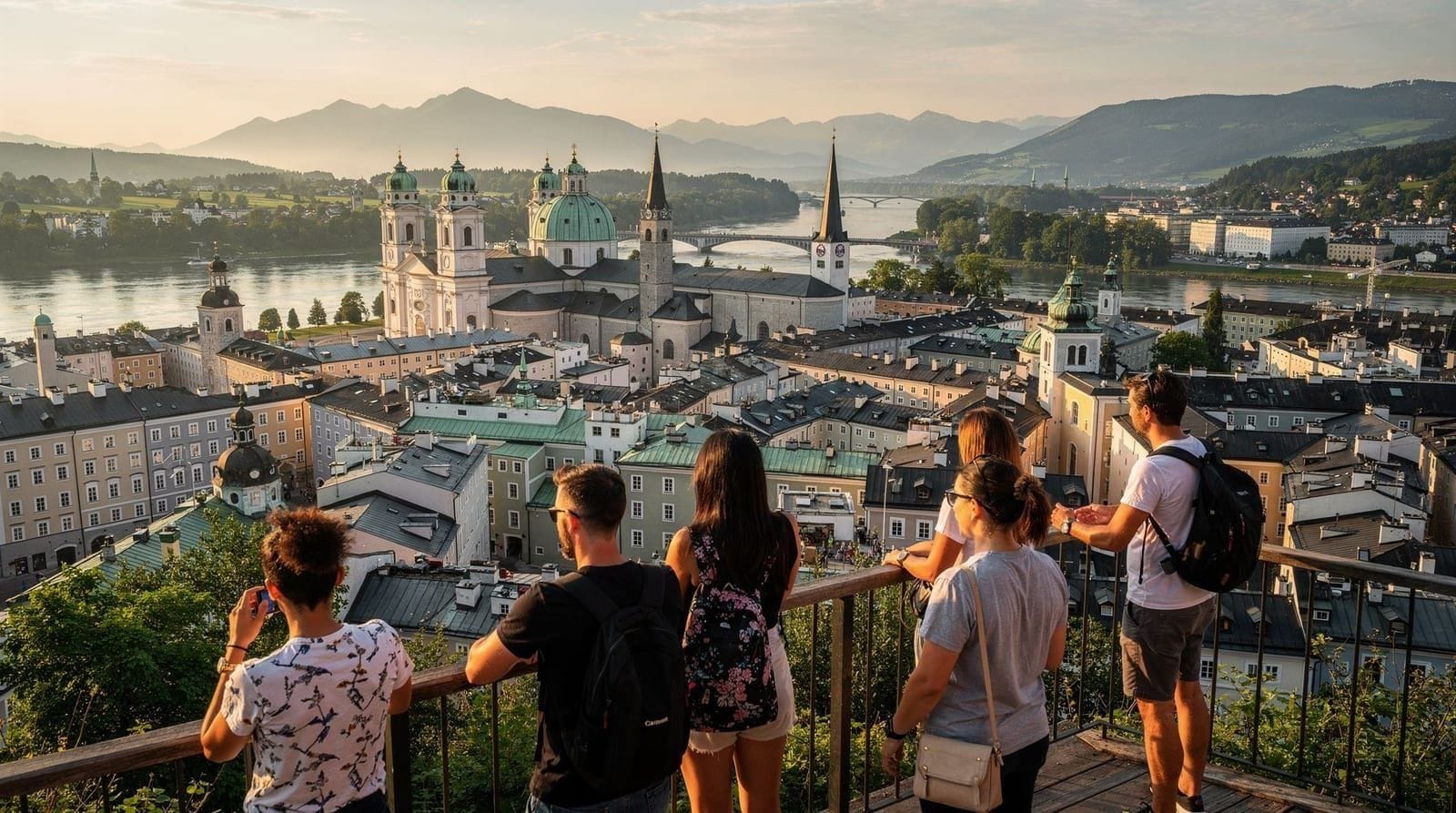
Salzburg’s Altstadt is a UNESCO World Heritage Site and genuinely deserves that status. The dense Baroque streetscape is intact in a way that few European cities can match. Getreidegasse is the famous shopping street — it’s worth a walk for the wrought-iron guild signs, but the shops are mostly tourist goods and chains. The real interest is in the streets radiating off it.
Domplatz (Cathedral Square): The Salzburg Dom is free to enter and one of the finest Baroque cathedrals in the German-speaking world. Built in the 17th century, it has three large portals and an impressive interior. Worth 20 minutes.
Residenzplatz: The Baroque fountain and the former archbishop’s palace (Residenz) are the center of gravity. The Residenz is now a museum (10 EUR admission) with state rooms and a gallery.
Hohensalzburg Fortress
The fortress (Festung Hohensalzburg) above the city is the defining visual of Salzburg’s skyline. You can take the Festungsbahn funicular (12.80 EUR with entry to the fortress museum) or walk up for free in about 20 minutes from the Kapitelplatz below. The views over the Altstadt and the Salzach River are the main reason to go. The museum inside the fortress is thin but the fortress buildings themselves are atmospheric.
If you only have time for one hilltop experience, the fortress is the one to choose.
Mozart-Geburtshaus
Mozart was born in Salzburg in 1756, and the house on Getreidegasse 9 where he was born has been a museum since 1880. Tickets cost 12 EUR. Inside you’ll find a collection of instruments, portraits, and personal effects from Mozart’s life. Whether this is worth your limited time depends on how much Mozart means to you. For casual visitors, the connection to the wider city is probably more interesting than the museum interior.
Mirabell Palace and Gardens
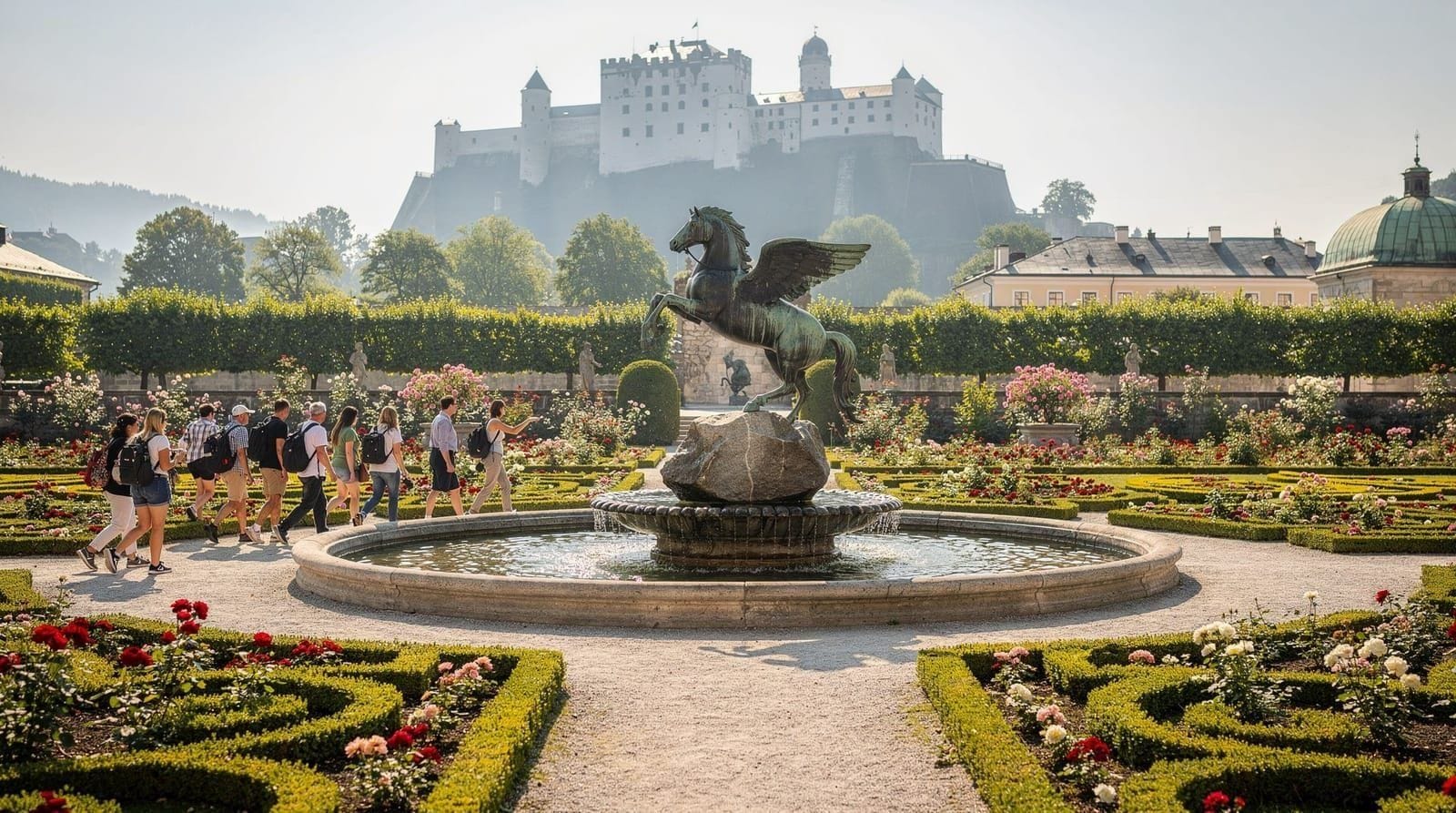
The Mirabell Gardens are free to enter and famously appeared in The Sound of Music (the “Do-Re-Mi” scene with the hedges and fountains). The gardens are lovely in themselves — Baroque formal design with mountain views. Go in the morning before the tour groups arrive or in the late afternoon. Mid-day in high summer, it’s crowded to the point of being unpleasant.
The palace itself houses the city council offices and is not open to tourists except for the Marble Hall (used for concerts and occasionally viewable).
Where to eat in Salzburg
Salzburg is an expensive city by Austrian standards. The closer you eat to Getreidegasse or Mozartplatz, the higher the surcharge. A few reliable options:
Augustiner Bräustübl Mülln: A Salzburg institution (founded 1621) and the best-value eating and drinking in the city. It’s a brewery with a beer hall and large beer garden on the western edge of the Altstadt, about 15 minutes walk from the cathedral. Self-service Bavarian food (Brezn, cold platters, roast pork) and Augustiner beer from the barrel for around 4.50–5.00 EUR per half liter. Genuinely local, no tourist markup.
Café Tomaselli: The oldest coffeehouse in Salzburg (1705), on Alter Markt. Excellent Viennese-style coffee and cakes. Yes, it’s a tourist institution, but it’s also genuinely good. A coffee and cake here costs 8–12 EUR.
Stiftskeller St. Peter: Claims to be the oldest restaurant in Europe (though several European cities make that claim). Good Austrian food at tourist prices (mains 18–28 EUR). Worth it if you want a formal sit-down meal in atmospheric surroundings.
For a cheap lunch: the stalls along the Grünmarkt (an outdoor market on Universitätsplatz behind the cathedral) sell sausages, bread, and local produce at market prices — roughly 4–7 EUR for a satisfying lunch.
Sound of Music tourism in Salzburg
The Sound of Music has a persistent hold on American and British visitors to Salzburg. The city has mixed feelings about this — locals are often bemused by the obsession with a film that’s not particularly well-known in Austria itself.
That said, the real locations are genuinely interesting from a film and architectural history perspective. The Leopoldskron Palace (used for the lakeside von Trapp house scenes), the Mirabell Gardens, the Mondsee church (wedding scene), and the Nonnberg convent are the main filming locations. Most can be seen from outside for free.
Our Sound of Music Salzburg tour guide covers these in detail.
Tips for avoiding the crowds
Salzburg’s Altstadt is genuinely very popular and can feel overwhelmed during summer peak hours (roughly 11:00–16:00). Some strategies:
Arrive early: A 08:00 departure from Munich and arrival by 10:00 gives you 1–2 hours before the cruise ship day-trippers and bus tour groups arrive en masse.
Explore the Linzergasse side: The area across the Salzach River from the Altstadt (Schallmoos / Linzergasse) is less visited and more residential. The Steingasse is a narrow medieval street worth seeing and is almost never crowded.
Visit the fortress in the morning: The Festungsbahn gets long queues in the early afternoon. Either arrive before 11:00 or walk up.
Stay for the late afternoon: By 17:00, many day-trippers have left. The Altstadt at dusk is beautiful and noticeably calmer.
More general planning tips for how a day like this fits into a longer Munich stay are in the Munich travel tips guide and the Munich public transport guide, which covers ticket types beyond the Bayern-Ticket used here. If Salzburg convinces you to stay longer in the region, the Salzburg destination page covers what a multi-day visit adds beyond the day-trip highlights.
Frequently asked questions about the Salzburg day trip
How far is Salzburg from Munich?
By train, approximately 90 minutes on direct regional services. By car via A8, about 150 km (90–120 minutes depending on traffic and border crossing time).
Do you need a visa or special documents to enter Austria from Germany?
No — both countries are in the Schengen Area and there are no passport checks at the German-Austrian border. EU/EEA citizens can travel freely. Non-EU visitors who have entered the Schengen Area in Germany can move to Austria without additional checks.
Is the Bayern-Ticket valid to Salzburg?
The Bayern-Ticket is valid on regional trains from Munich to Salzburg (Hauptbahnhof) — the route crosses the border but the Bayern-Ticket covers it on regional services. It is NOT valid on ICE or IC trains. For travel within Salzburg city, you’ll need a local bus ticket (around 2.20 EUR per ride).
What currency do they use in Salzburg?
Austria uses the Euro, same as Germany. Your German bank card or credit card will work everywhere.
Can I see Hallstatt on the same day trip as Salzburg?
Technically possible but not recommended. Hallstatt is 75 km from Salzburg and requires a train and ferry combination or a bus. Adding it to a Munich-to-Salzburg day trip makes for an exhausting journey with too little time at each stop. See our guide to combining Salzburg, Wolfgangsee, and Hallstatt if that combination appeals.
Is the Eagle’s Nest near Salzburg?
Yes — the Kehlsteinhaus (Eagle’s Nest) is near Berchtesgaden, about 25 km south of Salzburg. Some operators run combination tours from Munich that cover both Eagle’s Nest and Salzburg in one day. Our Eagle’s Nest guide explains the site and its history.
Is one day really enough for Salzburg?
For the core Altstadt, the fortress, and the gardens, yes — the city is compact enough to cover meaningfully in a day. If Mozart sites, a Sound of Music location tour, and a relaxed pace all matter to you, a day trip will feel rushed; an overnight stay gives more breathing room.