Visiting Dachau Memorial Site — what to know before you go
Why visit Dachau
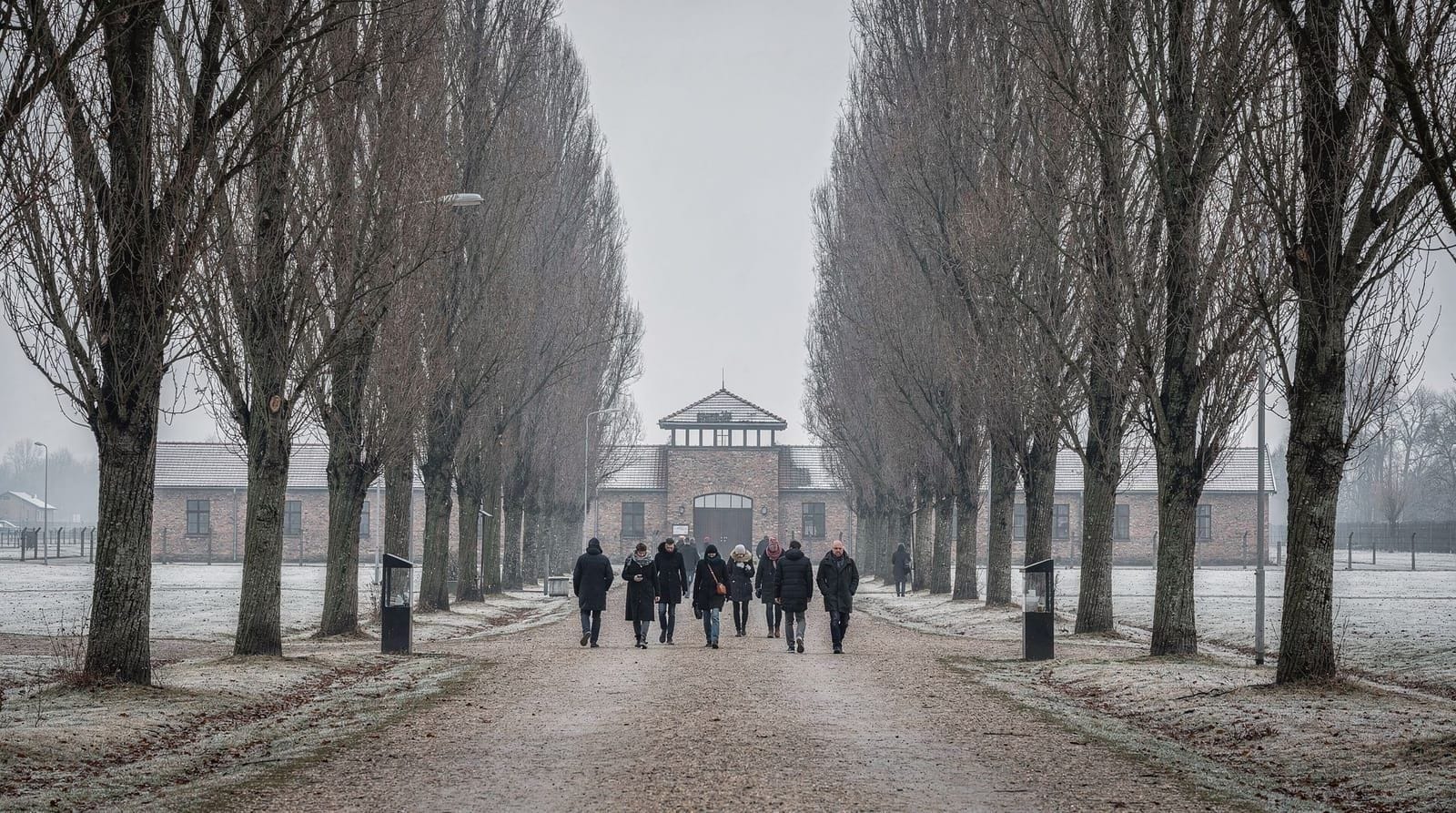
The Dachau Concentration Camp Memorial Site is one of the most significant historical sites in Germany. It was the first concentration camp established by the Nazi regime, opened in March 1933 — six years before the start of World War II. It served as a model for all subsequent camps and was in operation for 12 years until US forces liberated it on April 29, 1945.
Visiting Dachau is not entertainment and it should not be approached as a tourist attraction in the conventional sense. It is a memorial site — KZ-Gedenkstätte Dachau — managed with the explicit purpose of documentation, commemoration, and education. The 200,000 people imprisoned here between 1933 and 1945, and the approximately 41,500 who died, are the reason this site exists.
Many visitors to Munich feel uncertain about whether to go, worried it will be overwhelming. This guide addresses those questions honestly, alongside the practical information you need to visit respectfully and make the most of the experience.
| Where | Dachau, about 16 km northwest of Munich city centre |
| Cost | Free entry; audio guide around 4 EUR |
| Time needed | 3–4 hours minimum, more if visiting with a guide |
| Getting there | S2 S-Bahn to Dachau station, then bus 726 (about 35–45 min total) |
| Booking | No booking needed for independent visits; guided tours benefit from advance reservation |
Admission and opening hours
Entry to Dachau Memorial Site is free. There is no admission charge. Audio guides cost 4 EUR and are available in English and other languages at the visitor center.
Opening hours: Tuesday–Sunday, 09:00–17:00. Closed on Mondays and certain German public holidays. The site does not restrict visitor numbers, so you can arrive any time during opening hours without a booking.
The visitor center (Besucherzentrum) has a permanent exhibition across two floors that covers the camp’s history in depth. Allow time for this before walking the grounds.
Getting there from Munich
The Dachau Memorial Site is located about 16 km northwest of Munich city center. There are two main routes:
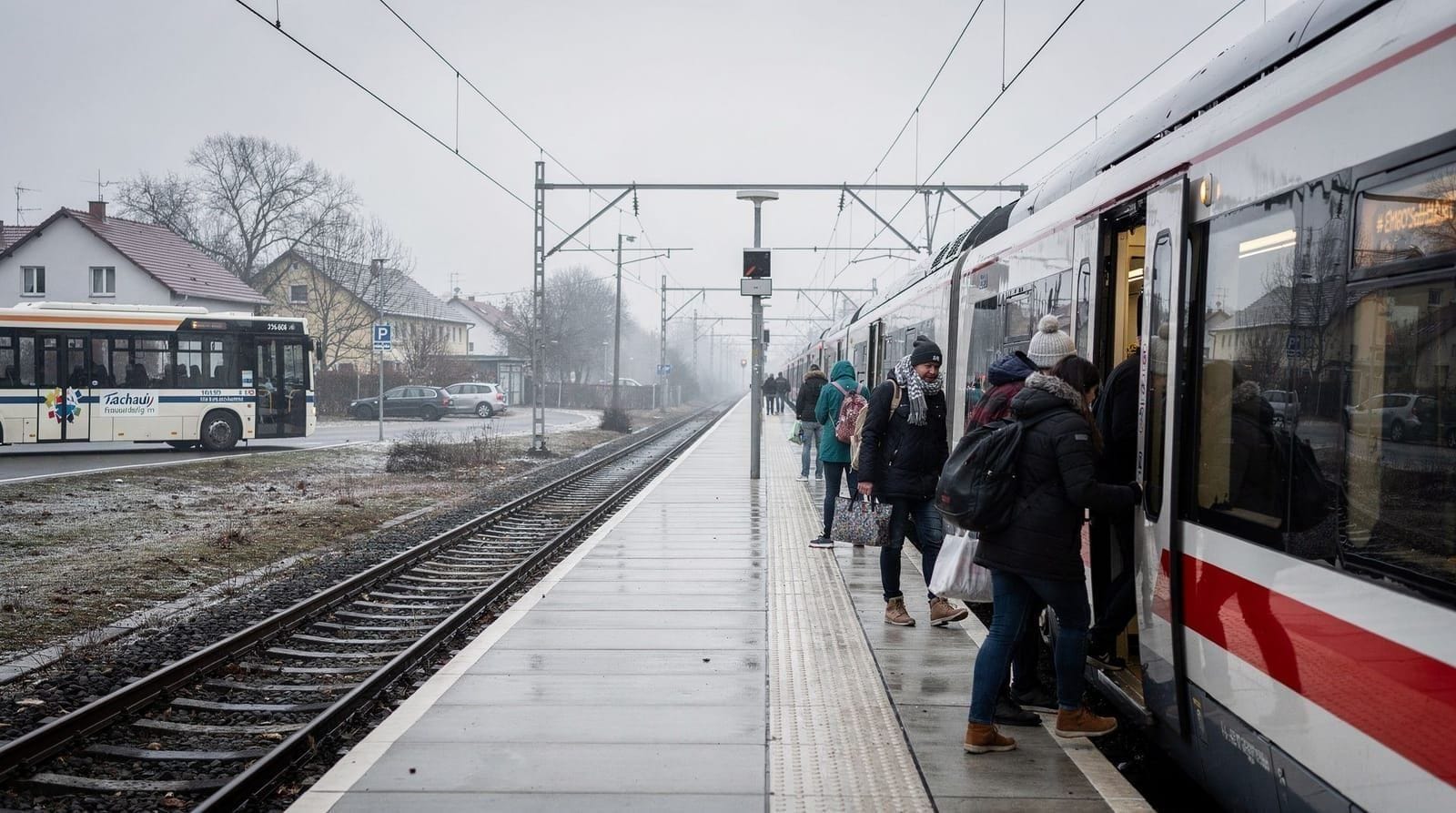
By public transport (recommended):
- S2 S-Bahn from Munich Hauptbahnhof (central station) to Dachau station — approximately 25 minutes, runs every 20 minutes
- From Dachau station, take the 726 bus directly to the memorial site (KZ-Gedenkstätte stop) — about 10 minutes
- The whole journey from central Munich takes 35–45 minutes
- A Munich Tageskarte (day ticket) covering Zone M+AB or ALL covers both legs — buy the correct ticket at the station. The standard Zone M ticket does NOT cover Dachau. You need a ticket that includes the extended zone. A Bayern-Ticket also works.
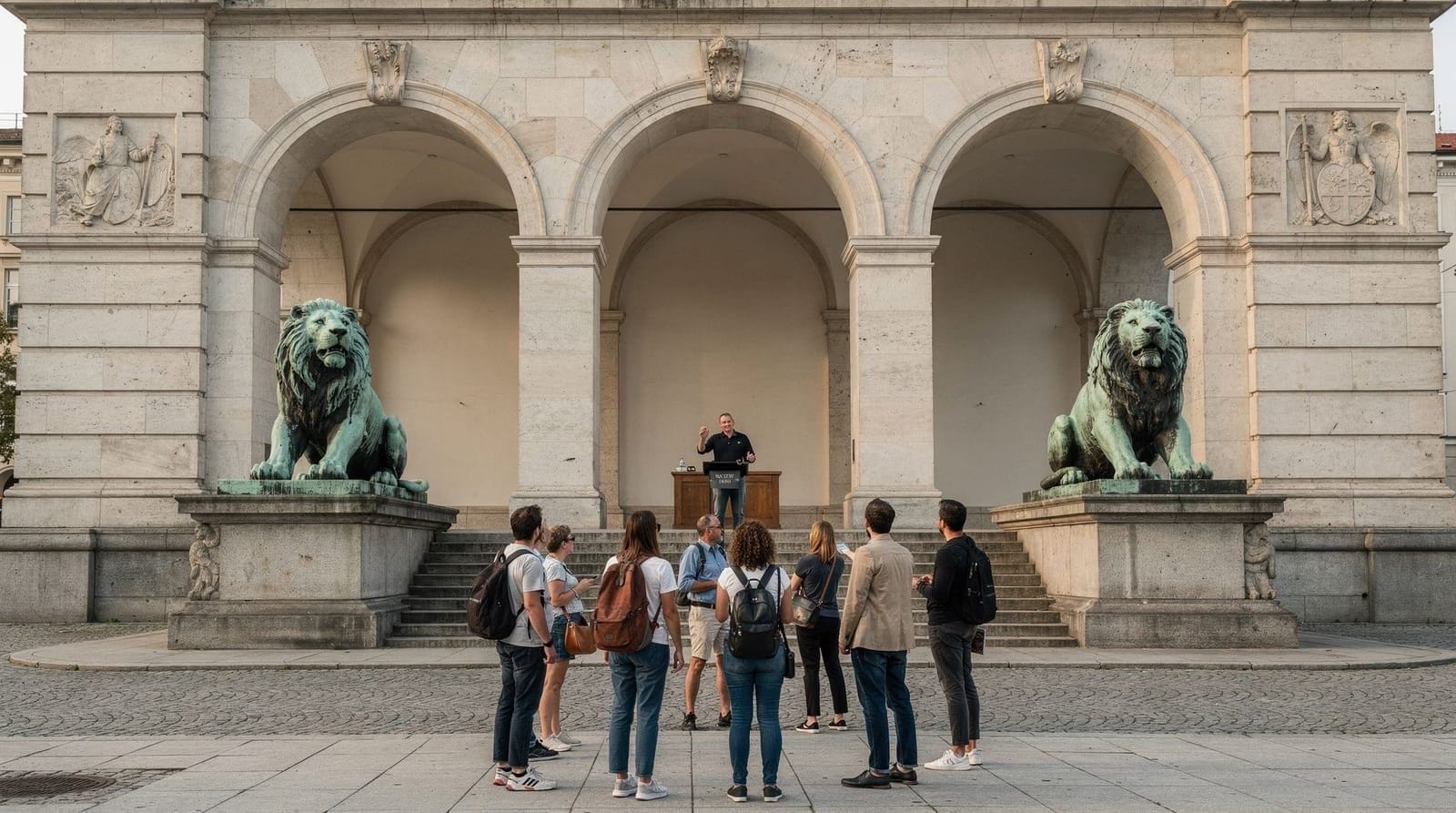
By guided tour: Multiple operators run guided tours from Munich that include transport to and from the site. These typically depart from near Marienplatz or the Hauptbahnhof and last half a day or a full day. A guided format can deepen the experience significantly — a good guide provides historical context that the exhibition alone doesn’t always convey effectively. Dachau Memorial Site guided small-group tour from Munich
A private tour option is also available if you’re traveling with family or a small group and want a more focused experience. Dachau Concentration Camp private tour by car from Munich
Our detailed Munich to Dachau day trip guide has full directions and transport options.
How long to allow
The memorial site requires more time than most visitors initially allocate. A minimum of 3 hours is needed to see the permanent exhibition and walk the main areas of the camp. Four hours is more comfortable, and some visitors take 5–6 hours.
The site includes:
- The main exhibition in the visitor center (approximately 90 minutes)
- The restored roll-call square (Appellplatz) and camp road (Lagerstrasse)
- The reconstructed and original barracks
- The crematorium and gas chamber area (Baracke X)
- Three religious memorial sites (Catholic, Protestant, and Jewish)
- The International Memorial (sculpture by Fritz Koёnig)
Walking the full site is approximately 2–3 km on flat ground.
What to expect emotionally
Dachau is a psychologically and emotionally demanding place. The permanent exhibition presents detailed documentation of what happened here — including photographs, testimonies, and artifacts — with directness and care. The physical space of the camp, including the restored barracks and the crematorium, adds weight that words and images cannot.
It is common to feel distressed, quiet, or exhausted after a visit. This is normal and appropriate. If you are visiting with children, see the section on age considerations below.
Give yourself time after the visit. Don’t schedule something frivolous or demanding immediately afterward. Many visitors take a quiet walk or return to their hotel before the evening.
Conduct and respect at the site
The Dachau Memorial operates clear guidelines on visitor conduct:
- Photography is permitted in most areas but should be done respectfully. Do not photograph other visitors without permission. Avoid performative selfies.
- Quiet and respectful behavior is expected throughout the site.
- Eating is permitted in the outdoor areas but not in the exhibition halls or memorial spaces.
- The site is a place of commemoration, not a backdrop for entertainment content.
These guidelines are stated on signage at the entrance and are worth reading before entering.
The exhibition in detail
The permanent exhibition was extensively redesigned in 2003 and covers seven major thematic sections:
- Dachau in the Nazi state (1933–1939)
- The prisoner society
- The SS — perpetrators and collaborators
- Daily life in the camp
- Dachau and the war (1939–1945)
- The end of the camp and liberation
- After liberation — memory and memorialization
The exhibition is thorough and well-designed. The text is in German with English translations throughout. The audio guide (4 EUR) adds significant depth at each stop.
Visiting with children
There is no official minimum age for visiting Dachau. The memorial site itself does not exclude children. However, the exhibition includes graphic historical photographs and detailed descriptions of violence, and parents should consider their child’s maturity and readiness.
As a general guide, many families with children under 12 find the exhibition too intense. Children aged 12–14 can engage meaningfully if they have some historical context beforehand — explaining what happened here, in age-appropriate terms, before arriving makes the visit more comprehensible and less purely frightening.
The site is not designed to exclude children, but it is designed for adults and students. Teachers bring school groups regularly, which reflects the site’s educational purpose.
Contextualizing Dachau within Munich’s history
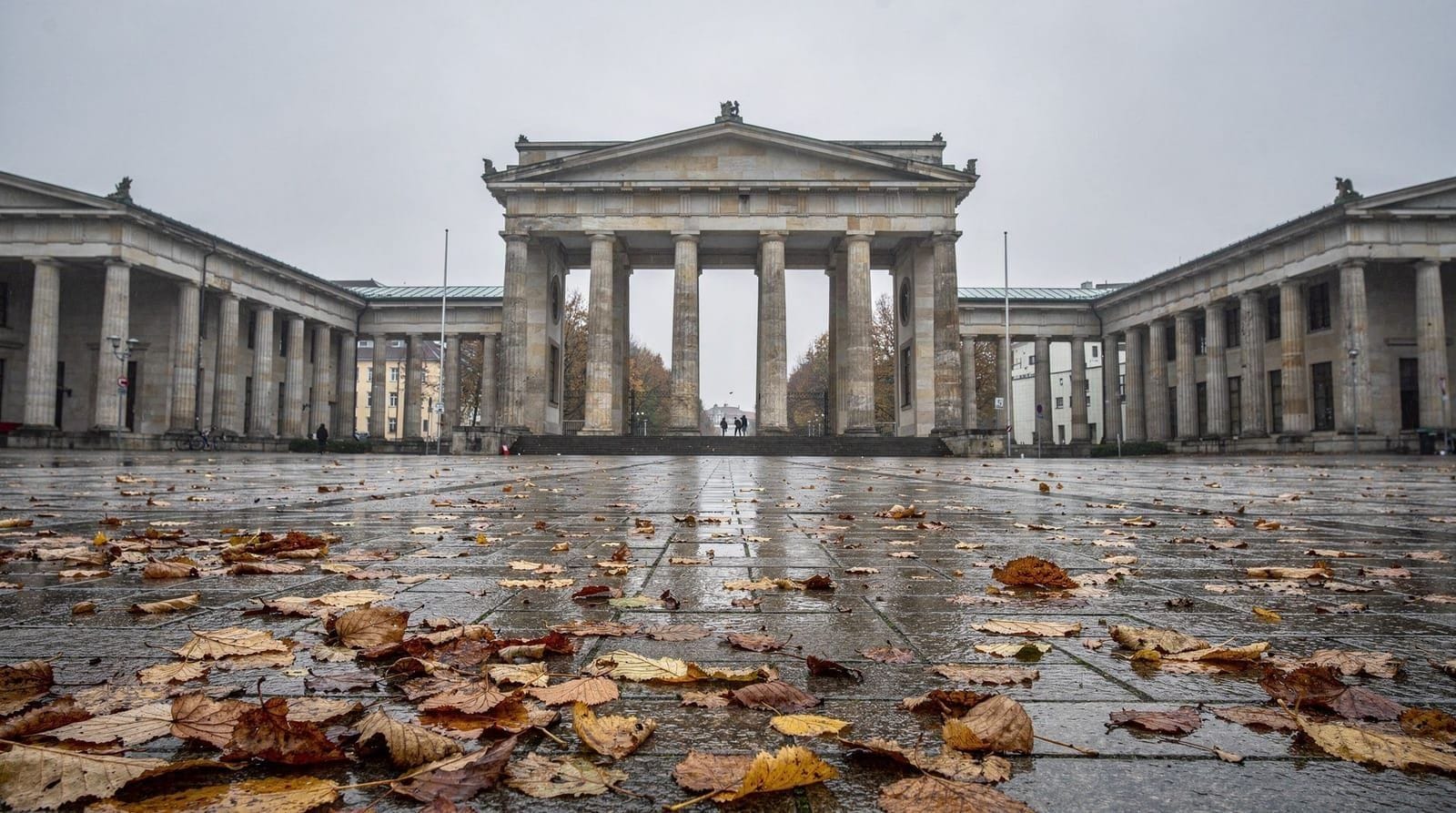
Munich has a uniquely complex relationship with the Nazi period. It was Hitler’s adopted home city, the location of the 1923 Beer Hall Putsch, and the site where the Nazi party consolidated its early power. The Königsplatz area, where Nazi rallies were held, still has visible traces of the period.
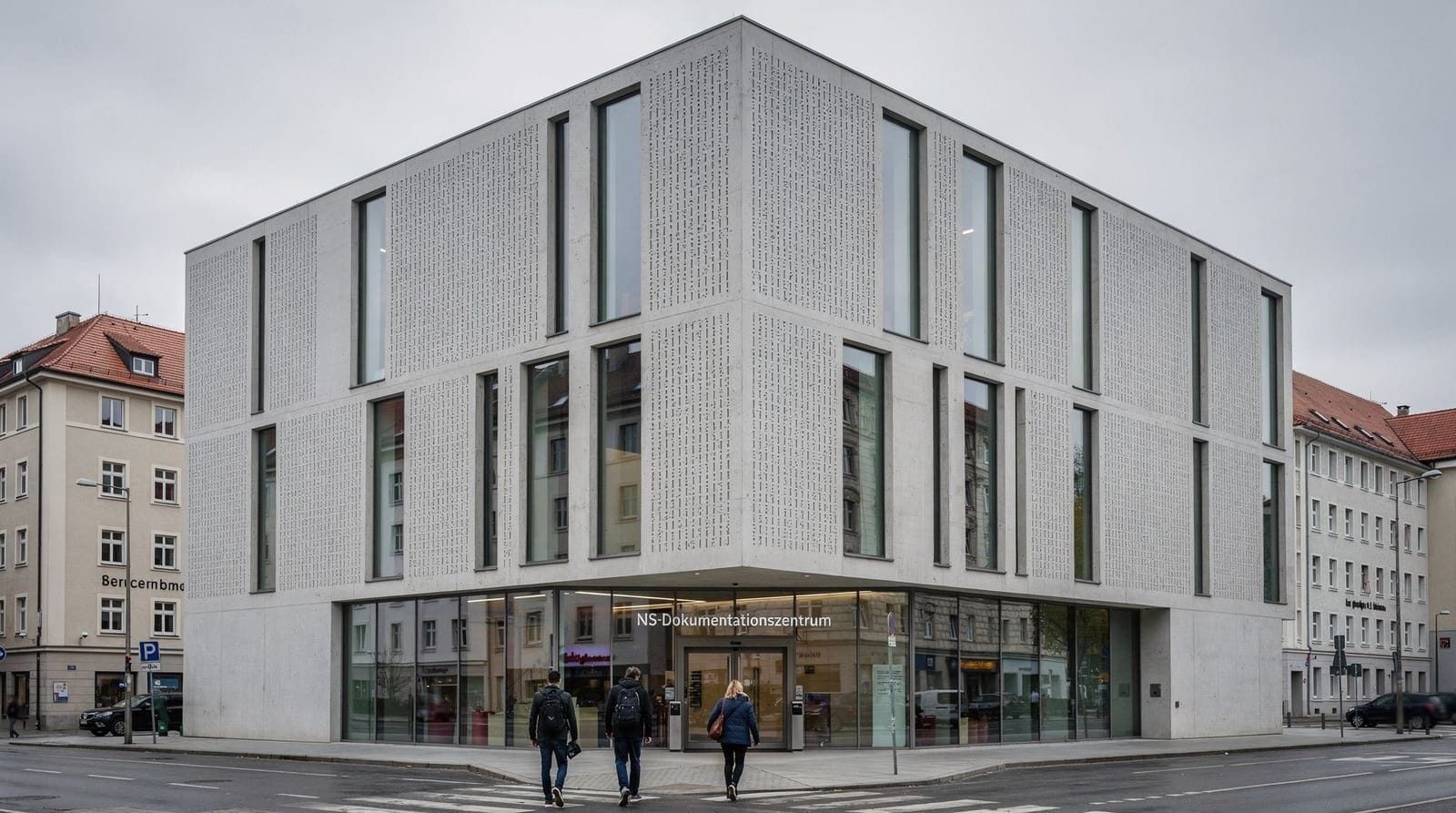
Visiting the Nazi Documentation Center in Munich (at Königsplatz) provides important political and cultural context for understanding how National Socialism rose and operated in the city. Our Munich WWII history guide connects these threads into a coherent historical picture.
Other related historical sites in Munich include the White Rose resistance memorial at Ludwig Maximilian University, and the site of the Beer Hall Putsch at the Bürgerbräukeller (now the Gasteig). Our beer hall putsch history guide provides background on that event.
If you want to build a full day or half-day around Munich’s Third Reich history rather than just Dachau, our Munich Third Reich tour guide sequences the Königsplatz sites, the Nazi Documentation Center, and Dachau into a coherent route, and the Nuremberg Trials guide covers where that history concluded, for those extending the trip.
Combining Dachau with the rest of your Munich trip
Dachau does not need to dominate your itinerary. Most visitors do it as a half-day or full-day trip and spend the rest of their stay on Munich’s other sides — the Marienplatz and Altstadt core, the beer gardens, and the museums. There’s no requirement to treat the day of your visit as entirely subdued; many people visit Dachau in the morning and have a normal, lighter evening. What matters is giving the visit itself the unhurried attention it needs, not how you structure the rest of the week. See our Munich trip planning guide for how to fit a half-day like this into a broader schedule.
Common questions from visitors
Should I take a guided tour or go independently?
Both are valid. Going independently with the audio guide is perfectly adequate if you have some background knowledge of the Nazi period and World War II. A guided tour (either small group or private) adds interpretive context that the exhibition alone doesn’t always provide — particularly regarding the experiences of different groups of prisoners (Jews, political prisoners, homosexuals, clergy, etc.) and the camp’s function within the broader Nazi system.
If this is your first encounter with this history, a guided tour is worth the additional cost.
Is Dachau appropriate to visit during Oktoberfest or a fun trip to Munich?
Yes. The two things coexist. Visiting Dachau during an otherwise leisure-focused Munich trip is a choice that many visitors make and that the memorial itself explicitly encourages — Munich’s history includes both its vibrant cultural life and its role in the Nazi period. The contrast is part of understanding Germany honestly.
What is the difference between Dachau and other concentration camp sites?
Dachau was the first Nazi concentration camp (1933) and is the best-preserved of the camps on German soil. It functioned primarily as a political prisoner camp and a training ground for SS personnel who later ran other camps. The death camps of the Holocaust — Auschwitz-Birkenau, Treblinka, Sobibór — were separate facilities built later, primarily in occupied Poland, specifically for the mass murder of Jews and others. Dachau had a gas chamber that was built but whose use for mass killings remains historically disputed; the primary cause of death at Dachau was disease, malnutrition, execution, and the effects of slave labor.
Is the memorial site well signposted from Munich?
Yes. From Dachau train station, the 726 bus is clearly marked. From the bus stop at the memorial, the entrance is visible. The Munich tourist office also provides clear directions.
Can I visit Dachau in under 2 hours if I’m short on time?
You can, but it isn’t recommended. Rushing the permanent exhibition and the grounds undermines the purpose of the visit. If your schedule genuinely only allows 2 hours including travel, it’s more honest to postpone the visit to a future trip than to see it superficially. A minimum of 3 hours on-site, plus travel, is the realistic floor.
Is there anywhere to eat near the memorial site?
There is a small café within the visitor center for a coffee or light snack, but it is deliberately modest rather than a full restaurant experience — this isn’t a place designed around dining. Most visitors eat before arriving or after returning to Dachau town or Munich. The Dachau town centre, a short bus or walk from the memorial, has ordinary cafés and restaurants if you want a proper meal nearby.
Resources for further reading
- Official memorial site: gedenkstaette-dachau.de (multilingual)
- Harold Marcuse’s comprehensive academic resource at marcuse.faculty.history.ucsb.edu
- Paul Berben, “Dachau 1933–1945: The Official History” (published by the International Dachau Committee)
The Dachau Memorial Guide on this site provides additional practical information and historical background for those who want more depth before visiting.