Dachau Memorial Site tour from Munich — what to expect in 2026
From Munich: Dachau Memorial Site day tour
Understanding what a Dachau memorial tour is
A visit to the Dachau Concentration Camp Memorial Site is not a leisure excursion. It is a historical and moral act — a deliberate choice to bear witness to events that occurred 16 kilometres from Munich city centre between 1933 and 1945. This page reviews the guided tour options from Munich to help you decide whether a guided group visit serves your purposes better than going independently.
The memorial site itself is managed by the Bavarian State Government and the Comité International de Dachau — a survivors’ organisation — and admission is permanently free. A guided tour from Munich charges for transport and professional historical guidance, not access. Book the Dachau Memorial Site tour from Munich
| Where | Dachau, around 16 km / 45–55 min from central Munich |
| Cost | Site entry free; guided tours from Munich around €30–55, private cars €80–120 |
| Time needed | At least 2.5–3 hours at the site, half a day including transport |
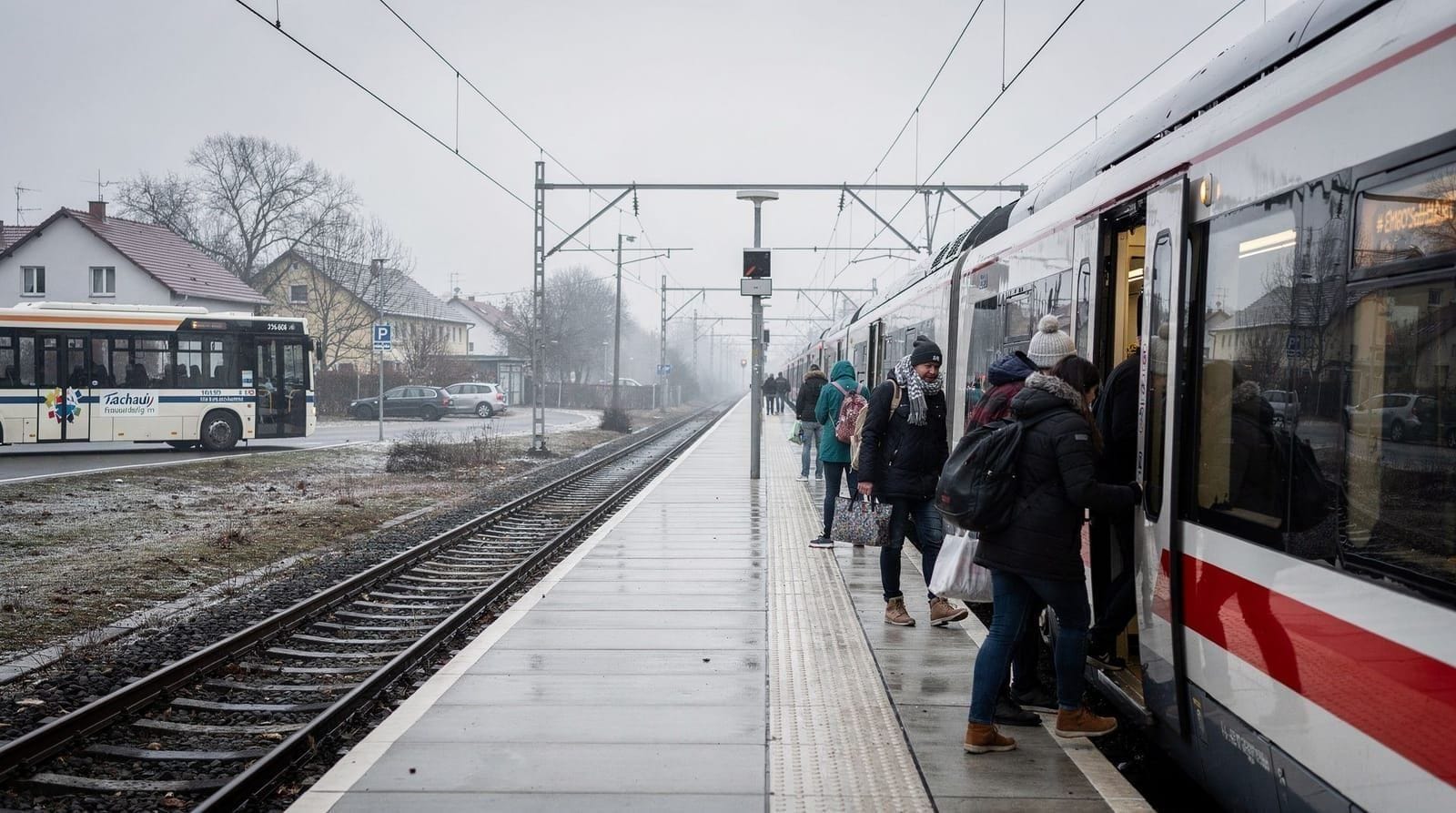
| Getting there | S2 to Dachau station, then bus 726 to KZ-Gedenkstätte |
| Best time | Weekday mornings for smaller groups; avoid the last hour before closing |
What the guided tour covers
A standard guided Dachau tour from Munich departs from a central Munich pick-up point — typically near the Hauptbahnhof — at around 9:00–10:00 am. The journey by bus or train takes 45–60 minutes. Once at the site, the guide leads the group through:
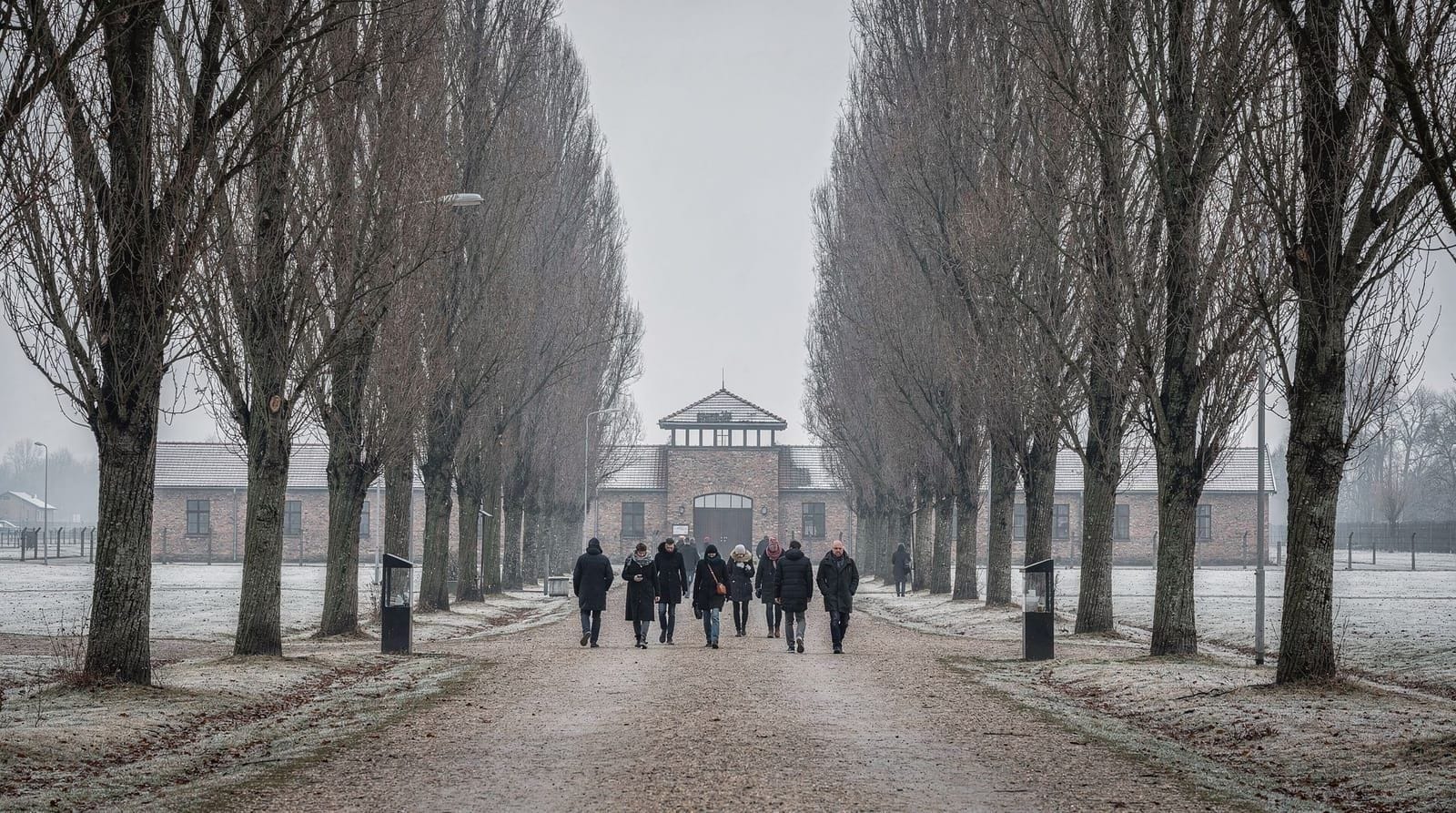
The gatehouse and entrance road — the Jourhaus gate with its notorious iron inscription Arbeit macht frei (“work sets you free”). The guide explains the camp’s establishment in March 1933 as the Nazis’ first systematic concentration camp, initially intended for political prisoners.
The roll-call square (Appellplatz) — the vast central square where prisoners were forced to stand for hours. The guide provides context for the daily prisoner routines, camp administration structure, and the SS guard system.
The permanent exhibition — housed in the former maintenance building, this is the core of any Dachau visit. Twelve rooms of photographs, documents, objects, and survivor testimonies trace the camp’s history chronologically, from the early prisoner categories through the medical experiments, the death marches, and the liberation by US forces on 29 April 1945. An expert guide can navigate this material with historical precision that the free audio guide approximates but cannot fully replace.
The reconstructed barracks — two of the original 34 prisoner barracks have been reconstructed to show the sleeping, sanitation, and living conditions at various points in the camp’s history.
The memorial chapels — three chapels (Catholic, Protestant, Jewish) and a Russian Orthodox church stand at the west end of the site, representing the faiths of those imprisoned here.
The crematorium complex — at the north end of the site, the original and enlarged crematorium buildings stand as a central focus of remembrance. The gas chamber, disguised as a shower room and labelled “Brausebad,” was never used for mass killing at Dachau itself — a distinction guides explain carefully, as it is often misunderstood.
Why a guided tour adds value at this site
The historical complexity of Dachau warrants expert guidance more than almost any other site in the Munich region. Several specific reasons:
Contextualising the camp’s role. Dachau was not an extermination camp — it was a concentration and forced-labour camp that served as the model for the SS camp system. Understanding this distinction, and why Dachau’s prisoners died from disease, starvation, overwork, and medical experiments rather than systematic gassing, requires context that the standard audio guide handles inadequately.
The perpetrator history. Dachau was the training ground for SS concentration camp guards across the entire Nazi system. The guides who specialise in this site understand the institutional history of the SS-Totenkopfverbände and can explain how ordinary Germans became perpetrators — a question with continuing moral relevance.
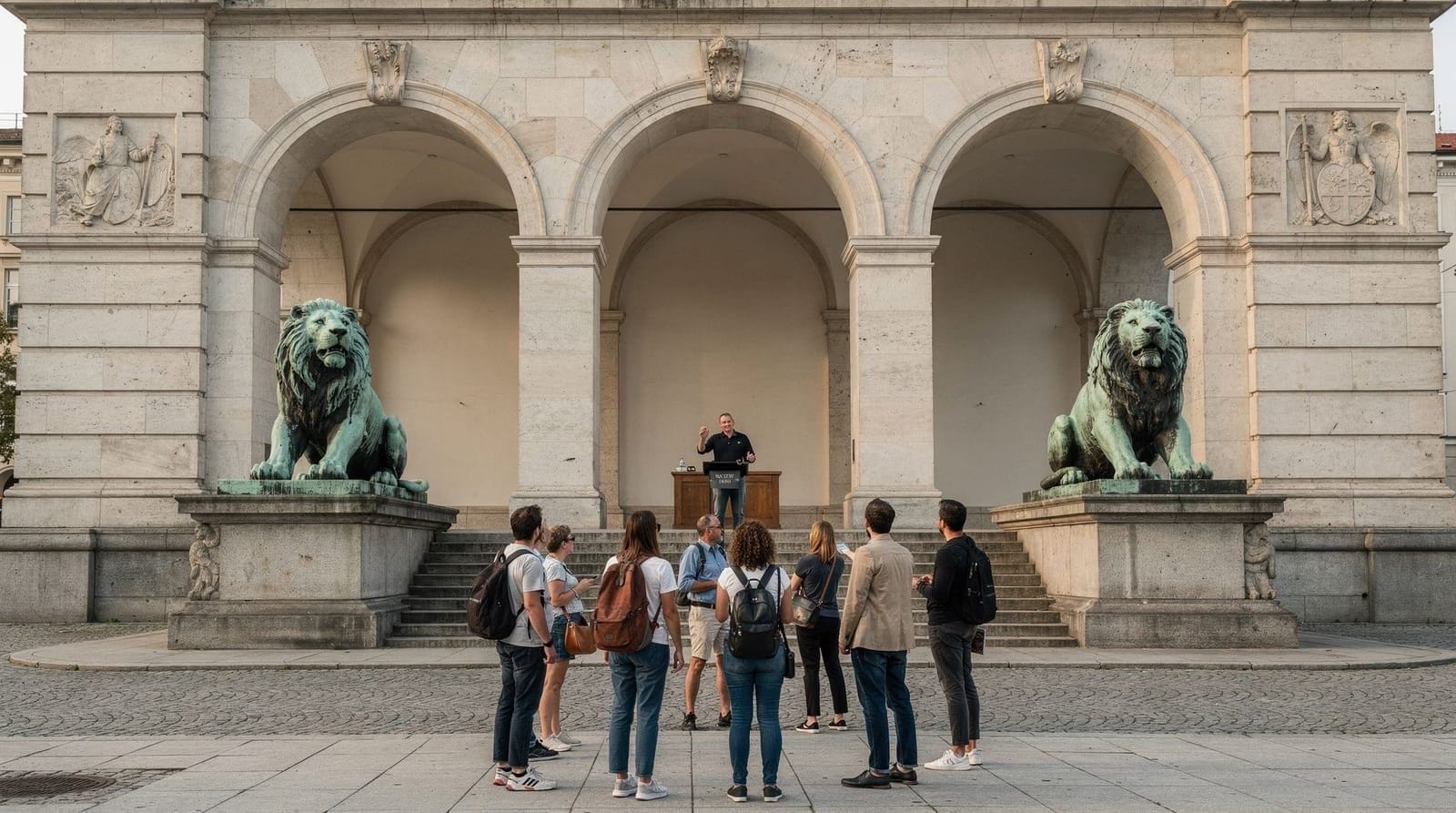
Survivor testimony context. Reputable guides integrate specific survivor accounts into their narratives, humanising statistics that can otherwise numb rather than instruct. Small-group Dachau memorial tour — more personal format
Independent visit versus guided tour
Going independently is a fully valid choice. The site’s own free audio guide (available in multiple languages at the visitor centre) covers the permanent exhibition thoroughly. The recommended independent route takes 3–4 hours for a thorough visit.
Transport independently: S2 S-Bahn from Munich Hauptbahnhof or Marienplatz to Dachau station (approximately 20 minutes, every 20 minutes). Then bus 726 from Dachau station to KZ-Gedenkstätte stop (approximately 11 minutes). The journey uses a standard Munich MVV day ticket (€10.60 single zone, or covered by a Bayern-Ticket). See the Munich to Dachau day trip guide for complete transport instructions.
Why to book a guide: A specialist guide who has studied the camp’s history — and ideally has personal or familial connection to this period — offers something the audio guide cannot: a living interlocutor who responds to your questions, reads your group’s engagement, and can emphasise the aspects most relevant to what you already know. For educators, students, or anyone for whom this visit is professionally or personally significant, a guide is the stronger choice.
| Approach | Cost per person | Time at site | Guide quality |
|---|---|---|---|
| Independent S-Bahn + audio guide | ~€11 transport | Self-directed | Audio guide (adequate) |
| Half-day guided bus tour | ~€30–40 | 2–2.5 hours guided | Professional historian |
| Small-group guided tour | ~€40–55 | 2.5–3 hours guided | Small-group engagement |
| Private car tour | ~€80–120 | Flexible | One-on-one guide |
How to visit respectfully
The Dachau Memorial Site has a code of conduct, and the following is worth knowing:
- Photography is permitted throughout the site, including in the permanent exhibition, except in areas where signage asks otherwise. The site management encourages photographic documentation as part of witnessing.
- Visitors should dress and behave appropriately to a place of remembrance. Large groups should maintain quiet in the memorial areas.
- Eating is permitted in the designated area near the visitor centre entrance, not in the main site areas.
- The site has no café or restaurant on-site. There is a small bookshop at the visitor centre with an excellent selection of historical publications, including survivor memoirs.
- Children are welcome but should be accompanied and prepared by parents. The memorial provides age-appropriate guidance.
Preparing before you go
Most visitors find it helps to read some background before arriving, rather than absorbing the full historical context for the first time on-site. The Dachau Memorial Site guide covers the camp’s chronological history in more depth than a guide can narrate in a single visit, and reading it beforehand means you can spend your time at the site absorbing the exhibition rather than following a first introduction to the facts. Emotionally, allow a quiet afternoon or evening afterwards rather than scheduling something celebratory straight after — many visitors want time to process the visit rather than move straight on to sightseeing.
Group size and format considerations
Coach-based half-day tours typically run larger groups (20–40 people), which keeps the price down but means less opportunity to ask the guide questions and a more fixed pace through the exhibition. Small-group tours cap at around 8–15 people and allow more flexibility — worth the extra cost for anyone visiting for research, education, or personal/family history reasons. Private car tours suit visitors who want full control over pacing, or who are combining Dachau with a specific personal or professional interest that a group format cannot accommodate.
What the memorial asks of visitors
The Comité International de Dachau, whose members include Dachau survivors and their descendants, has defined the memorial’s educational mission clearly: to remember, to document, and to draw lessons that prevent recurrence. This framing matters for how you approach the visit. It is not a museum of past events — it is an active site of conscience.
The Dachau Memorial Site guide on this site provides the full historical background, including the camp’s chronological history from 1933 to 1945 and a description of every major area of the site. The Munich WWII history guide places Dachau in the broader context of Munich’s central role in National Socialism.
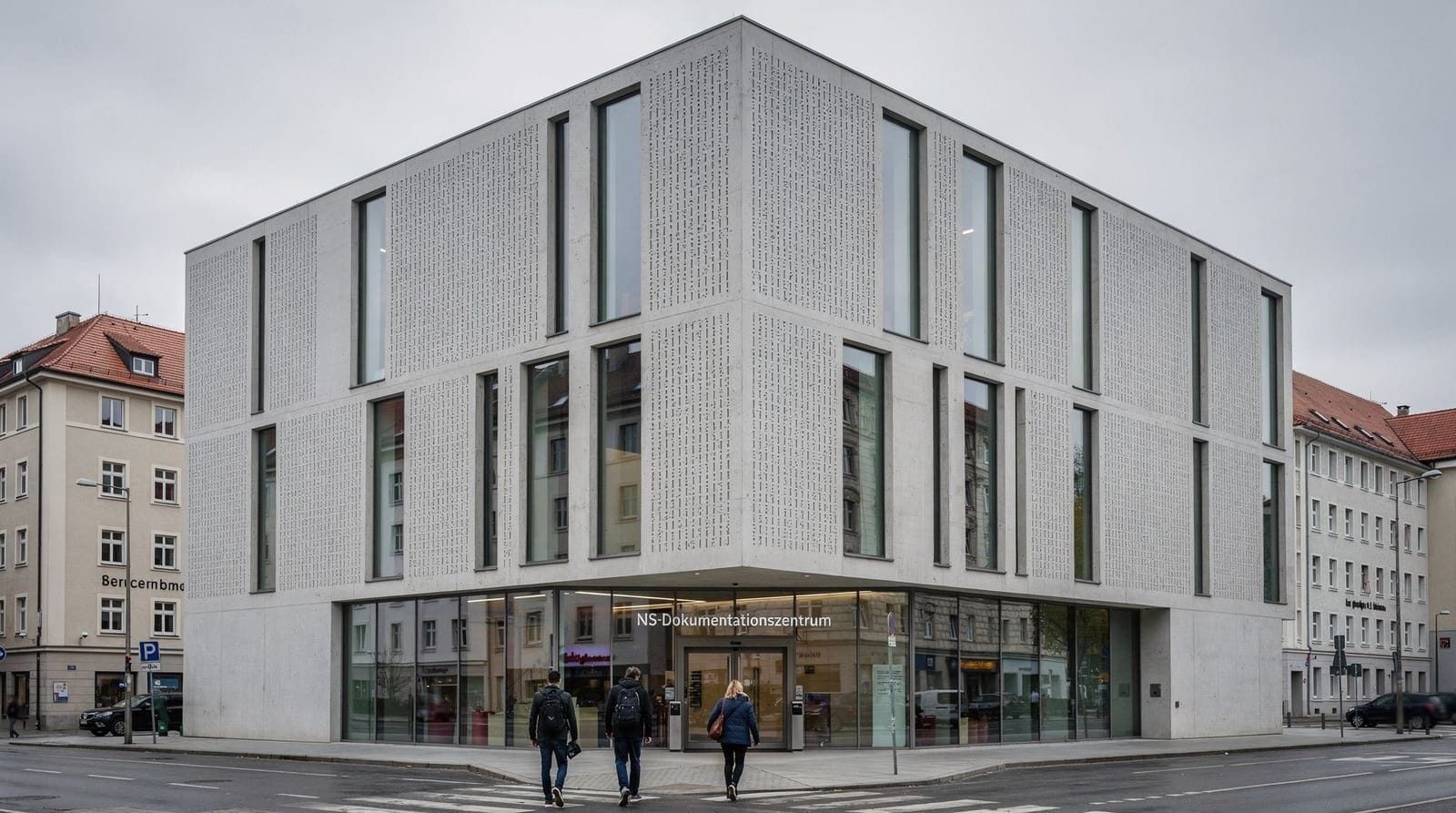
For a wider picture of how Munich confronts this history, see the Nazi Documentation Center guide — a purpose-built museum in Munich’s former Nazi Party administrative quarter — and the White Rose resistance guide, covering the student resistance group based at Ludwig Maximilian University.
Practical information 2026
Site opening hours: Tuesday–Sunday, 09:00–17:00. Last entry 16:30. Closed Monday, 24 December, and 31 December.
Address: Alte Römerstraße 75, 85221 Dachau.
Transport: S2 from Munich Hauptbahnhof towards Petershausen; alight Dachau (Zone MVV zones AB). Bus 726 from Dachau station. Total journey approximately 55 minutes from Munich centre.
Visitor centre facilities: Free audio guides in German, English, French, Italian, Spanish, Russian, Hebrew, Polish, and Czech. Bookshop. Limited accessible parking. Half-day Dachau tour from Munich — half-day format
Frequently asked questions about this tour
Is Dachau Memorial Site free to enter?
Yes — admission to the Dachau Concentration Camp Memorial Site is free for all visitors. The guided tour price covers transport from Munich and the cost of the guide’s time, not entry.
How long does the Dachau memorial tour from Munich take?
Half-day tours take approximately 4–5 hours including transport. Full-day tours allow more time at the site. Plan at least 2.5 hours at the memorial itself to see the permanent exhibition, memorial chapels, and reconstructed barracks.
Is it appropriate to bring children to Dachau?
The memorial site is recommended for visitors aged 14 and above. The permanent exhibition contains graphic historical documentation. Younger children can visit but parents should prepare them and may wish to skip certain sections.
Can I visit Dachau independently without a guided tour?
Yes. Take the S2 S-Bahn from Munich Hauptbahnhof to Dachau station (20 minutes), then bus 726 to the KZ-Gedenkstätte stop (11 minutes). The site is open Tuesday–Sunday, 09:00–17:00. A free English audio guide is available at the visitor centre.
What is included in the guided tour?
Transport from Munich, an expert guide who provides historical context throughout the visit, and access to the site. The memorial’s own audio guide is separate and available at the site.
Is the tour suitable for people with limited mobility?
The memorial site is largely accessible and flat. The permanent exhibition building is fully accessible. Some external areas have gravel paths. Notify your tour operator in advance for specific accommodation needs.
What is the best time of year to visit?
The site is open year-round. Spring and autumn have manageable visitor numbers. Summer weekends see the largest crowds. Winter visits are quieter and the subdued atmosphere matches the nature of the site.
Should I combine Dachau with other Munich history sites the same day?
It is possible but not always advisable — many visitors prefer to give Dachau its own day and visit the Nazi Documentation Center or White Rose resistance sites separately, so that neither visit feels rushed and there’s time to process the material between them.
Is a small-group tour worth the extra cost over a coach tour?
For most visitors, yes if budget allows — small groups of 8–15 people get more direct interaction with the guide and a more flexible pace through the exhibition, compared with the fixed schedule typical of 20–40 person coach tours.