Munich flea markets guide 2026
Where are the best flea markets in Munich?
The largest and most established flea market is the Olympiapark Flohmarkt, held regularly on the Olympiapark grounds — typically the first Sunday of each month from spring to autumn. The Theresienwiese (Oktoberfest grounds) hosts large flea markets in spring and autumn. Several smaller neighbourhood Flohmarkts run on weekends throughout the city.
Flea market culture in Munich
Munich’s flea market culture (Flohmarkt in German) reflects the city’s character: well-organised, reasonably priced for what is on offer, and genuinely productive for buyers with patience. The city has a tradition of large outdoor markets on the grounds of major public spaces — the Olympiapark and the Theresienwiese — alongside a network of smaller neighbourhood markets.
Munich flea markets are neither as cheap as Eastern European markets nor as upscale (or expensive) as Paris antique markets. They occupy a middle ground: genuinely second-hand goods at prices that reflect their age and condition rather than artificial vintage premiums, in a context that is accessible to non-German speakers and easy to navigate.
This guide covers the main markets, dates, what to expect, and practical tips for getting the most out of a visit.
| Biggest market | Olympiapark Flohmarkt (1,000–2,000 pitches) |
| Season | March–October, outdoor markets pause in winter |
| Entry | Around €2–4 for buyers |
| Payment | Cash only — bring small notes |
| Getting there | U3 Olympiazentrum (Olympiapark), U4/U5 Theresienwiese |
Olympiapark Flohmarkt — the largest market
Location: Olympiapark, Munich (grounds adjacent to the Olympic Stadium) Frequency: Typically the first Saturday or Sunday of the month, March–October Hours: Usually 07:00 or 08:00 to 16:00 or 18:00 Entry: Approximately €2–3 for buyers Transport: U3 to Olympiazentrum
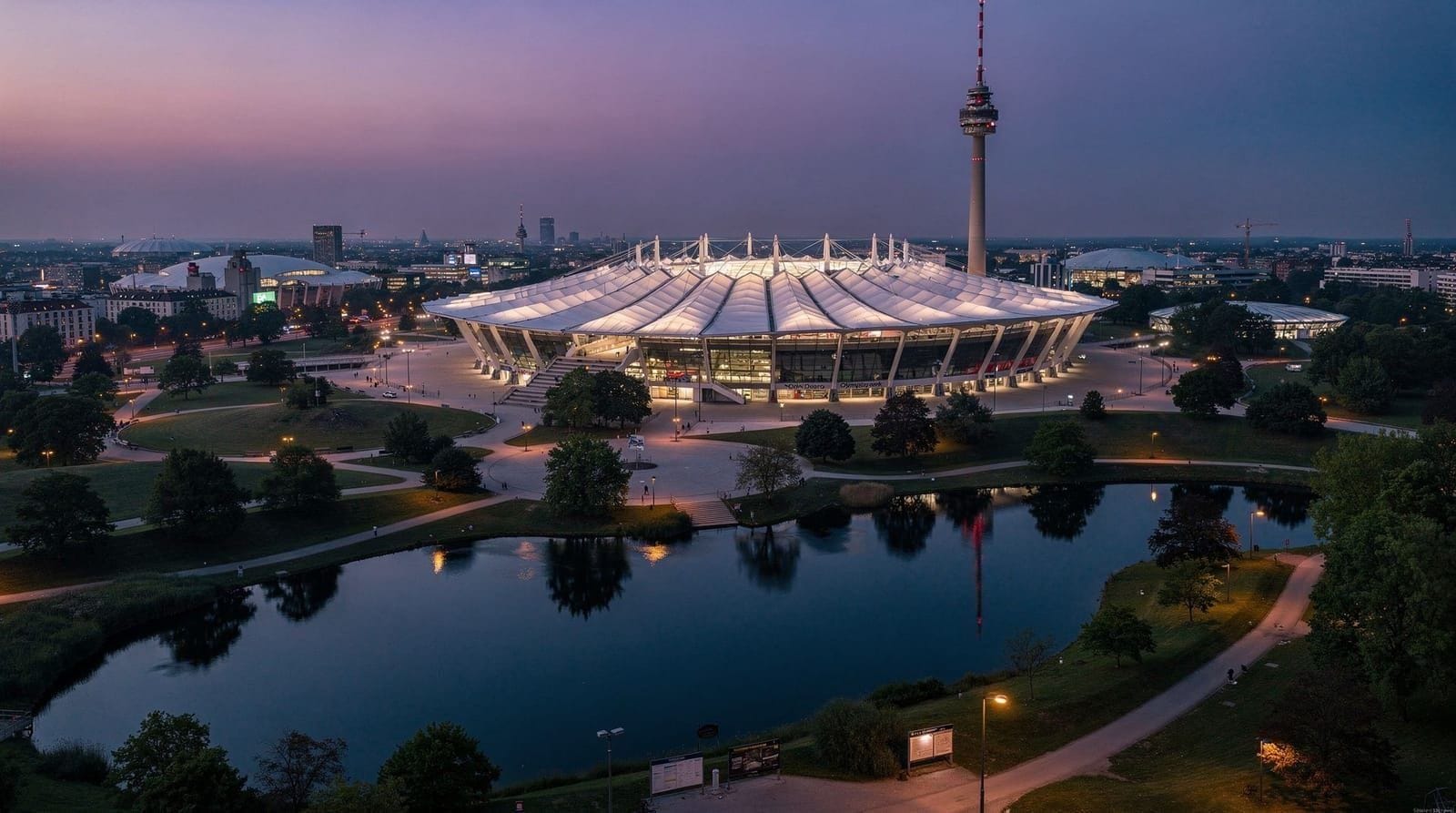
The Olympiapark Flohmarkt is the largest regular flea market in Munich and one of the largest in Bavaria. It typically runs with 1,000–2,000 seller pitches spread across the parking areas and grounds adjacent to the Olympic Stadium and Olympic Lake.
The market is a mix of private sellers clearing out household goods and professional dealers with curated stock. The private sellers are where you find genuine bargains — particularly in the categories of vintage clothing, old books and records, kitchenware, and household items. The professional dealers carry higher-quality antiques and collectibles but at prices that reflect their expertise.
What to look for:
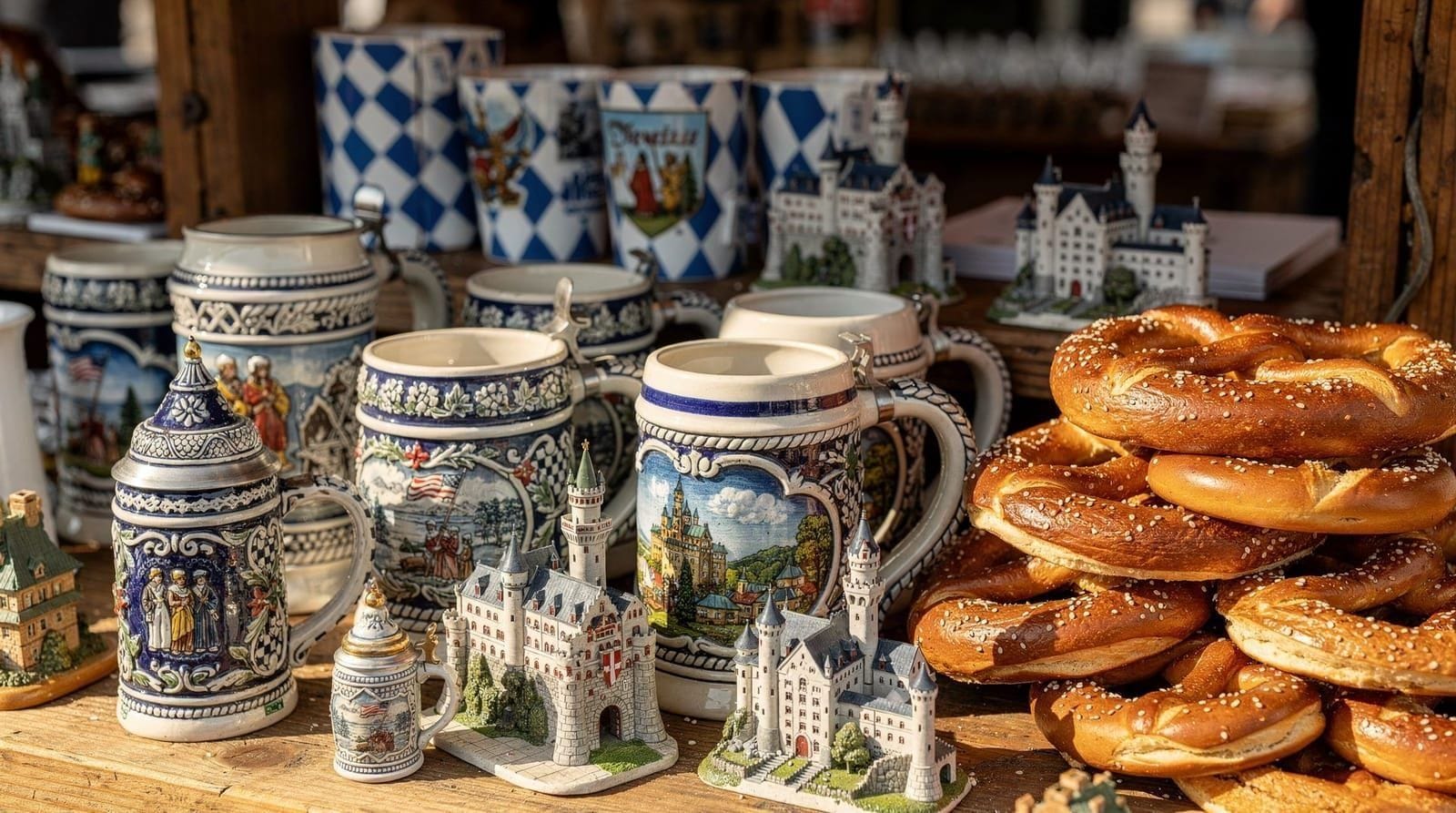
- Vintage Bavarian ceramics: Regional pottery, particularly from Dachau and the surrounding area, appears regularly at Munich flea markets. Look for blue-and-white painted pieces with regional motifs — these are genuinely Bavarian and often sell for €10–30.
- Vinyl records: Munich has a strong record collecting scene, and the Olympiapark market is one of the better places to find German pressings of jazz, classical, and rock from the 1960s–1980s.
- Old photography and postcards: Bavarian landscape postcards and early 20th-century photography appear at dealer stalls. Prices start at €2–5 for common cards.
- Second-hand books: German-language titles predominate, but English books appear sporadically. If you read German, the market is a good source for old travel guides, illustrated Bavaria books, and out-of-print regional histories.
- Vintage sports equipment: Munich’s alpine culture means old hiking boots, ski equipment, and mountaineering gear appear regularly. Quality varies but genuine vintage gear from established German brands (Salewa, Lowa) can be found.
Strategy: Arrive early (07:30–08:00 for an 07:00 opening) and walk the perimeter of the market before the main aisles — many of the best private sellers set up at the edges. Carry cash; cards are rarely accepted. A cotton bag or backpack is more practical than a hard bag.
The Olympiapark guide covers the wider park — combining a flea market visit with a walk around the Olympic grounds makes a full morning.
Theresienwiese Flohmarkt — the spring and autumn markets
Location: Theresienwiese (the Oktoberfest grounds, near U4/U5 Theresienwiese) Frequency: Typically April/May and October/November (exact dates vary by year) Hours: 07:00–18:00 approximately Entry: €2–4
The Theresienwiese — the large public space that hosts Oktoberfest in late September and early October — hosts large flea markets in spring and autumn. These are comparable in scale to the Olympiapark market and attract a similar mix of private sellers and professional dealers.
The autumn Theresienwiese market coincides roughly with the end of the Oktoberfest season, which means the city is in a post-festival mood and the market atmosphere is particularly relaxed. The spring market, typically in April or May, is the first major outdoor market of the year and tends to attract sellers clearing out storage after winter — good for furniture, larger items, and winter-specific goods.
The Theresienwiese market is located between the main train station (Hauptbahnhof) and the Glockenbachviertel, making it easy to combine with other activities in that part of the city.
Au-Haidhausen Flohmarkt and neighbourhood markets
Munich’s residential neighbourhoods host smaller, irregular flea markets throughout the year. These are typically one-off events or irregular series rather than fixed monthly markets. The neighbourhoods most active in this regard:
Au-Haidhausen: The Mariahilfplatz and surrounding streets in this east-of-Isar neighbourhood occasionally host small Flohmarkts, often organised by local residents’ associations. These are genuinely neighbourhood-scale events, not commercial enterprises.
Schwabing/Maxvorstadt: The university district hosts occasional swap meets and smaller markets, often with a focus on books, records, and student goods. Timing is irregular — check local community boards (schwarzes Brett) at cafés and universities.
Neuhausen-Nymphenburg: The residential neighbourhood west of the centre has regular neighbourhood markets in spring and summer, typically at local squares or school grounds. These function more as community events than commercial markets.
For these smaller markets, the best source of up-to-date information is the local Munich website münchen.de and the Facebook groups dedicated to Munich Flohmarkt events, which aggregate both major and minor markets.
What you will actually find at Munich flea markets
Realistic expectations: Munich is an affluent city, which means the goods at flea markets are generally in reasonable condition (Münchners maintain their possessions well) but not cheaply priced. You will not find the chaotic bargains of a market in a city with lower average incomes. What you will find is well-preserved second-hand goods at prices that are fair for what they are.
Good buys:
- Vintage clothing in good condition (particularly at the Au-Haidhausen and Schwabing neighbourhood markets, which attract younger sellers)
- Old illustrated books on Bavaria, Munich, and Bavarian history (cheap and genuinely interesting)
- Second-hand hiking and outdoor equipment from German brands
- Vintage Bavarian kitchenware — the blue and white enamelware used in traditional Bavarian homes
- Old German board games and children’s books (popular with German expats visiting Munich)
Overhyped categories:
- Genuine antiques of high value: these get bought early by professionals or don’t make it to general Flohmarkts. Serious antique buyers in Munich use specialist auction houses (Neumeister and others) rather than flea markets.
- Designer vintage clothing: quality vintage fashion in Munich is channelled toward specialist vintage clothing shops (several in the Glockenbachviertel) rather than flea markets.
How to buy at Munich flea markets
Language: German is the working language but most sellers will attempt English if you try German first. The words you need: “Wie viel kostet das?” (How much is this?), “Können Sie etwas rabattieren?” (Can you give a discount?), and “Ich nehme es” (I’ll take it).
Payment: Almost exclusively cash. Bring €80–100 for a serious buying visit. Small denomination notes (€5, €10, €20) make negotiation easier.
Bags: Bring your own bags. Sellers do not provide packaging. A large cotton tote or a day bag is essential.
Parking: The Olympiapark market generates significant car traffic. Public transport (U3 to Olympiazentrum) is more reliable than trying to park, particularly for the early morning rush.
Weather: Munich outdoor markets run in almost any weather short of heavy rain. In spring and autumn, prepare for cold mornings (4–10°C at 08:00). By midday the temperature is usually more comfortable.
For purchasing souvenirs and Bavarian-specific items, the best souvenirs Munich guide is a useful complement — it covers what is worth buying in Munich more broadly.
Comparing Munich’s main flea markets
| Market | Size | Frequency | Best for |
|---|---|---|---|
| Olympiapark Flohmarkt | Largest (1,000–2,000 pitches) | Monthly, March–October | Vinyl, ceramics, outdoor gear |
| Theresienwiese Flohmarkt | Large, seasonal | Spring & autumn | Furniture, larger items |
| Neighbourhood markets | Small, irregular | Varies by district | Vintage clothing, community feel |
Shopping strategy: combining a flea market with the rest of Munich
A Munich flea market visit works best as the anchor of a half-day rather than an isolated errand. Because the Olympiapark market runs until mid-afternoon and the Theresienwiese site sits between the Hauptbahnhof and Glockenbachviertel, both pair naturally with other shopping and sightseeing.
Olympiapark morning, Schwabing afternoon. After the market winds down around midday, the U3 puts you in Schwabing in 15 minutes, where the second-hand bookshops and record stores around Türkenstraße extend the hunting without another early start. The Olympiapark guide covers the wider park if you want to extend the morning with a walk to the Olympic Tower.
Theresienwiese market, then Glockenbachviertel vintage shops. The Theresienwiese site is a 15-minute walk from the Glockenbachviertel’s permanent vintage shops, making it easy to compare flea-market prices against curated shop prices on the same day — useful for calibrating whether a find at the market was genuinely a bargain.
Budget guidance for a serious buying day. Beyond the €80–100 cash allowance mentioned above, factor in €10–20 for lunch at the market (most stalls or nearby cafés serve Bratwurst, Brezn or coffee) and keep €20–30 in reserve for an impulse find at a specialist shop afterwards. A realistic total for a full day combining a flea market and the Glockenbachviertel is €120–160 for a serious collector, considerably less for casual browsing.
Specialist vintage shops: the year-round alternative
Several permanent vintage and second-hand shops in Munich provide the curated version of the flea market experience without the early-morning commitment and weather uncertainty.
Glockenbachviertel has the best concentration: multiple vintage clothing shops on Reichenbachstraße and the cross-streets carry everything from 1970s sportswear to 1950s formal wear. The quality is higher than a flea market average but so are the prices — expect €30–80 for a quality vintage piece where the same item might have cost €15 at Olympiapark.
Maxvorstadt (around the university): Second-hand bookshops and record stores are the particular speciality here. Several shops on Türkenstraße carry used academic books, old travel guides, and illustrated art books alongside more recent second-hand titles.
The Glockenbachviertel guide at Glockenbachviertel guide covers the neighbourhood’s vintage and independent shops in more detail.
Online and alternative second-hand options
If your Munich trip doesn’t coincide with a major Flohmarkt, the German classified ads platform Kleinanzeigen (formerly eBay Kleinanzeigen) allows you to browse second-hand listings in the Munich area. Collection must be in person, but if you are spending a week in the city, it is worth checking for specific items. The platform operates in German but the listings interface is straightforward with basic German or a translation tool.
For furniture and larger household items, Kleinanzeigen is typically how Munich residents buy and sell between themselves — the volume and price points are better than at flea markets for specific high-value items.
Several specialist vintage shops in the Glockenbachviertel function as permanent, curated alternatives to flea markets for clothing, design objects, and records. These are worth visiting if your visit does not coincide with a major outdoor market.
Frequently asked questions about Munich flea markets
Is there a flea market at Viktualienmarkt?
The Viktualienmarkt does not host a regular flea market — it is a year-round food market. Antique and collectible dealers occasionally appear on the market’s periphery during special events, but this is not regular. For food market shopping, see the Viktualienmarkt shopping guide.
Can I sell at Munich flea markets as a visitor?
The Olympiapark and Theresienwiese markets allow private sellers to rent pitches. Pitch rental costs €10–30 depending on size, and you book in advance through the market organiser. As a foreign visitor, this is logistically complex but not impossible if you are in Munich for an extended period.
Are Munich flea markets open in winter?
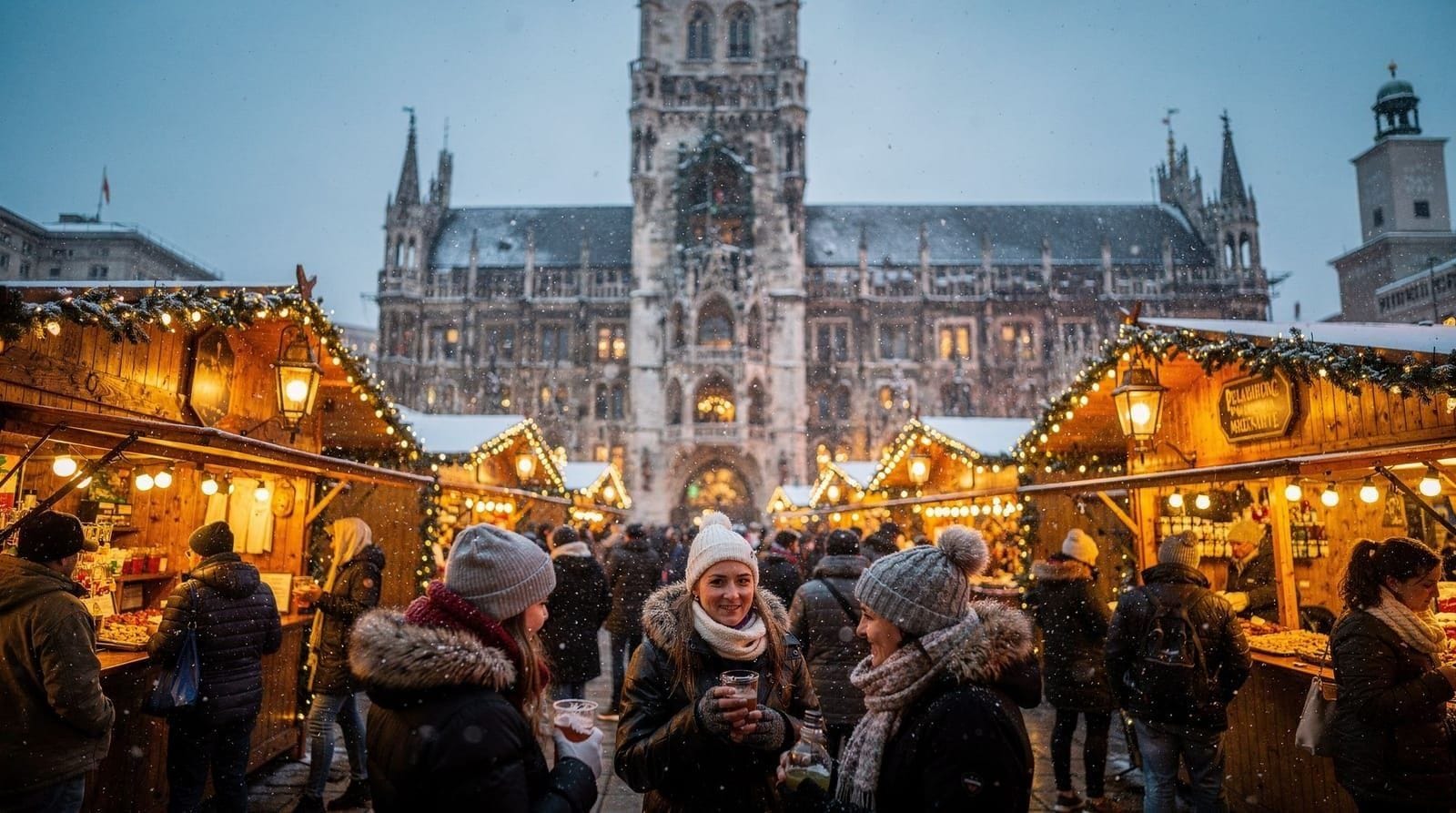
The major outdoor markets (Olympiapark, Theresienwiese) are seasonal — they generally do not run from November through February. Some covered or indoor markets run year-round. The regular Christmas market season (late November to 24 December) replaces the flea market calendar in December. See the Munich Christmas markets guide.
What is the difference between a Flohmarkt and a Trödelmarkt?
The terms are used interchangeably in Munich. Both refer to second-hand markets mixing private sellers and professional dealers. In some German cities, “Trödelmarkt” implies a higher proportion of dealers and more antique-focused goods, but in Munich the distinction is not consistently maintained.
How do Munich flea markets compare to Berlin’s?
Berlin’s flea market scene (Mauerpark, Arkonaplatz, etc.) is larger, more established as a tourist attraction, and has a more developed vintage and antique culture. Munich’s markets are less well-known internationally but equally well organised and more consistently attended by genuine locals rather than tourists.
What time should I arrive at the Olympiapark Flohmarkt to avoid crowds?
Arrive at opening (typically 07:00 or 08:00) for the quietest browsing and the best private-seller finds — the best pieces move fast among dealers who arrive early too. By 10am the market is at its busiest; by early-to-mid afternoon, sellers begin negotiating lower prices to avoid packing goods back up, which can be a good time for bargain-hunting rather than first pick.
Can I find souvenirs at Munich flea markets that aren’t available in tourist shops?
Yes — this is one of the strongest reasons to visit. Genuine second-hand Bavarian ceramics, old Munich postcards, and vintage brewery memorabilia at flea markets are typically more authentic and better priced than anything sold as a “souvenir” in the old town. Combine a flea market visit with the best souvenirs Munich guide for a fuller shopping picture.
Top experiences
Bookable activities with verified prices and instant confirmation on GetYourGuide.