Munich Christmas markets 2026: dates, locations, and what to skip
Munich Christmas markets: the actual situation
Munich’s Christmas markets (Christkindlmärkte) have a reputation that outpaces the reality in certain respects, and undersells it in others. The Marienplatz market — the one that appears on every Christmas postcard — is genuinely beautiful and genuinely crowded with a genuinely tourist-facing product range. The neighbourhood markets are smaller, less famous, and significantly more interesting.
This guide covers what to realistically expect, which markets to prioritise, and what to actually eat and drink.
| When | Late November – December 24, 2026 |
| Where | Marienplatz (main), plus Schwabing, Residenz, Sendlinger Tor, Haidhausen |
| Cost | Free entry; Glühwein around €4–6 plus €2–3 mug deposit |
| Getting there | U-Bahn/S-Bahn to Marienplatz or Odeonsplatz |
| Best time | Weekday mornings or early afternoons to avoid crowds |
2026 dates (confirmed as of June 2026)
Christmas markets in Munich traditionally open on the last Monday or Friday of November and close on December 24 (Christmas Eve). For 2026:
- Expected opening: Friday, November 27, 2026
- Expected closing: Thursday, December 24, 2026
- Hours: Most markets are open 10am–9pm daily; Marienplatz until 10pm; some smaller markets close at 8pm
These dates follow the standard Munich pattern. The official 2026 dates will be confirmed by the City of Munich in September 2026.
The Marienplatz market: what it is and what it is not
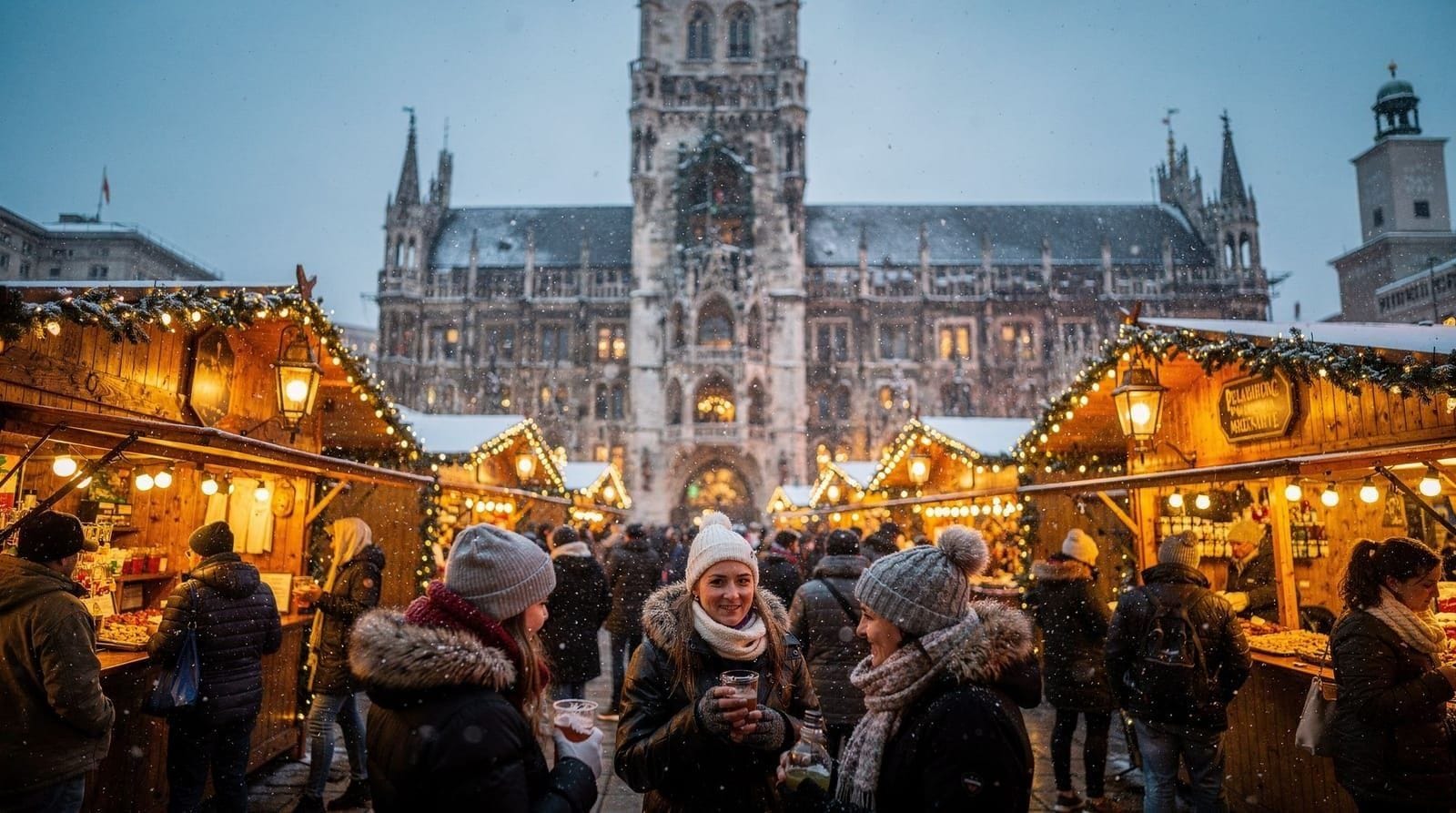
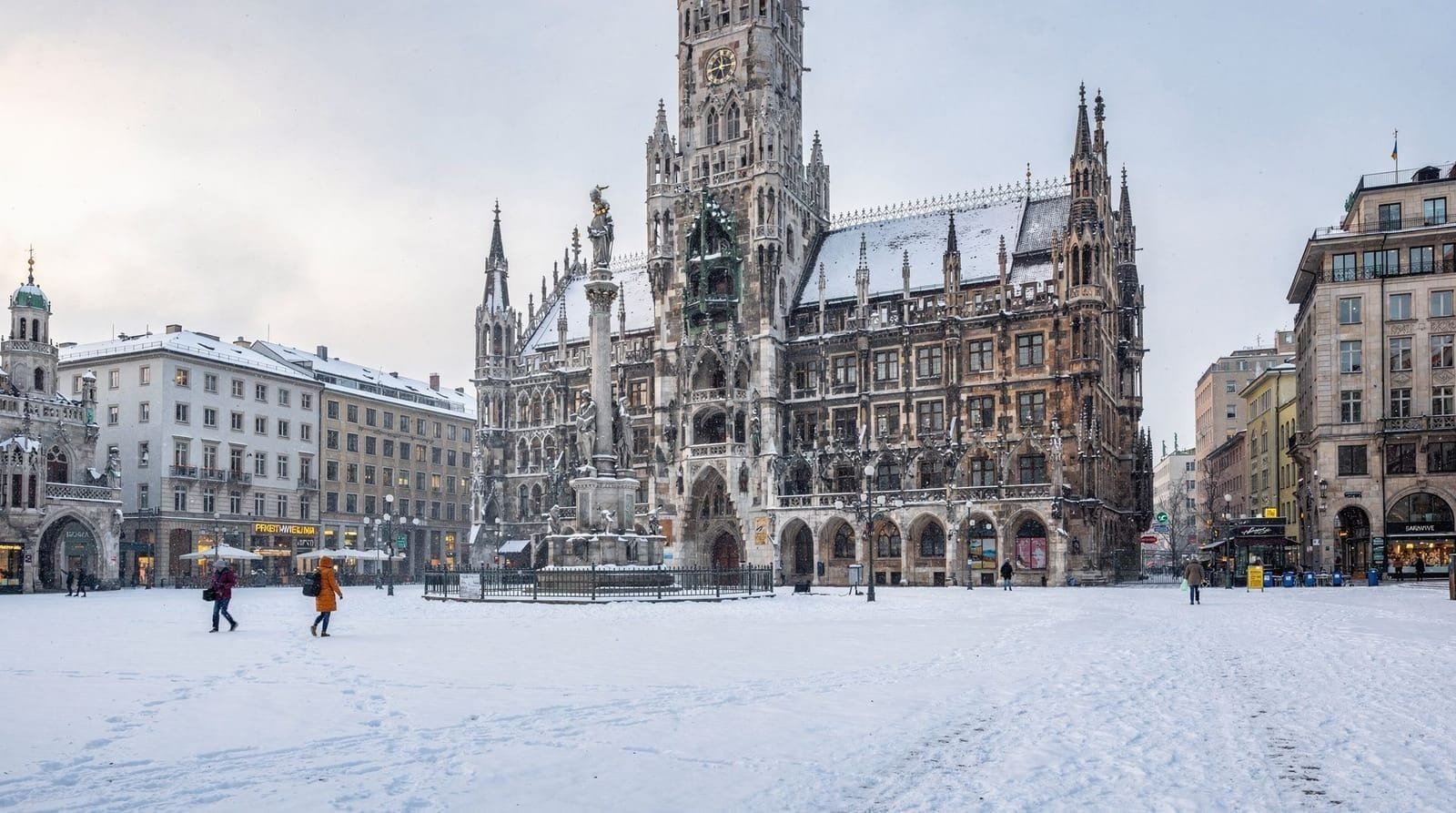
The Christkindlmarkt on Marienplatz is the official city Christmas market, set against the backdrop of the Neues Rathaus with its Gothic tower. About 100 stalls sell a range from handmade wooden decorations and glass ornaments to commercially produced tourist items. The visual effect — especially after dark with the Christmas tree and the Rathaus lit up — is genuinely beautiful.
What it is not: a quiet, artisanal, deeply traditional experience. The market draws hundreds of thousands of visitors over its run. On December weekends, you will be navigating crowds with limited personal space. The product quality is variable — some stalls sell beautiful Erzgebirge wooden figurines from the Ore Mountains of Saxony; others sell items indistinguishable from those in any European Christmas market.
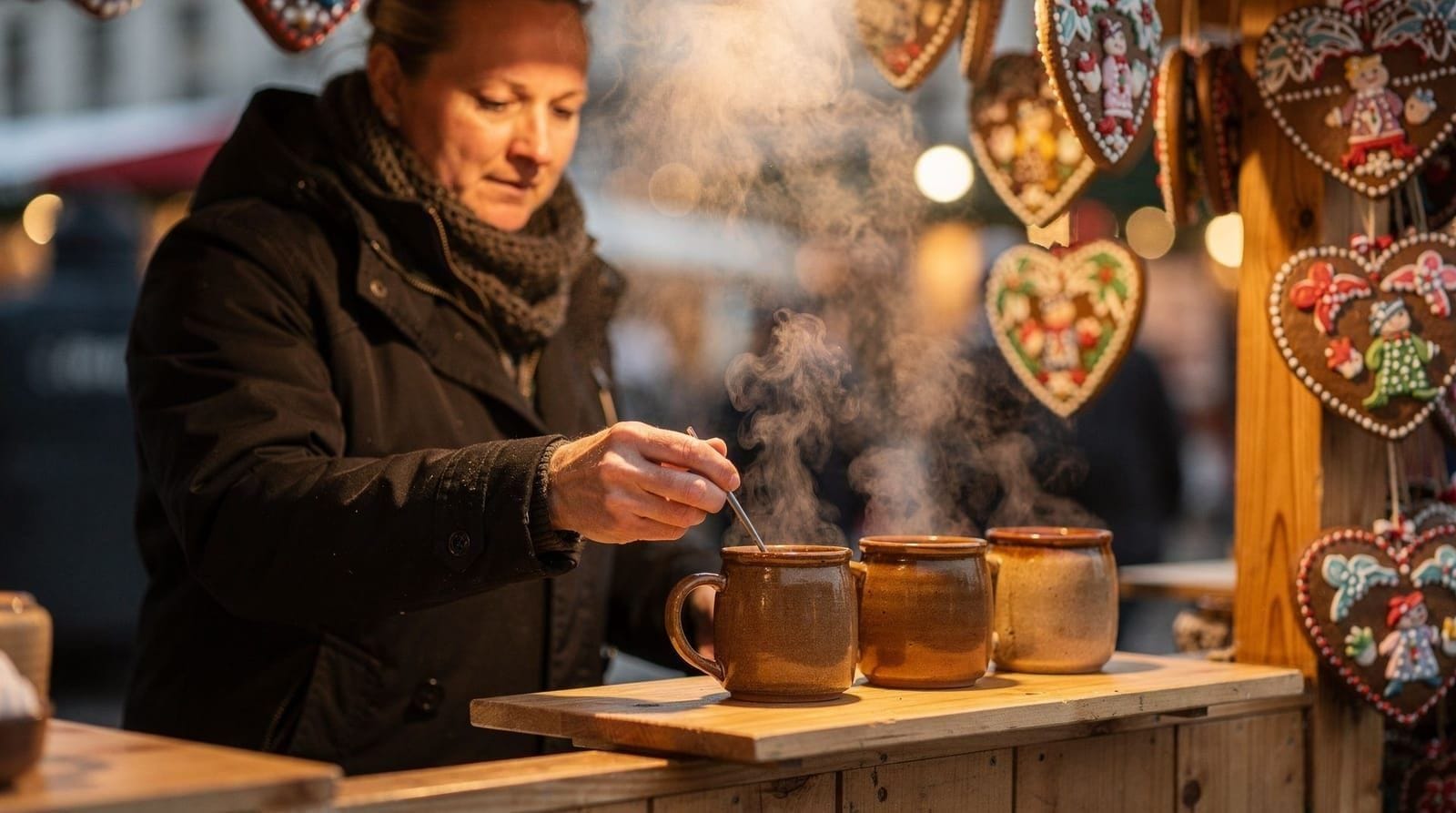
The Glühwein (mulled wine) here costs €4–6 for a mug plus €2–3 deposit on a ceramic mug. Keep the mug — it typically has a market year imprinted on it and doubles as a souvenir.
What to buy at Marienplatz: handmade wooden nativity figures (Krippen), glass tree ornaments (Christbaumschmuck), and traditional Bavarian decorations. These are the market’s genuine strengths.
The markets worth seeking out beyond Marienplatz
Schwabing Christmas market (Münchner Freiheit)
On the square in front of Münchner Freiheit U-Bahn station, this is a neighbourhood market with a more local clientele. About 60 stalls, a central ice rink, and mulled wine stalls that close later than average. The surrounding Schwabing streets are decorated independently. Getting here takes 10 minutes on the U3 or U6 from Marienplatz.
Medieval Christmas market (Mittelaltermarkt) at the Munich Residenz
Held in the courtyard of the Residenz palace complex (Odeonsplatz entrance), this market goes harder on the historical theme than most: performers in medieval costume, fire shows, mulled mead (Honigwein) in addition to wine, and vendors selling hand-forged metalwork, period-appropriate candles, and leather goods. More expensive than average but the quality is noticeably higher. The stone courtyard creates acoustics that make the music sound better than it has any right to.
Sendlinger Tor Christmas market
Small, focused on handmade crafts, and genuinely attended by Munich residents who work nearby. About 30 stalls. Good for watching Munich daily life at 6pm on a winter Wednesday rather than for buying specific items.
Gasteig / Haidhausen market (Weißenburger Platz area)
East of the Isar, a genuinely relaxed market serving the Au-Haidhausen neighbourhood. Artisan crafts, local food stalls including proper Bavarian snacks rather than tourist versions.
Tollwood Winter Festival (Olympiapark)
Technically a festival rather than a traditional Christmas market, but worth mentioning because it runs simultaneously (late November through December 31) and offers a significantly different experience. Tollwood is Munich’s major alternative market — global food, music performances, a mix of sustainable crafts vendors and international food stalls. Entry to the grounds is free; performances cost separately.
Comparing the main markets at a glance
| Market | Size | Crowds | Best for |
|---|---|---|---|
| Marienplatz | ~100 stalls | Very high, especially weekends | The postcard atmosphere, wooden decorations |
| Schwabing (Münchner Freiheit) | ~60 stalls | Moderate | Ice rink, later-closing Glühwein stalls |
| Residenz Mittelaltermarkt | Medium | Moderate | Medieval theming, mulled mead, live fire shows |
| Sendlinger Tor | ~30 stalls | Low | Watching everyday Munich life, handmade crafts |
| Tollwood (Olympiapark) | Large festival | Moderate to high | Global food, live performances, free entry to grounds |
Christmas markets with kids
Munich’s Christmas markets are genuinely family-friendly, and several are better suited to children than the crowded Marienplatz core. The Schwabing market’s ice rink is a reliable hit, and its wider aisles make it easier to navigate with a stroller than the packed Marienplatz stalls. The Sendlinger Tor market’s smaller scale and lower crowds make it a calmer stop if a child needs a break from noise and crowding. Tollwood in Olympiapark has open grounds where children can move freely between stalls without the bottlenecks typical of Marienplatz on a Saturday afternoon. For a broader look at planning a Munich trip around children, see our Munich with kids guide.
What to eat and drink: an honest guide
The food at Munich’s Christmas markets is not a tourist invention. These are dishes Bavarians actually eat, and some of them are genuinely excellent.
Glühwein: Red mulled wine with cinnamon, orange peel, and cloves. At its best warm, spiced, and served from a ladle by someone wearing a red Santa hat in -2°C. At its worst, pre-mixed from a packet. The quality varies significantly by stall.
Gebrannte Mandeln: Spiced roasted almonds or cashews, cooked on-site in copper drums. The caramel-cinnamon smell is one of the defining sensory experiences of a German Christmas market. Get them in a paper cone and eat while walking.
Lebkuchen: Gingerbread cookies, either plain, sugar-glazed, or chocolate-covered. The heart-shaped Lebkuchen decorated with icing messages are the tourist souvenir version; the plain, less sweet type sold by bakeries (Lebkuchenstände) is the better eating product.
Stollen: Dresden Stollen is the famous version — a dense, candied-fruit-filled bread dusted with powdered sugar. Munich has its own Christstollen tradition. Worth buying to take home; eating a slice warm from a market stall is the correct introduction.
Baumstriezel: A spit-roasted pastry from Hungarian and Slovak tradition that has become ubiquitous at German Christmas markets. Basically Trdelník if you know Prague markets. Fine, if not particularly Bavarian.
Sausages: Nürnberger Rostbratwurst (small grilled Nuremberg sausages in a bread roll) are the market standard. Three or six in a roll with mustard, for about €5–8. Better quality than they have any right to be given the context.
Fischsemmeln: Smoked fish rolls, particularly popular at Viktualienmarkt year-round. Several stalls serve them at Christmas markets. A good cold-weather snack.
See full food guide: Munich Christmas market food guide
What to skip
The mulled wine at Marienplatz peak hours: The wait for Glühwein at the most central Marienplatz stalls on Saturday evenings in December is often 10–15 minutes. Walk 50 metres to a side stall. Same wine, no queue.
Souvenir beer steins at Christmas markets: They cost significantly more here than at department stores (Kaufhof, Karstadt) or at Kaufingerstrasse gift shops. The Oktoberfest-branded version sold in December is particularly poor value.
The “handmade” label on anything under €5: At that price point it was not hand-made in Bavaria. Nothing wrong with buying affordable imports, but be clear about what you’re getting.
Going on the opening weekend without a plan: The first weekend of the Christmas market season (late November) draws very large crowds for a single day, then settles. If you are arriving the last weekend of November, plan around the Marienplatz market being at maximum capacity.
Practical logistics
Getting there: All Munich Christmas markets are reachable by U-Bahn or S-Bahn. Marienplatz is on the U3/U6 and S1–S8 lines. The Schwabing market is on U3/U6 (Münchner Freiheit). Parking in the city centre during December is genuinely unpleasant and expensive.
Weather: Munich in December averages -1°C to 5°C. Snow is possible but not reliable. Dress in proper layers — you will be standing still at markets and moving slowly. Waterproof boots are worth having.
Crowds peak times: Weekday evenings (6pm–9pm) after work are busier than midday weekdays. Saturdays from noon onwards are the most crowded. Aim for weekday mornings or early afternoons for the best experience at Marienplatz.
Money: Most stalls are cash-preferred or cash-only. Bring cash — there are ATMs nearby but queues form at them in the evenings.
A day at Munich’s Christmas markets: suggested route
Start at the Residenz’s Mittelaltermarkt when it opens (typically 11am on weekdays). Spend 45 minutes. Walk through the Hofgarten to Odeonsplatz, then south down Theatinerstrasse to Marienplatz. Spend an hour at the Marienplatz market, buy your mandatory Gebrannte Mandeln, then walk southwest to the Sendlinger Tor market (10 minutes on foot). If it’s a weekday, cut east to the Viktualienmarkt for lunch — the market stalls are open year-round and the quality is reliably higher than Christmas market food.
In the evening: the Tollwood Winter Festival in Olympiapark is a 15-minute U-Bahn ride from the centre (U3 to Olympiazentrum). The international food stalls there offer the most diverse hot food in Munich in December. Munich old town food tour (includes winter menu)
Christmas in Munich beyond the markets
Nymphenburg Palace illuminations: The palace and park are lit in December with events running on specific weekends. Check the Schloss Nymphenburg website for 2026 programming.
Konzerthaus performances: The Gasteig cultural centre (now in a temporary venue during renovation) and the Munich Philharmonic’s home stage run Christmas concert series. Tickets for Bavarian State Opera (Nationaltheater) Christmas performances sell out months in advance.
The Residenz itself: The palace rooms feel different in winter — the gilt and velvet interiors are genuinely suited to cold-weather visiting and the crowds are significantly lower than summer. See: Munich Residenz guide
Andechs Monastery: The Benedictine monastery 45 minutes south of Munich by S-Bahn serves its own winter Doppelbock beer starting in November. The monastery beer garden is open year-round (weather permitting), and the December pilgrimage atmosphere is genuine rather than staged. See: Andechs
More detail: Munich Christmas markets guide 2026 and Munich Christmas guide 2026
For those visiting for a broader winter trip rather than the markets specifically, see Munich in winter for the full seasonal picture.
Frequently asked questions about Munich’s Christmas markets
Is the Marienplatz Christmas market worth visiting if it’s crowded?
Yes, at least once — it’s genuinely the most visually striking of Munich’s markets, especially after dark. Visit on a weekday morning to reduce the crowding, and treat the neighbourhood markets as the places to actually linger and shop.
Do I need to book anything in advance for Munich’s Christmas markets?
No advance booking is needed for the markets themselves — they’re free, open-air, and walk-in. The exception is popular restaurant tables nearby and any Christmas-season concert tickets, which do sell out.