Munich Residenz guided tour review — is the skip-the-line ticket worth it?
Munich: Residenz Palace and Hofgarten skip-the-line guided tour
Munich’s royal palace rewards a couple of hours whether you book a guide or go it alone, but the two experiences are genuinely different — and the gap between them is the subject of this review. Below is the quick logistics summary, followed by the full breakdown of what the guided ticket adds, what it costs against a self-visit, and how to fit the Residenz into a wider day in the Altstadt.
| Where | Max-Joseph-Platz 3, Altstadt, one block north of Marienplatz |
| Cost | Self-visit around €19–24; guided tour around €30–45 |
| Time needed | 2 hours guided (20–25 rooms); 2–3 hours self-guided (130 rooms) |
| Getting there | U3/U6 to Marienplatz, then walk north; or tram 19/21 to Nationaltheater |
| Best time | Weekday mornings; book skip-the-line ahead for summer weekends |
What the Munich Residenz actually is
The Munich Residenz is the former royal palace of the Wittelsbach rulers of Bavaria, located in the Altstadt on Max-Joseph-Platz, one block north of Marienplatz. It is the largest urban palace in Germany — and among the most historically complex, having been built, expanded, damaged, and rebuilt across four centuries from 1385 to the 20th century.
What you see today is substantially a post-war reconstruction: Allied bombing in 1944 destroyed or severely damaged much of the palace, and the meticulous rebuilding process, completed by 1980, is itself a remarkable feat of cultural restoration. Original ceiling paintings were reassembled from thousands of fragments stored in salt mines during the war; tapestries were transported to safety and returned; the golden stucco of the Antiquarium was pieced together from photographs and surviving sections.
Understanding this history — that the Munich Residenz is simultaneously a genuine Renaissance palace and an extraordinary act of post-war reconstruction — is what separates a guided visit from a self-guided wander through rooms that can otherwise seem curiously pristine. Book the Munich Residenz skip-the-line guided tour
What the skip-the-line guided tour includes
The standard guided tour (2 hours, small group) covers approximately 20–25 of the Residenz Museum’s 130 rooms, with the guide selecting the most historically and aesthetically significant spaces. Typical rooms covered include:
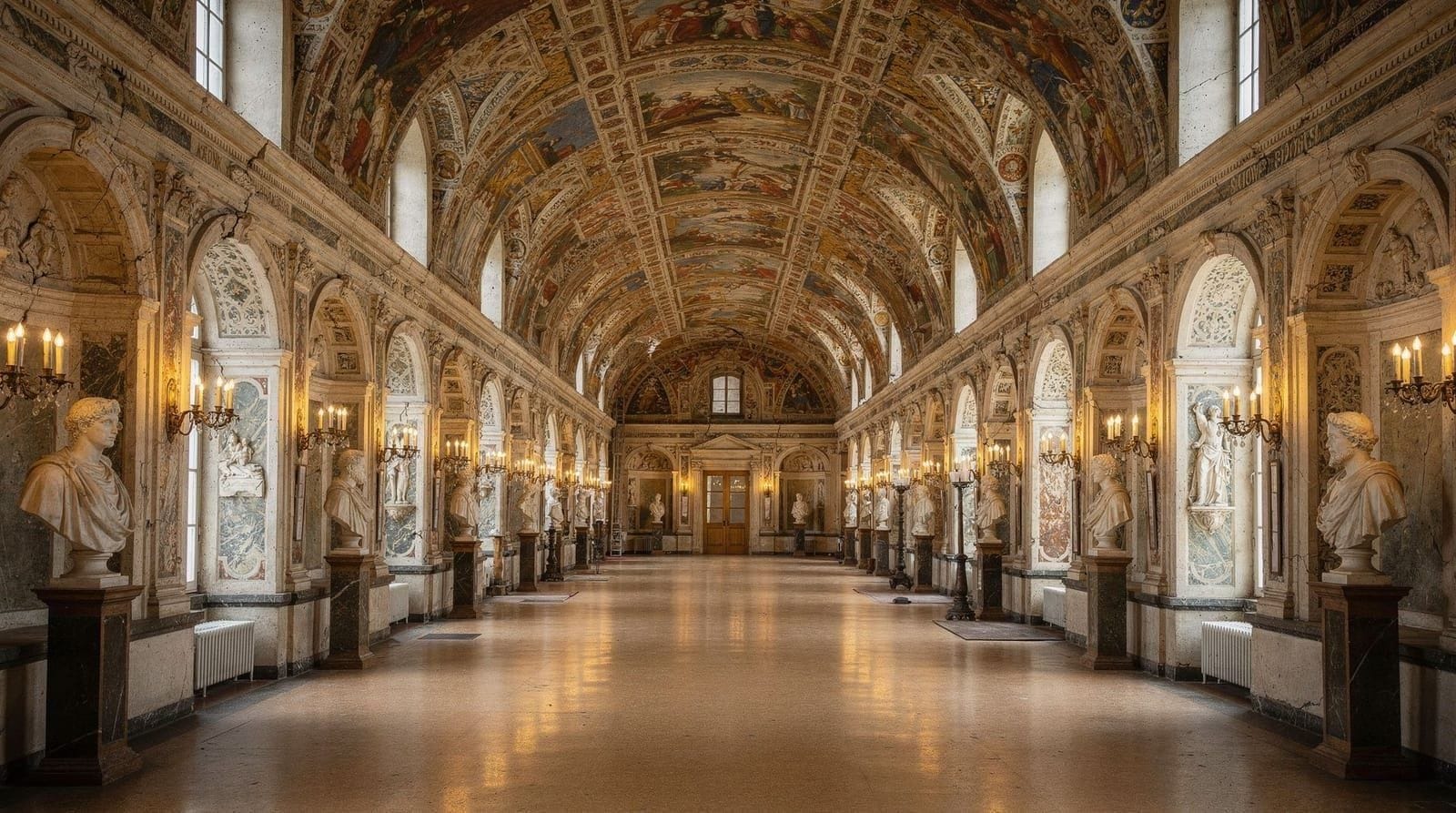
The Antiquarium — the oldest intact Renaissance room in Munich (completed 1571), 69 metres long, with a barrel-vaulted ceiling and over 100 antique busts lining the walls. Built by Duke Albrecht V to house his classical antiquities collection, it was later remodelled as a court banqueting hall. It is the room most guides spend the most time in, because its scale and historical layers reward explanation.
The Nibelungensäle — four rooms commissioned by Ludwig I in the 1820s, painted with scenes from the Nibelungenlied by Julius Schnorr von Carolsfeld. The rooms were destroyed in 1944 and rebuilt post-war using the surviving original paintings as templates. An excellent example of the reconstruction story.
The Ornate Rooms (Reiche Zimmer) — eight rooms in the Rococo style, designed by François Cuvilliés the Elder in the 1730s for Elector Karl Albrecht (later Holy Roman Emperor Charles VII). The finest Rococo interiors in Germany outside Sanssouci, with original furniture, mirrors, and silk wall hangings surviving in several rooms.
The Royal Apartments (Königsbau) — the neoclassical wing built by Leo von Klenze for Ludwig I in the 1820s–1840s, containing the family apartments used by the Bavarian royal family until 1918. King Ludwig II was born in the Residenz; these rooms formed his childhood environment.
The Treasury (Schatzkammer) — covered separately from the museum, the Treasury contains the Wittelsbach Crown Jewels, including pieces dating to the 10th century. This is arguably the most remarkable collection in the building and requires an additional ticket.
Why a guide makes a significant difference here
The Residenz Museum is unusual among Munich’s major attractions in that the self-guided experience is genuinely inferior to guided. Three reasons:
The rooms are context-dependent. A room that looks like a bedroom is actually a ceremonial lever (levée) chamber where the Duke appeared to courtiers each morning — a ritual with specific political meaning. Without a guide explaining the ceremonial function of each space, 80% of the information embedded in the room design is invisible.
The reconstruction narrative is fascinating and poorly signposted. The museum does not prominently label which rooms are reconstructions, which are originals, and which are partially restored. A good guide makes this history legible.
The Treasury needs explanation. The Crown of the Bavarian Kings (1806), the reliquary of St George (c.1590), and the Toilet Service of Queen Marie Antoinette (from the Munich court, not Versailles) are spectacular objects that require historical context to be more than decorative. Private guided tour of Munich Residenz Palace and Treasury
Self-visit versus guided tour: the honest calculation
Self-visit costs (2026):
- Residenz Museum: €9 adult
- Treasury: €9 adult, or combined ticket €14
- Cuvilliés Theatre: €5 adult (check seasonal opening)
- Audio guide: €5
Total self-visit with audio guide: €19–24 per person
Guided tour with skip-the-line ticket: €30–45 per person depending on group size and whether Treasury access is included.
The skip-the-line element saves meaningful time in summer. More importantly, a 2-hour guided tour of 20–25 rooms with an expert is educationally superior to a 3-hour self-guided visit to 130 rooms. The Residenz is one of the cases where less breadth and more depth is the right strategy.
Recommendation: If you have never visited and are in Munich for 2–3 days, the guided tour is worth the premium. If you are a repeat visitor or a professional architect/art historian, self-guided with the museum’s detailed printed room guide (available at the entrance) is adequate.
What to skip and what to prioritise
With 130 rooms, the Residenz rewards prioritisation:
Do not miss:
- The Antiquarium (room 7)
- The Ornate Rooms / Reiche Zimmer (rooms 55–62)
- The Treasury (separate building, separate ticket)
- The Cuvilliés Theatre if it is open (separate ticket, irregular hours — check ahead)
Can abbreviate:
- The papal rooms (rooms 8–11) — historically significant but decoratively plain
- The 19th-century Baroque Revival rooms in the Festsaalbau — large and impressive but repetitive
The Munich Residenz guide covers every section of the museum in detail. For a comparison with Nymphenburg Palace, see the Munich Residenz vs Nymphenburg guide.
Which visit type actually suits you
The Residenz is unusual in that price alone doesn’t tell you which option is right — depth of interest and time budget matter more.
| Visit type | Best for | Rooms seen | Approx. cost |
|---|---|---|---|
| Self-visit, no audio guide | Repeat visitors, professional historians | Up to 130 | €9–14 |
| Self-visit with audio guide | Independent travellers with time to spare | Up to 130, at your own pace | €19–24 |
| Small-group guided tour | First-time visitors, 2–3 days in Munich | 20–25 curated rooms | €30–45 |
| Private guided tour | Families, those wanting the Treasury explained in depth | 20–25 rooms + flexible focus | Varies by group size |
Understanding the Wittelsbachs before you go
The Residenz only fully makes sense once you understand who built it. The Wittelsbach family ruled Bavaria for over 700 years, and the palace is essentially their accumulated architectural biography — Renaissance foundations, Baroque additions, Rococo extravagance, and neoclassical apartments layered century on century. Our Wittelsbach royal history guide traces the dynasty from its medieval origins to King Ludwig II, whose fairy-tale castles at Neuschwanstein and elsewhere are the more famous legacy but were built after he left the family’s Munich seat behind. Reading even a short primer before your visit makes the ceremonial function of rooms like the Antiquarium and the Königsbau click into place far faster than the museum’s own signage does.
Getting there and practical information
The Residenz is at Max-Joseph-Platz 3, 80539 München — about 300 metres north of Marienplatz. U3/U6 to Marienplatz, then walk north through the pedestrian zone. Alternatively, tram 19 or 21 to Nationaltheater stops directly outside the entrance.
The main entrance on Max-Joseph-Platz is the busiest. A secondary entrance on Hofgartenstrasse (north side) sometimes has shorter queues for the Brunnenhof courtyard.
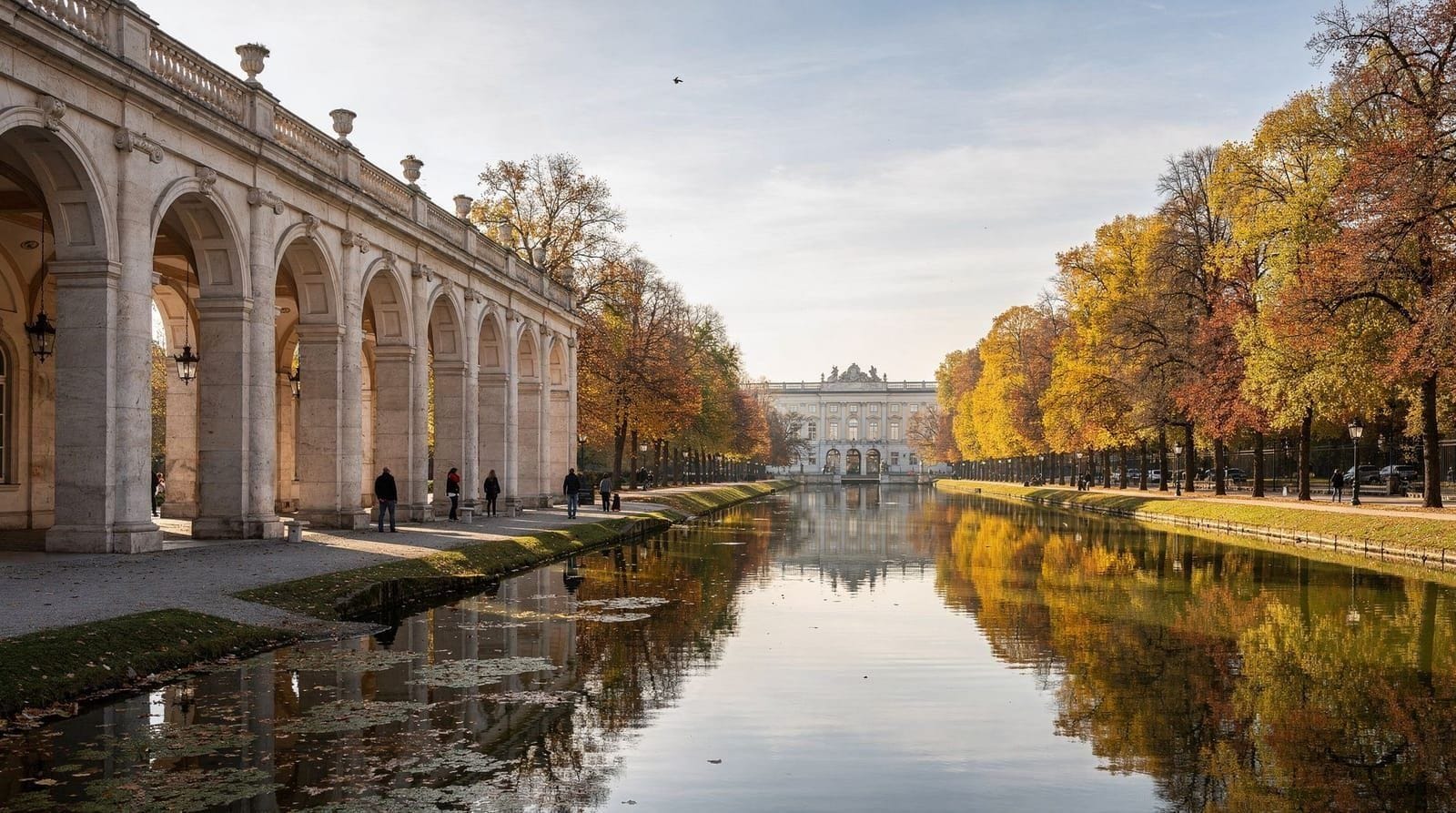
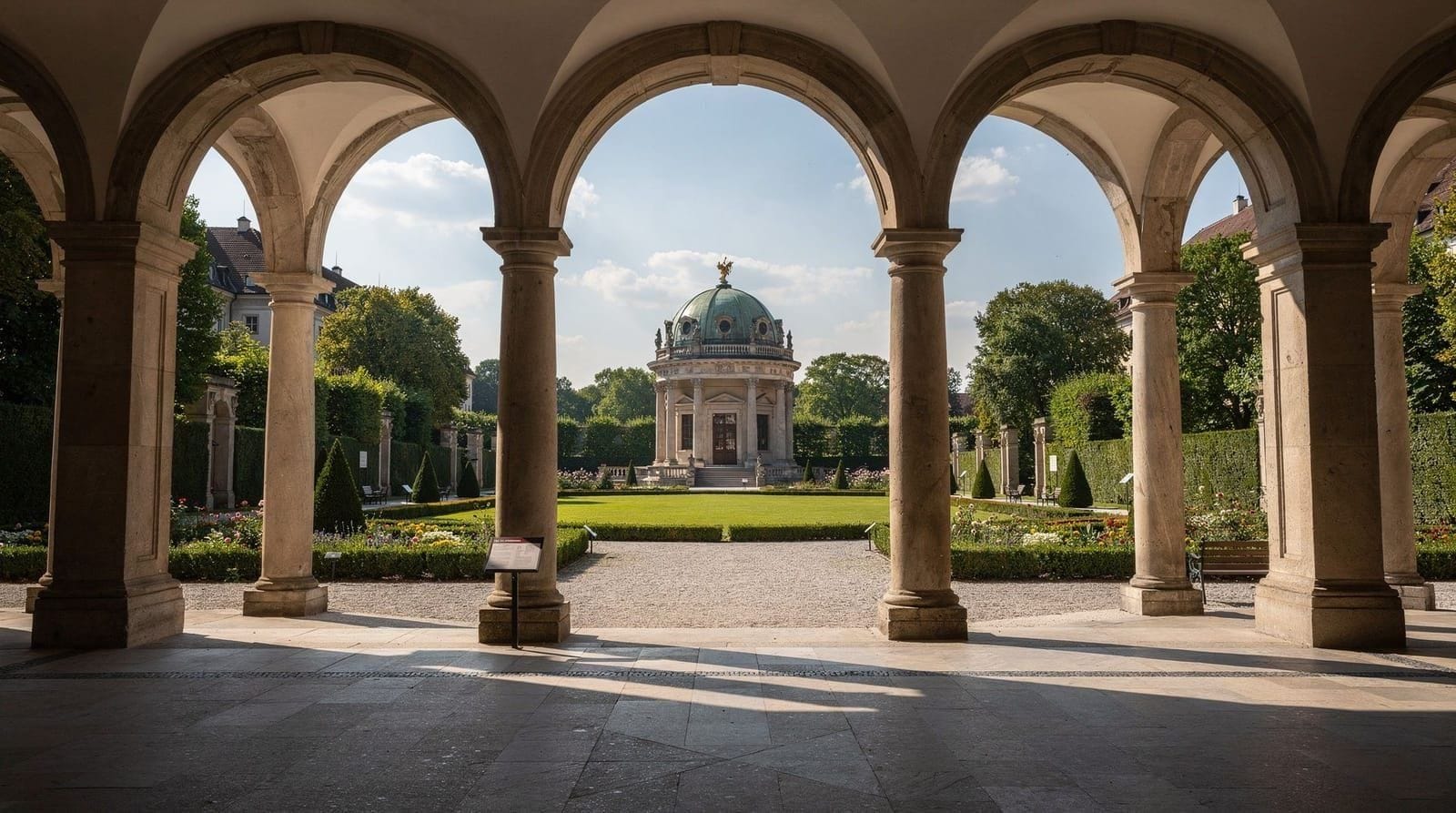
Tip: The Hofgarten — the formal court garden directly north of the Residenz — is free, open year-round, and contains the Diana Temple and some of the best street music in Munich. Include a 20-minute walk here after your museum visit. Compare: Nymphenburg Palace vs Residenz guided tour options
Fitting the Residenz into a day in the Altstadt
The Residenz sits at the heart of the Altstadt, so it pairs naturally with the rest of Munich’s old town rather than needing a dedicated day. Start or finish at Marienplatz, five minutes’ walk south, and use our Munich Altstadt guide to plan a loop that also takes in Frauenkirche and Viktualienmarkt. If museums are a priority for your trip, check whether the Munich Museums Pass covers the Residenz Museum before buying individual tickets — it can be worthwhile if you’re also visiting the Pinakothek galleries. For a two-day first visit that includes the Residenz alongside the rest of central Munich, see our Munich in 2 days itinerary.
Frequently asked questions about this tour
What is included in the Munich Residenz skip-the-line guided tour?
The skip-the-line guided tour includes pre-purchased timed entry tickets bypassing the standard queue, a licensed English-speaking guide for approximately 2 hours, and access to the Residenz Museum rooms. The Treasury (Schatzkammer) is a separate ticket and admission is typically not included.
How long does a visit to the Munich Residenz take?
The Residenz Museum alone can occupy 2–3 hours if you try to see all 130 rooms. A guided tour typically covers the 20–25 most significant rooms in 2 hours. The Treasury is an additional 45–60 minutes. The Cuvilliés Theatre (separate ticket, €5) is 20 minutes.
Is the Munich Residenz worth visiting?
Yes, without reservation. The Residenz is the most important palace in Munich and one of the finest royal residences in Europe — more historically layered than Nymphenburg and substantially richer than Neuschwanstein in terms of decorative arts. The Nibelungensäle, Antiquarium, and Treasury alone justify the visit.
What is the difference between the Residenz Museum and the Treasury?
The Residenz Museum (€9 adult) covers the state rooms, apartments, and court chapels across 130 rooms. The Treasury (Schatzkammer, €9 adult) is a separate building with the Crown Jewels of the Wittelsbach dynasty. A combined ticket costs €14.
Is there a queue at the Munich Residenz?
In summer, queues at the main Max-Joseph-Platz entrance can reach 30–45 minutes on weekday mornings and 60+ minutes on weekends. Skip-the-line tickets reduce this to 5–10 minutes.
When does the Munich Residenz open?
April–October: daily 09:00–18:00. November–March: daily 10:00–17:00. Closed 1 January, Shrove Tuesday, 24 December, 25 December, 31 December.
Is the Residenz accessible for visitors with mobility impairments?
Partial accessibility. The ground floor rooms and most of the major state apartments are accessible. A map showing accessible routes is available at the entrance.
Can I visit the Residenz and Marienplatz in the same morning?
Yes, easily. They are about 300 metres apart. A common plan is Marienplatz first (including the Glockenspiel if it’s near the 11:00 or 12:00 show), then the Residenz for 2 hours, finishing with a walk in the Hofgarten.
Does the Munich Museums Pass cover the Residenz?
Some multi-museum passes include Residenz Museum entry — check current terms on the Munich Museums Pass guide before buying separate tickets, especially if you’re also visiting the Pinakothek galleries during your stay.