Eagle's Nest and Berchtesgaden tour from Munich — honest review 2026
Munich: Eagle's Nest, Obersalzberg and Berchtesgaden tour
Understanding what you are visiting
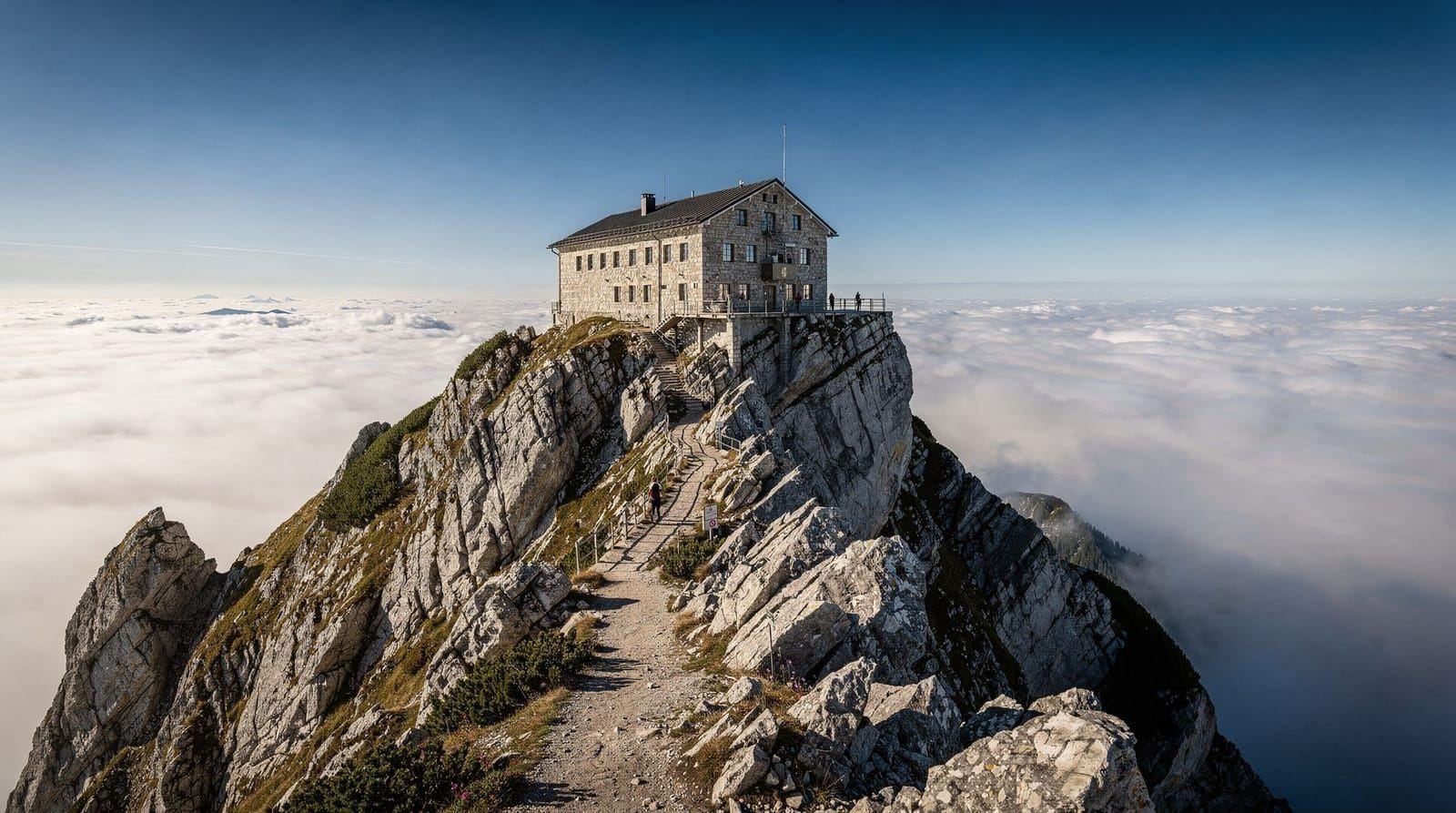
The Eagle’s Nest (Kehlsteinhaus) is one of the most visited sites in the Bavarian Alps — and one of the most contextually complicated. The building was constructed in 18 months between 1937 and 1938 by Martin Bormann as a 50th birthday gift for Adolf Hitler, funded by the Nazi Party rather than the German state. Hitler, who suffered from vertigo and reportedly disliked the exposed site, visited only 14 times.
Today the Kehlsteinhaus operates as a mountain restaurant with remarkable views, managed by the Berchtesgaden local council. Proceeds support local charities. It is not a concentration camp and is not a formal Holocaust memorial site. It is a building of historical significance that survived the war (unlike Hitler’s Berghof residence below, which the US Army deliberately destroyed) and has been repurposed as both a visitor site and a source of local revenue.
This context matters for how you approach a tour here. The Eagle’s Nest is worth visiting for three overlapping reasons: the alpine scenery is extraordinary, the engineering of the 6.5-kilometre Kehlsteinstrasse mountain road is remarkable, and the historical significance is undeniable. But it should be visited with clear eyes about what the site is and what it is not. Book the Eagle’s Nest and Berchtesgaden tour from Munich
Our Eagle’s Nest and Kehlsteinhaus guide covers the site’s full history and layout in more depth than a single tour day allows — worth reading before or after this review.
| Where | Obersalzberg, above Berchtesgaden, around 2–2.5 hrs from Munich |
| Cost | Guided tours around €70–110; independent transport+access around €65–70 |
| Time needed | Full day (departs 7:30–8:00am, back in Munich by evening) |
| Getting there | Train or tour van to Berchtesgaden, then bus 838 and the Kehlsteinbus |
| Best time | 15 May–26 October only; early-morning tours beat the crowds |
What a full-day guided tour covers
A typical full-day guided tour from Munich departs at 7:30–8:00 am and covers three main elements:
1. The Obersalzberg area and Documentation Centre
The mountain plateau of Obersalzberg, above Berchtesgaden, was requisitioned by the Nazi Party in the 1930s to become a private settlement for the Nazi leadership. The Berghof (Hitler’s main mountain residence), a Göring residence, Bormann’s house, a hotel commandeered for Nazi staff, and a vast underground bunker system were all built here. The area was bombed by the RAF in April 1945 and most buildings were destroyed by US forces after the war to prevent them becoming pilgrimage sites.
The Dokumentation Obersalzberg, built into the site in 1999 with a major expansion in 2021, is one of the best historical museums in Germany covering the Nazi period. It includes the original bunker system beneath Obersalzberg (partially accessible) and a meticulously documented exhibition covering the Third Reich’s use of Berchtesgaden, the mechanics of Nazi persecution, and the postwar denazification process. Better guides spend 60–90 minutes here.
2. The Kehlsteinstrasse and the Eagle’s Nest approach
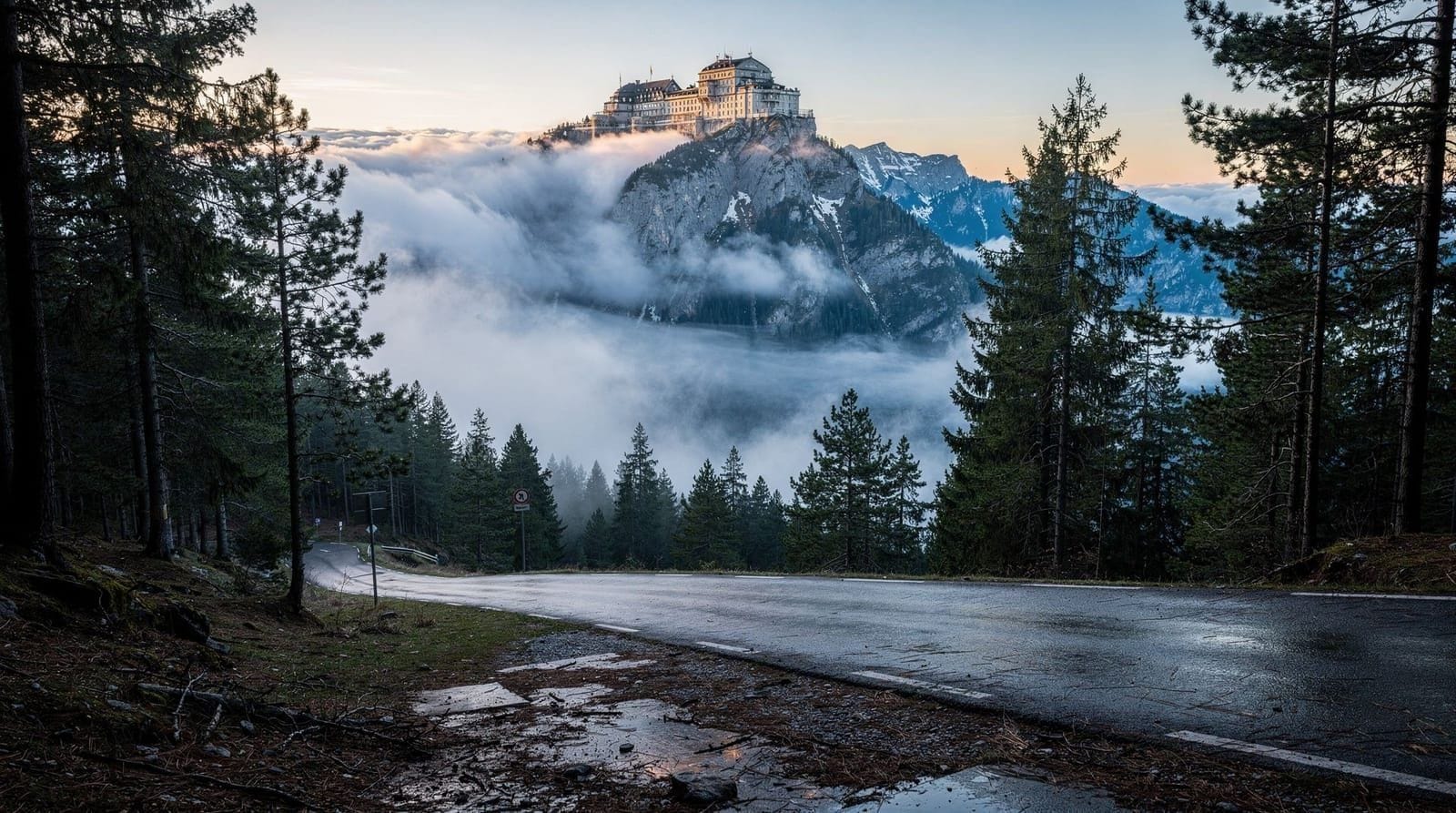
The road built to access the Kehlsteinhaus is itself an engineering curiosity — a 6.5-kilometre mountain road with five hairpin bends, cut through solid rock, built at an altitude of 1,200–1,700 metres in a single construction season. Private vehicles are not permitted on this road; access is by dedicated Kehlsteinbus only (tickets purchased at Hintereck, €28.50 per person in 2026 for the round-trip bus plus elevator). Guided tours include this access cost.
3. The Eagle’s Nest summit
From the bus terminus at the tunnel entrance, a 124-metre brass-lined elevator (original equipment, maintained) rises through the rock to the Kehlsteinhaus level. The building itself is small — a central hall with a Carrara marble fireplace, a terrace restaurant, and spectacular 360° views over the Berchtesgaden Alps, Salzburg plain, and on clear days the Watzmann massif.
The original brass-lined elevator and the initials carved into the tunnel walls during construction remain intact. The restaurant operates from May to October; expect €7–15 for coffee and cake, €18–25 for a substantial meal.
Summit time in most guided tours: 45–90 minutes.
The Königssee option
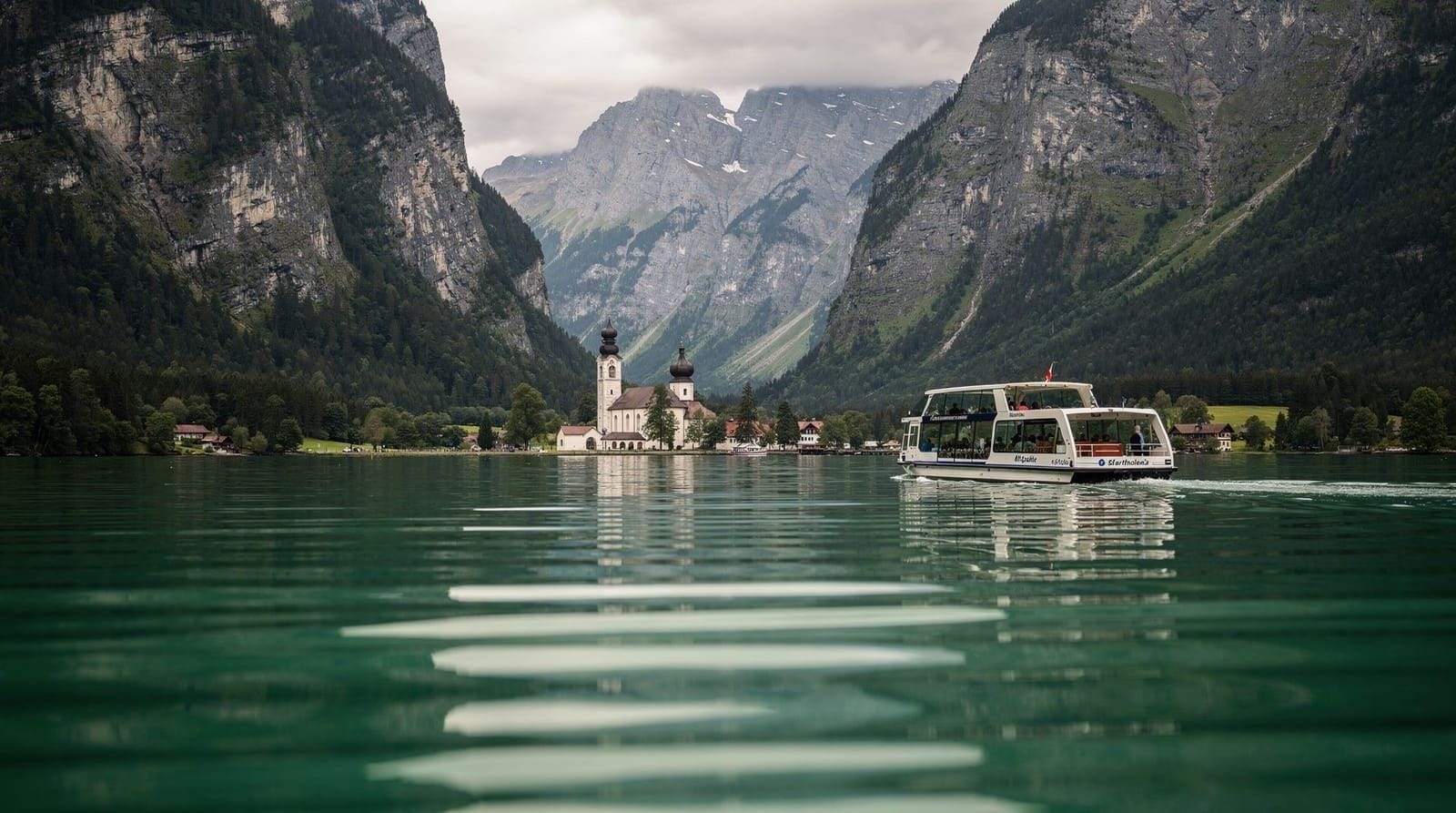
Some tours extend the day to include Königssee — a fjord-like glacial lake 5 kilometres south of Berchtesgaden, one of the most beautiful natural sites in Germany. The Königssee boat tour (electric boat, silent operation) visits the St. Bartholomä pilgrimage church and Obersee lake. The boat operators are famous for sounding a brass horn on the water to demonstrate the lake’s echo, a performance they have apparently not tired of.
If your guided tour includes Königssee, expect it to be the final stop before the return to Munich. Budget 2–3 hours at Königssee for the boat tour plus time at St. Bartholomä. Full-day Eagle’s Nest and WWII history tour from Berchtesgaden
Going independently: the complete guide
The Eagle’s Nest is entirely accessible without a guided tour if you are comfortable with German train connections.
By train from Munich: Munich Hauptbahnhof → Berchtesgaden: approximately 2.5 hours. The fastest route runs via Salzburg (change at Freilassing) using an EC or IC train. Check DB Bahn for the latest schedules — services vary by season.
At Berchtesgaden: Bus 838 from Berchtesgaden station to Obersalzberg/Hintereck. From Hintereck, the Kehlsteinbus runs every 25 minutes to the tunnel entrance (ticket: €28.50 round-trip in 2026, includes elevator). Bus 838 is covered by Bayern-Ticket; Kehlsteinbus is not.
The Dokumentation Obersalzberg is accessible via bus 838 at the Obersalzberg stop before the Hintereck terminus. Entry: €10 adults, includes bunker tour.
Total independent cost per person: Bayern-Ticket (single): €29 + Kehlsteinbus/elevator: €28.50 + Dokumentation: €10 = approximately €67.50. Guided tours typically cost €70–110 per person — essentially the same or slightly more. The guide adds contextual value that is genuine; the cost saving of going independently is minimal.
Where guided tours genuinely earn their cost here:
- The guide knows the seasonal timings precisely (the Kehlsteinbus has limited operating hours and the last bus down is non-negotiable)
- The guide can negotiate the Documentation Centre, Eagle’s Nest, and Königssee in a single day efficiently
- The van departure from Munich at 7:30 am means arriving at Obersalzberg before the main crowds
Historical framing: what responsible guides say
The best guides on this tour treat the Kehlsteinhaus visit as an opportunity for historical literacy, not as a celebrity location tour. Specifically, they clarify:
- The Eagle’s Nest was not Hitler’s main residence — the Berghof (now demolished) served that function. The Kehlsteinhaus was a prestige gift he rarely used.
- The site was de-Nazified deliberately and systematically. The preservation of the Kehlsteinhaus was controversial; an early decision was made that destroying it would prevent understanding the period.
- The Documentation Centre at Obersalzberg provides the historical context that the Eagle’s Nest itself — operating as a restaurant — cannot by design.
- The mountain landscape and the Nazi-era buildings are inseparable here: the appropriation of the Alps as a Nazi aesthetic was deliberate and calculated, and understanding that connection is part of understanding the period.
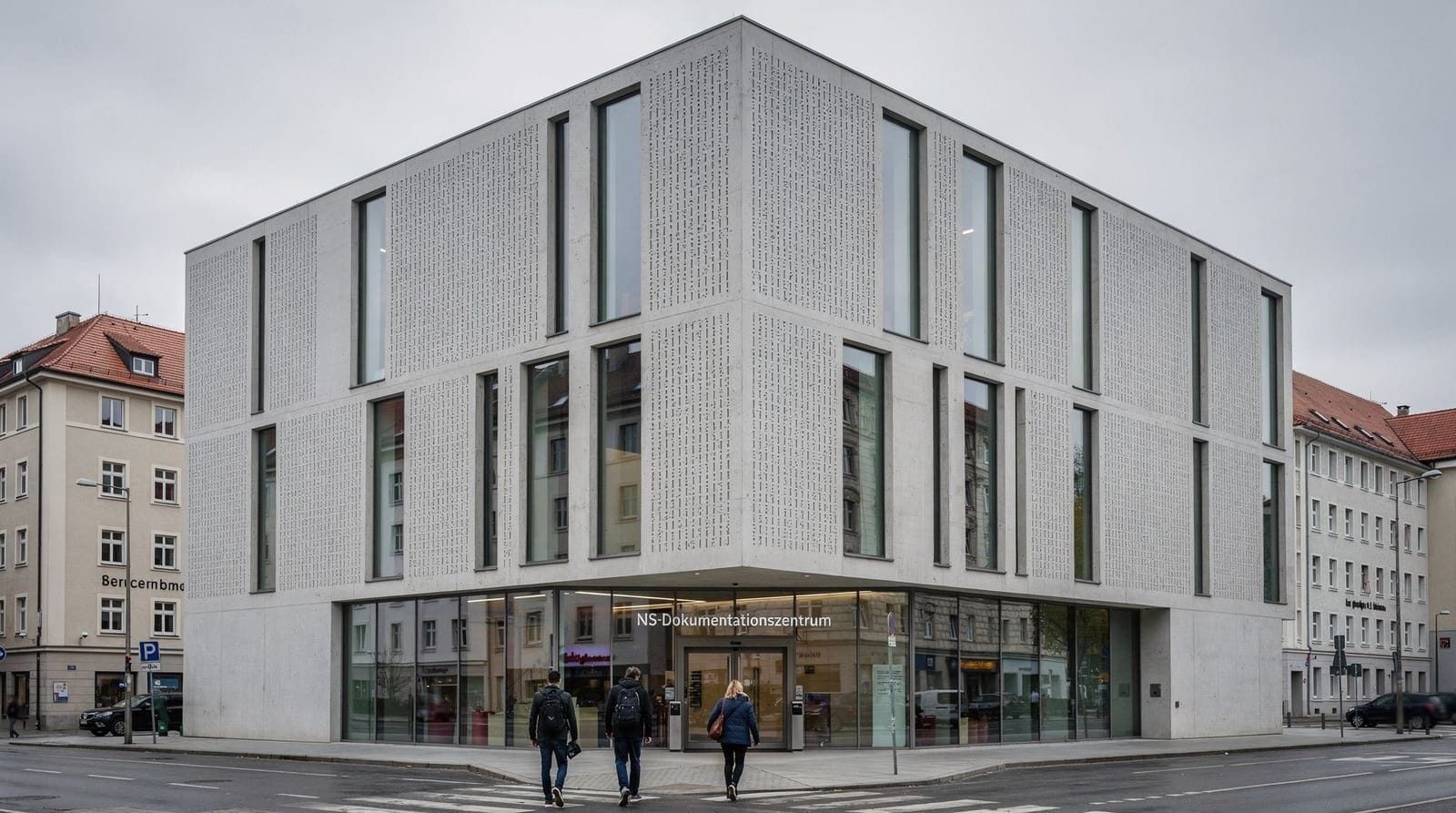
For broader historical context before or after your visit, the Munich WWII history guide and the Dachau memorial guide are the strongest resources on this site. For the Königssee natural environment, see the Königssee guide. For a Munich-based museum covering the same period without the mountain setting, the Nazi Documentation Center guide is a useful companion or alternative if the day trip isn’t feasible.
Combining with other alpine day trips
The Kehlsteinbus and elevator only run mid-May to late October, which is also peak season for the wider Bavarian Alps. If you are choosing between several alpine day trips from Munich, our best day trips from Munich guide compares Berchtesgaden against Zugspitze, Neuschwanstein and the other classic options, and the Bavarian Alps cable cars guide is useful background if you want to add a cable-car ascent elsewhere in the region on a different day. Berchtesgaden itself does not pair well with a second full day trip on the same visit — the travel time alone makes it a dedicated day.
Munich to Berchtesgaden transport in detail
For travellers piecing together the independent route step by step, our dedicated Munich to Berchtesgaden day trip guide covers train timetables, the Bayern-Ticket coverage, and connection timing at Freilassing and Berchtesgaden station in more detail than fits in this tour review.
What to expect at the summit in 2026
Eagle’s Nest operating dates: approximately 15 May–26 October (weather dependent). No tours operate November–April.
Summit opening hours: 07:50 (first bus) to approximately 16:55 (last bus down).
Restaurant: Kehlsteinhaus restaurant serves Bavarian food and has an exceptional terrace if weather cooperates. It gets crowded from 11:00 am; early-morning tours (arriving before 10:00 am) have the terrace to themselves.
Photography: unrestricted at the summit. The view south toward the Watzmann and Hochkalter massifs is the best panoramic shot. Looking northeast on a clear day, Salzburg is visible in the plain below.
Weather: The summit at 1,834 metres is often in cloud when Berchtesgaden town below is clear. Check the webcam at kehlsteinhaus.de before departure. Most guided tours have flexible cancellation for weather-related closures.
Frequently asked questions about this tour
What is the Eagle’s Nest?
The Eagle’s Nest (Kehlsteinhaus) is a building constructed in 1938 as a birthday gift from the Nazi Party to Adolf Hitler, perched at 1,834 metres above Berchtesgaden. Today it operates as a restaurant and visitor centre. Hitler visited only 14 times.
How do you get to the Eagle’s Nest without a guided tour?
Train from Munich to Berchtesgaden (2.5 hours), then bus 838 to Hintereck, then Kehlsteinbus to the tunnel entrance. The elevator rises 124 metres to the summit.
Is the Eagle’s Nest open year-round?
No. It is closed approximately mid-October to mid-May due to snow. Operating dates 2026: approximately 15 May–26 October. Check kehlsteinhaus.de for exact dates.
What is the Obersalzberg Documentation Centre?
A serious history museum on the site of Hitler’s personal mountain residence, covering the history of the Nazi mountain retreat and the persecution system. Entry approximately €10 in 2026. The bunker system beneath Obersalzberg is partially accessible as part of the museum visit.
How long is the journey from Munich to Berchtesgaden?
By guided tour van: approximately 2–2.5 hours each way. By train: approximately 2.5 hours each way.
What is included in a standard guided Eagle’s Nest tour?
Return transport from Munich, Kehlsteinbus tickets from Hintereck, elevator to the summit, and guide commentary throughout. The restaurant at the Eagle’s Nest is not included.
Is this tour appropriate for people sensitive to Nazi history?
Reputable guides contextualise the history carefully. The site is not presented as a celebration. If you have concerns about the framing, check the tour operator’s stated historical approach before booking.
Can I combine Eagle’s Nest with another Munich day trip?
Not practically on the same day — the round trip to Berchtesgaden alone takes most of a day. If you want more alpine scenery on a separate day, see the best day trips from Munich guide for how it compares to Zugspitze and Neuschwanstein.
What if I can’t visit during the May–October season?
The Eagle’s Nest and Kehlsteinbus are closed outside that window. The Nazi Documentation Center in Munich covers similar historical ground year-round if a winter or early-spring trip doesn’t allow for Berchtesgaden.