Munich Airport guide 2026 — terminals, transport, and transit tips
Munich Airport (MUC) — an overview
Munich Franz Josef Strauss Airport (IATA: MUC) is Germany’s second-busiest airport after Frankfurt and consistently ranks among the best airports in Europe. If you’ve flown through Frankfurt or Heathrow recently, Munich will feel immediately calmer and better organized. It operates two main passenger terminals and serves around 47 million passengers annually.
The airport sits 28 km northeast of Munich city center. Getting into the city is straightforward — though the options involve tradeoffs of cost, time, and convenience that are worth understanding before you land.
| Distance to city | 28 km northeast of central Munich |
| Fastest transfer | S8 S-Bahn, around 38–42 minutes to Hauptbahnhof |
| Cheapest transfer | S-Bahn single ticket, 13.60 EUR |
| Fastest overall | Lufthansa Express Bus, around 45 minutes, no onward city coverage |
| Passport control buffer | 30–60 minutes at peak transatlantic arrival times |
Terminal layout
Munich Airport has two main terminals:
Terminal 1 (T1): Used primarily by Lufthansa’s Star Alliance partners, Condor, and some charter carriers. Five piers (A, B, C, D, E) radiate from the central check-in area.
Terminal 2 (T2): Primarily used by Lufthansa and its partners. T2 is connected to the Satellite terminal (T2S), which opened in 2016 and handles additional Lufthansa flights. T2 and T2S are connected by an underground people mover.
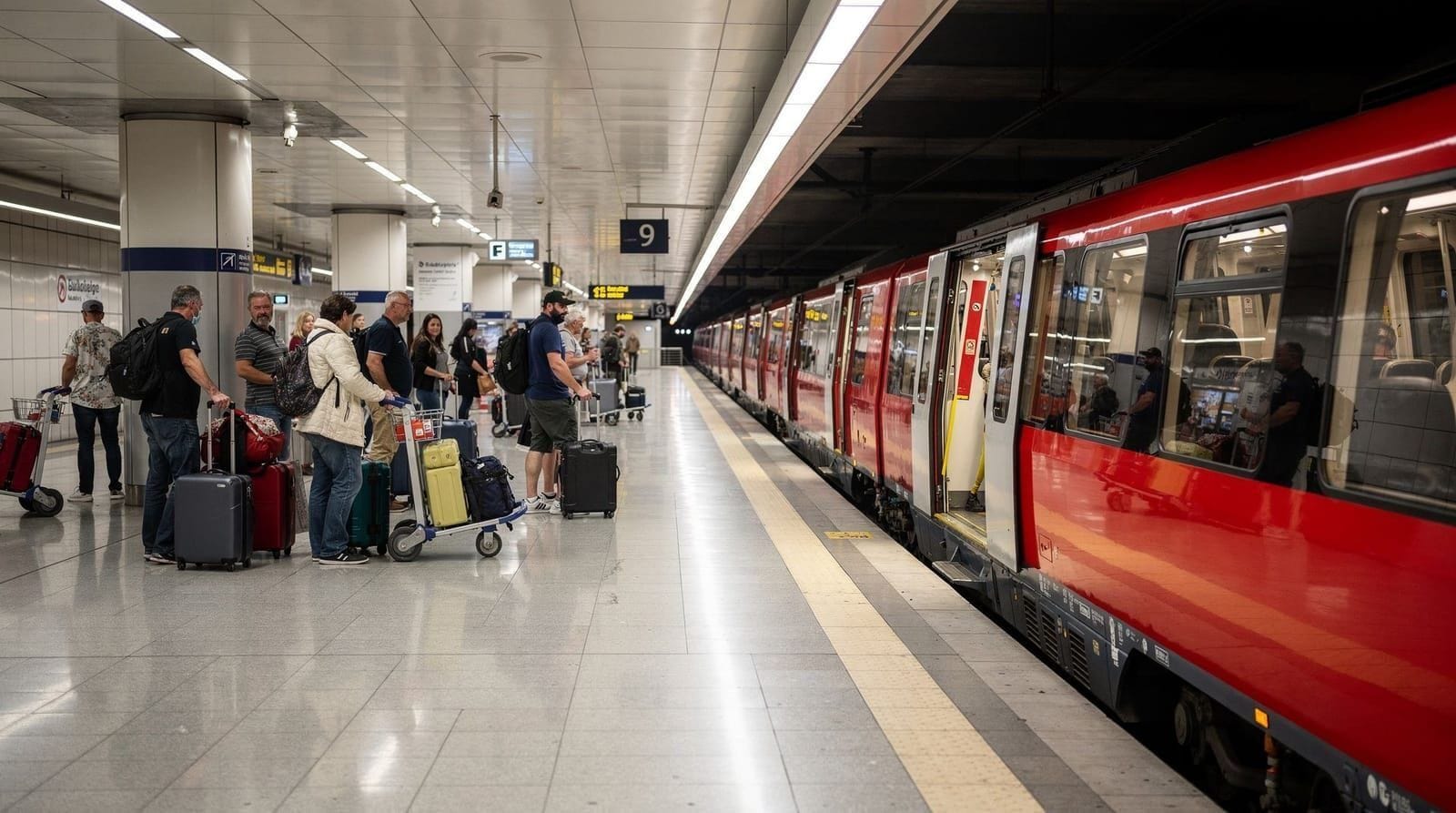
The MAC Forum / Central Area: Between T1 and T2 is the MAC (Munich Airport Center), which houses a hotel (Hilton Munich Airport), restaurants, shops, a visitor park, and the S-Bahn station serving both terminals. This is where you go for the train into Munich.
If you’re confused about which terminal your flight departs from, check the Munich Airport website or your airline’s app. The two terminals are a 15-minute walk apart at ground level, or you can take the free shuttle bus that runs every 5–10 minutes between them.
Getting from Munich Airport to the city
S-Bahn (S1 and S8) — cheapest, most reliable
Two S-Bahn lines connect the airport to central Munich:
- S1: Munich Airport → München Hauptbahnhof (central station) via the northern route through Dachau and Pasing. Journey time: approximately 45 minutes.
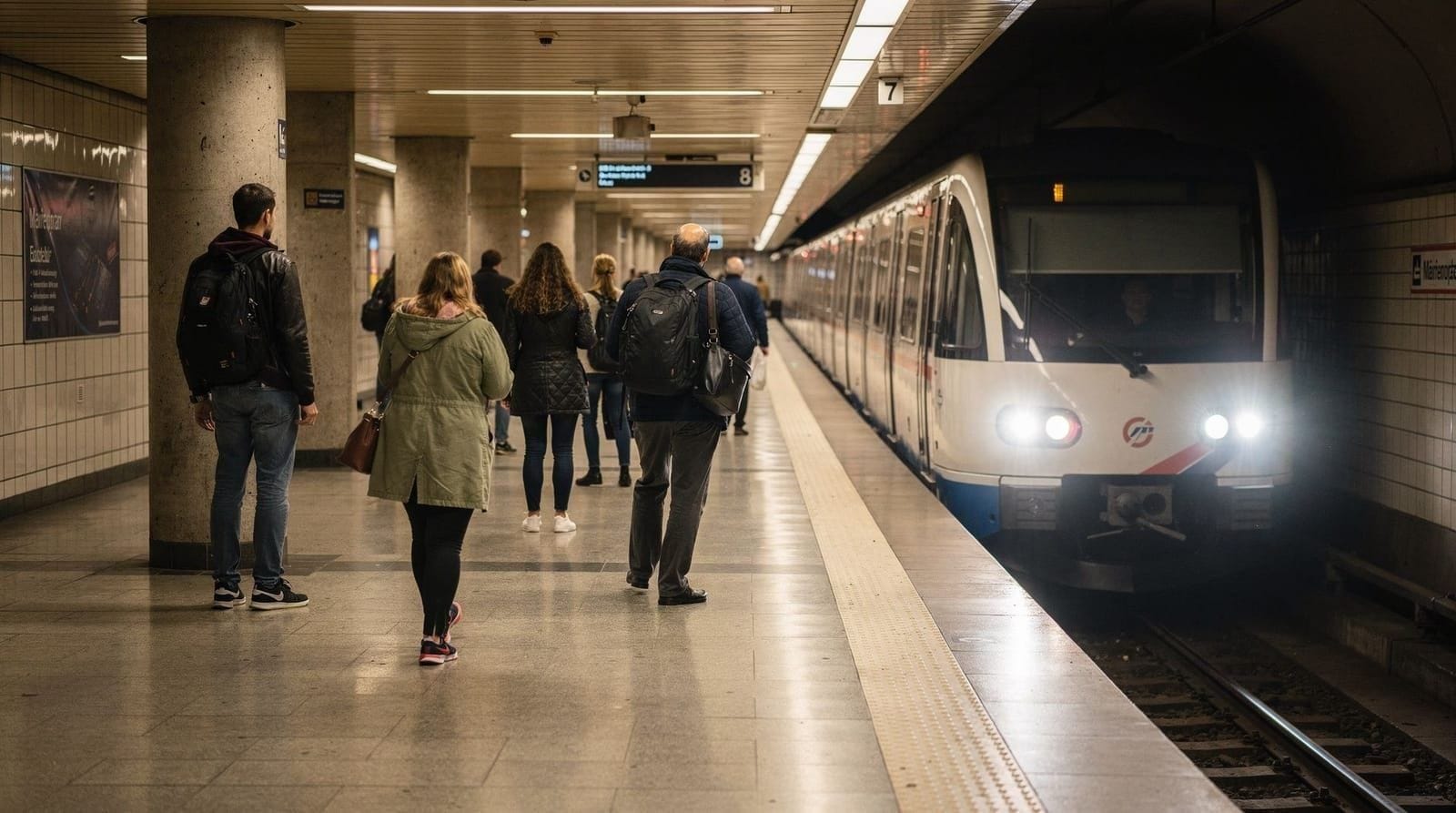
- S8: Munich Airport → München Hauptbahnhof via the southern route through Marienplatz. Journey time: approximately 38–42 minutes, generally faster.
Both run every 20 minutes, alternating so that the combined frequency from the airport is every 10 minutes. They share the same underground station beneath the MAC Forum.
Cost: A single ticket to Munich city center (Zone ALL, which includes the airport) costs 13.60 EUR in 2026. A day ticket (Tageskarte ALL) for one adult is 19.60 EUR and covers all journeys within the entire network for the day — worth buying if you’ll use the S-Bahn or U-Bahn within Munich on arrival day.
For two or more people, an Isarcard 9 for groups or a partner ticket can reduce per-person costs. See our full breakdown in the Munich airport to city guide.
Buying tickets: Ticket machines are at the S-Bahn station beneath the airport. They accept cash and card. Select “Munich” or use the zone map and select the “All” zone (which includes the airport). English is available on all machines.
Lufthansa Airport Bus — faster but no city coverage
The Lufthansa Express Bus runs between the airport and Munich Hauptbahnhof in approximately 45 minutes (the route has fewer stops than the S-Bahn and uses the A9 motorway when traffic allows). Cost is 13 EUR per person each way.
Tickets can be bought on the bus or in advance. The bus does NOT cover any further journeys in Munich — you’ll need a separate transit ticket to get from the Hauptbahnhof to your hotel. For most travelers, the S-Bahn is better value unless you have significant luggage and find stairs and crowded trains impractical.
Taxi or rideshare
Taxis from Munich Airport to the city center cost approximately 65–85 EUR depending on traffic and destination. The journey takes 30–50 minutes. Rideshare apps (Uber, FreeNow) are available in Munich. Neither is recommended for budget-conscious travelers when the S-Bahn covers the same route for 13.60 EUR.
Car rental
Munich Airport has a full car rental center on the ground floor of the car park (P1 building). All major providers operate here. If you’re planning to drive in Bavaria — particularly for reaching the castles, the Zugspitze area, or the Chiemsee — picking up a car at the airport is convenient. If you’re staying in Munich city, car rental is unnecessary and parking in the center is expensive (4–8 EUR/hour in central car parks). See our Munich car rental guide for which counters and providers are worth booking ahead.
What to do on arrival day if your flight lands early
If you land in the morning and your hotel room isn’t ready, don’t waste the day sitting in a lobby. Drop your bags at left luggage or your hotel’s storage, then head straight into the old town — Marienplatz, the Frauenkirche, and the Viktualienmarkt are all walkable from Hauptbahnhof and don’t require advance tickets. A guided orientation walk is a low-effort way to get your bearings on a jet-lagged first day. Munich old town guided walking tour
Terminals, facilities, and layover info
Food and drink at the airport
Munich Airport is notably good for airport food by German standards. Terminal 2’s Airside Center has multiple sit-down restaurants and a Markt im Flughafen food court with Bavarian options at reasonable (for an airport) prices. The Beer Garden Terminal 2 is an actual outdoor beer garden between T1 and T2 — operating May through October, offering Augustiner beer. Yes, an outdoor beer garden at an airport. This is Bavaria.
For longer layovers, the Airbräu brewery is in the MAC Forum area between terminals — a microbrewery that has operated at the airport since 1999, serving four house-brewed beers and Bavarian food.
Luggage storage
Left-luggage facilities are available in both terminals. Prices start at around 6 EUR per item for up to 24 hours. Location: Terminal 1 arrivals area (ground floor) and Terminal 2 arrivals area (level 03).
Lounges
Multiple lounges operate at Munich Airport. Lufthansa has its own lounges in Terminal 2 (access with Business Class ticket or Miles & More status). Several independent lounges accept Priority Pass. Check the airport website for current access options and Priority Pass eligibility.
Hotels at or near the airport
The Hilton Munich Airport is in the MAC Forum, directly connected to both terminals and the S-Bahn station without leaving the building — ideal for early-morning departures or long layovers. It runs 150–200 EUR per night on average. The NH München Airport and Novotel München Airport are slightly cheaper options a short shuttle ride away.
Transit and connecting flights
Munich is a major Lufthansa hub and a significant connection point between North America and eastern Europe/Asia. If you’re transiting through MUC:
- Minimum connection times are typically 40 minutes within the Schengen Area and 60–90 minutes for international connections. Build in more buffer — these are minimums, not comfortable windows.
- T1 and T2 are not directly airside-connected. If your connection requires changing terminals, you’ll go through security again. Add at least 30 minutes for this.
- The T2 Satellite has an airside transfer option for some Lufthansa connections.
For transit passengers on a long layover (4+ hours), the airport offers a luggage storage service and a visitor area. The Munich Airport Visitor Park (free) has aircraft viewing decks.
Practical tips for arriving in Munich
Border control
For travelers arriving from outside the Schengen Area (including the UK post-Brexit, the USA, Canada, Australia, and others), the passport control queues at Munich Airport can be significant during peak arrival times (typically 08:00–12:00 for transatlantic flights). Budget 30–60 minutes for passport control. EU/EEA citizens and those with biometric passports registered for EasyPass move faster.
WiFi and connectivity
Free WiFi is available throughout Munich Airport (MUC_Gast network). You’ll need to register once with an email address. Coverage is good in both terminals.
For data connectivity during your stay in Germany, an EU SIM is cheapest. German operators include Telekom, Vodafone, and O2. Alternatively, an eSIM from operators like Airalo works well in Germany and can be set up before travel.
Currency exchange
Don’t exchange currency at the airport exchange desks — the rates are poor. ATMs in the arrivals hall dispense Euros at the interbank rate minus a modest foreign transaction fee, which is almost always better than the cash desk. Wise and Revolut cardholders pay the lowest fees.
Getting to day-trip destinations from Munich Airport
If you’re heading directly to a day-trip destination without going into the city first, some routes are more practical than others:
- Dachau: S2 to Dachau, then bus 726. No need to go into Munich city center. Full logistics in the Munich to Dachau day trip guide.
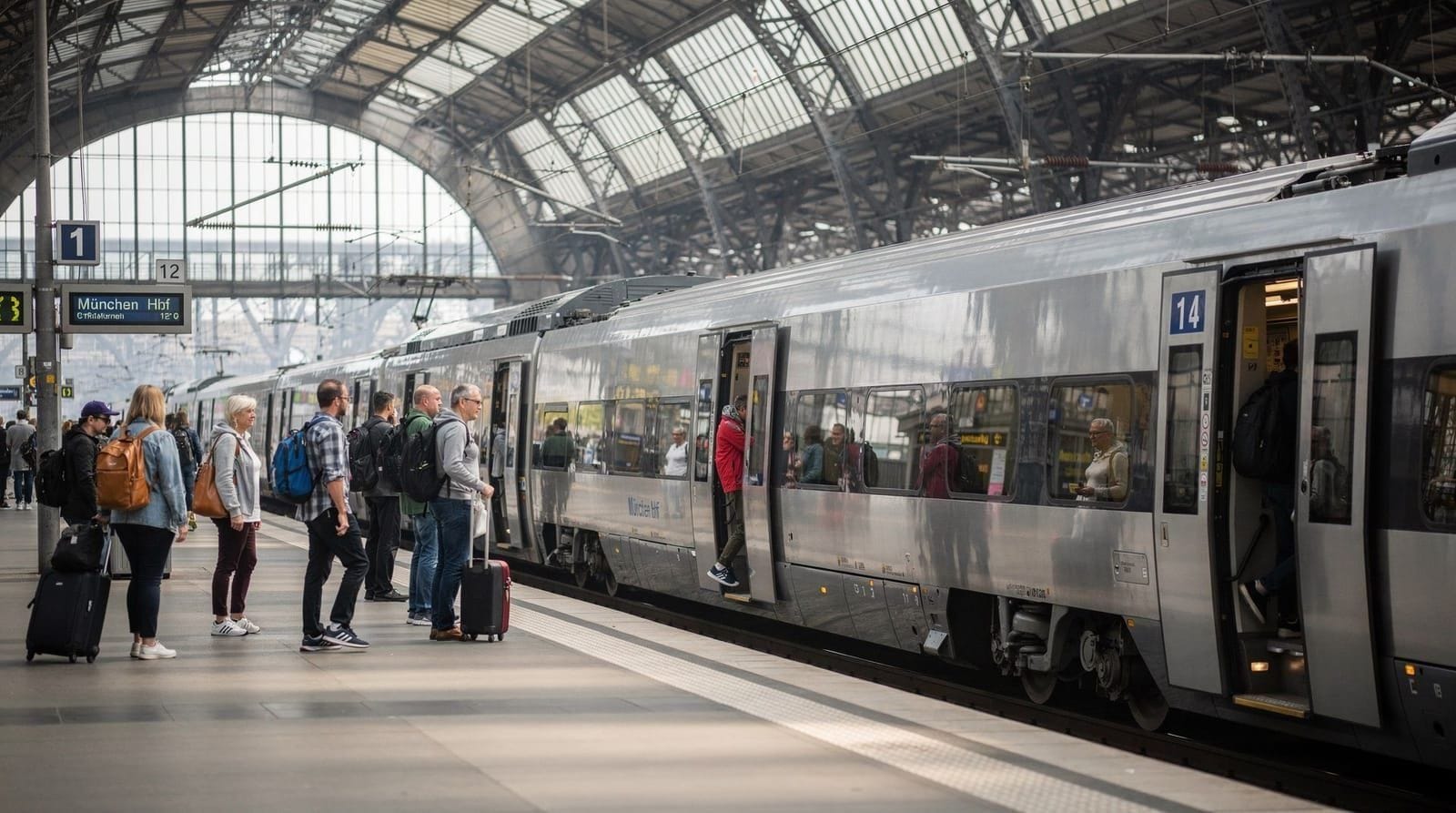
- Nuremberg: Regional train from the airport via Ingolstadt or take the S8 to Munich Hauptbahnhof, then ICE to Nuremberg (1 hour). See the Munich to Nuremberg day trip guide.
- Salzburg: S8 to Munich Hauptbahnhof, then regional train to Salzburg (approximately 1.5 hours). Or take the S8 to Pasing and change there. See the Munich to Salzburg day trip guide.
- Neuschwanstein: Go to Munich Hauptbahnhof first, then take the regional train to Füssen (2 hours). See the Munich to Neuschwanstein day trip guide.
Our Munich public transport guide and U-Bahn and S-Bahn guide have full connection details, and getting around Munich covers ticket apps and zones in more depth than the S-Bahn notes above.
Frequently asked questions about Munich Airport 2026
How long does the S-Bahn take from Munich Airport to the city?
The S8 (faster route) takes approximately 38–42 minutes to München Hauptbahnhof. The S1 takes around 45 minutes via the northern route.
How much does the airport S-Bahn ticket cost in 2026?
A single ticket from Munich Airport to the city center costs 13.60 EUR. A day ticket (Tageskarte ALL) covering the entire network including the airport is 19.60 EUR for one adult.
Is there a direct bus from Munich Airport to the city?
Yes — the Lufthansa Airport Express Bus runs to Munich Hauptbahnhof for 13 EUR. It does not cover onward travel in the city.
Can I get to Neuschwanstein from Munich Airport without going into the city?
Technically yes, but it’s complicated. You’d need the S-Bahn to Pasing station, change to the regional train to Buchloe, then on to Füssen. It’s easier to go to Munich Hauptbahnhof first and take a direct regional train. Allow 2.5–3 hours total.
Is Munich Airport well connected for budget airlines?
Yes — Ryanair, easyJet, Wizz Air, and other budget carriers use Terminal 1. Munich is not as cheap as some secondary German airports (Memmingen, sometimes called Munich West, is 120 km away and used by some very budget options) but has good connectivity to most European destinations.
Where is the Munich Airport luggage storage?
In both terminals on the arrivals level. Prices start at 6 EUR per item per day. There is also left-luggage storage in the S-Bahn station area beneath the MAC Forum.
Should I buy a Bayern-Ticket at the airport if I’m heading straight to a day trip?
Yes, if your plan is to go directly from the airport to a day-trip destination via Munich Hauptbahnhof, buying a Bayern-Ticket at the airport ticket machine covers both the airport transfer and the onward regional train — check current pricing and route validity against a standard S-Bahn-only ticket for your specific route, since the airport zone is already included in Bayern-Ticket coverage.
What should I pack for the transition from a flight into Bavarian weather?
Bavaria’s weather can shift quickly regardless of season, and layers matter more than any single heavy item. Our Munich packing guide covers what actually gets used versus what sits unworn in a suitcase, tailored to the month you’re visiting.