Zugspitze day trip from Munich — guided tour review 2026
From Munich: tour of Germany's highest peak Zugspitze
Germany’s highest point is a genuine full-day trip from Munich, not a quick add-on, and the weather at the summit is the single biggest variable most reviews underplay. Below is the quick logistics summary, followed by the full guided-vs-DIY breakdown and what actually happens at 2,962 metres.
| Where | Zugspitze summit, above Garmisch-Partenkirchen, 90 km south of Munich |
| Cost | DIY around €96 total; guided tours around €90–120 per person |
| Time needed | Full day, 5–6 hours travel plus 2–3 hours at the summit |
| Getting there | BOB/BRB train to Garmisch, then Zugspitzbahn or Eibsee Cable Car |
| Best time | May, June, September, October for visibility; check the summit webcam first |
What the Zugspitze is — and why it takes a full day
At 2,962 metres above sea level, the Zugspitze is Germany’s highest mountain. It sits on the Austrian border 90 kilometres south of Munich, above the town of Garmisch-Partenkirchen. The summit is accessible by a combination of the Zugspitzbahn cog railway (the highest in Germany, opened 1930) and the Eibsee Cable Car — a gondola that rises 1,945 metres in under 10 minutes from the alpine lake of Eibsee to the summit glacier.
A day trip from Munich to the Zugspitze is a genuine full-day commitment: approximately 5–6 hours total travel time and 2–3 hours at the summit. It is not a casual excursion to add on top of a city itinerary. Plan to dedicate the whole day and to return to Munich tired, hungry, and with a significantly broader sense of Bavaria’s scale. Book the Zugspitze guided day tour from Munich
Two ways up: cog railway vs cable car
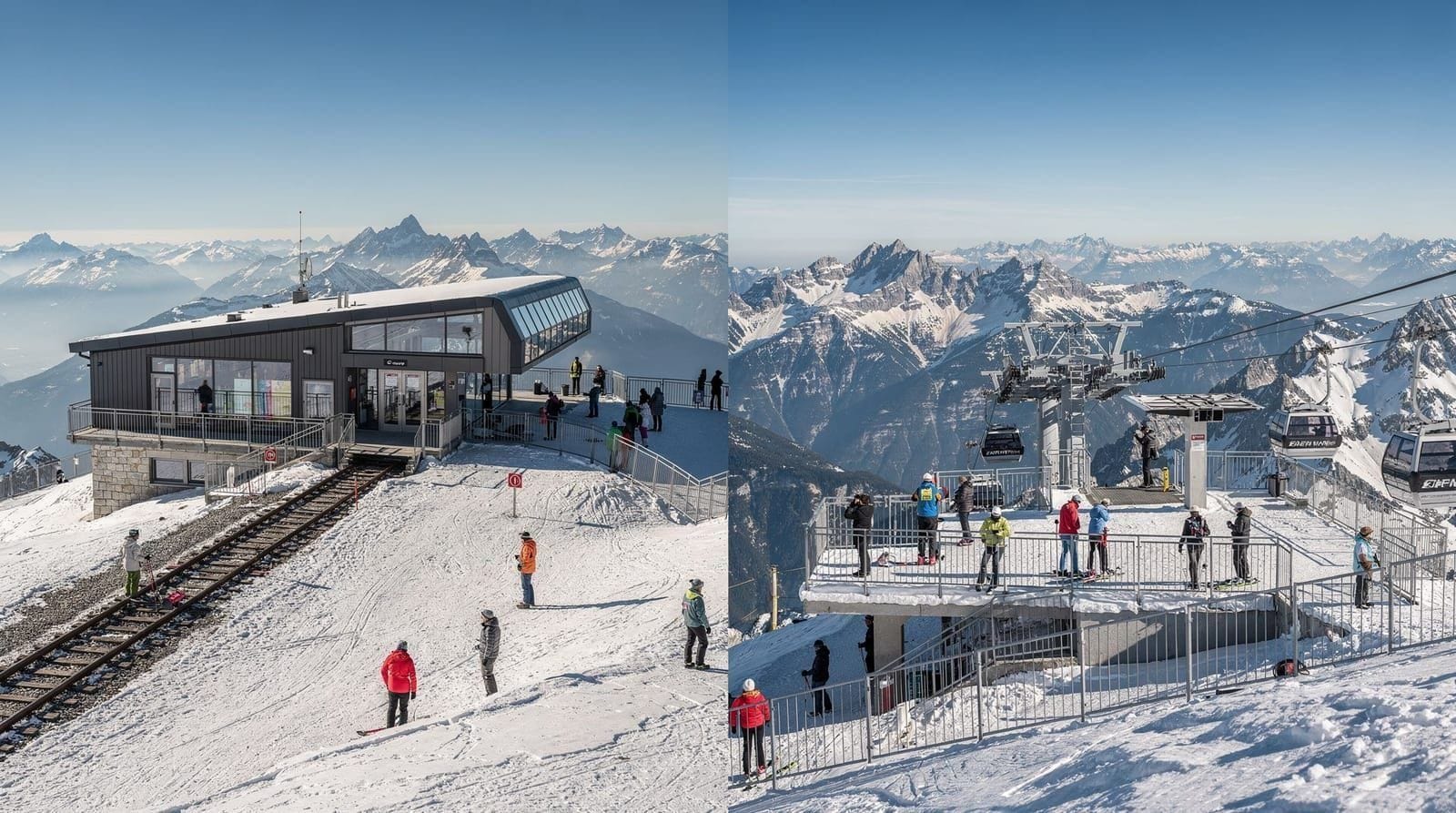
The Zugspitzbahn cog railway departs from Garmisch-Partenkirchen station and climbs through the Partnach Gorge area before entering a 4.5-kilometre tunnel through the mountain, emerging at the Zugspitzplatt glacier at 2,588 metres. From there, a further cable car (the Gletscherbahn) rises the final 370 metres to the summit. This is the traditional route and the one that gives the most varied landscape experience. Journey time from Garmisch: 75 minutes.
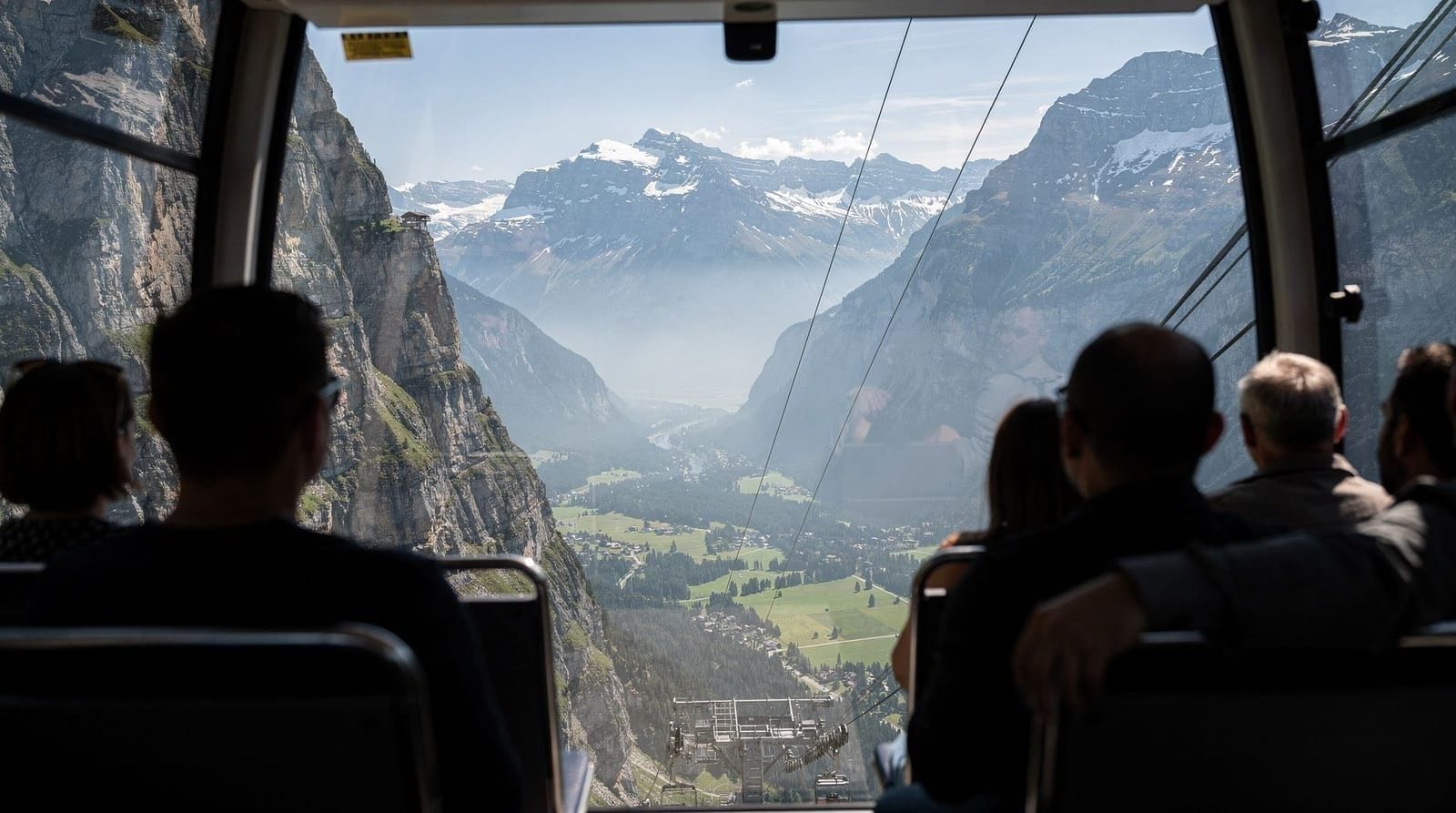
The Eibsee Cable Car departs from Eibsee, a stunning alpine lake 10 kilometres from Garmisch (shuttle buses connect them). The cable car rises directly to the summit in approximately 10 minutes with dramatic views of Eibsee below. It operates every 30 minutes in summer. This is the faster and more spectacular ascent; most guided tours combine both directions — up by cog railway, down by cable car (or vice versa) — to experience both.
What a guided van tour offers
A guided van tour from Munich (typically 8-person maximum) picks up from central Munich at 7:00–8:00 am and drives south on the A95 towards Garmisch-Partenkirchen, arriving approximately 9:30 am. The guide provides commentary on the Bavarian Alps landscape during the drive, including the Wetterstein massif, the Zugspitze massif, and the history of alpine mountaineering in the region.
At Garmisch or Eibsee, the group boards the railway or cable car using pre-booked tickets — a meaningful advantage in summer when individual ticket counters have queues and cable car capacity is limited. At the summit, visitors have 2–3 hours of free time before the return descent.
The guide typically accompanies the group to the summit, can recommend viewpoints, explains the meteorology of the alpine environment, and is available to answer questions. Return to Munich is around 6:00–7:00 pm. Zugspitze mountain van tour including Garmisch town visit
What to expect at the summit
The Zugspitze summit area has been developed as a visitor destination. There are two summit stations: the German side (Zugspitzplatt) and the Austrian side (Tiroler Zugspitze). A bridge between them crosses the border — one of the more unusual border crossings in Europe.
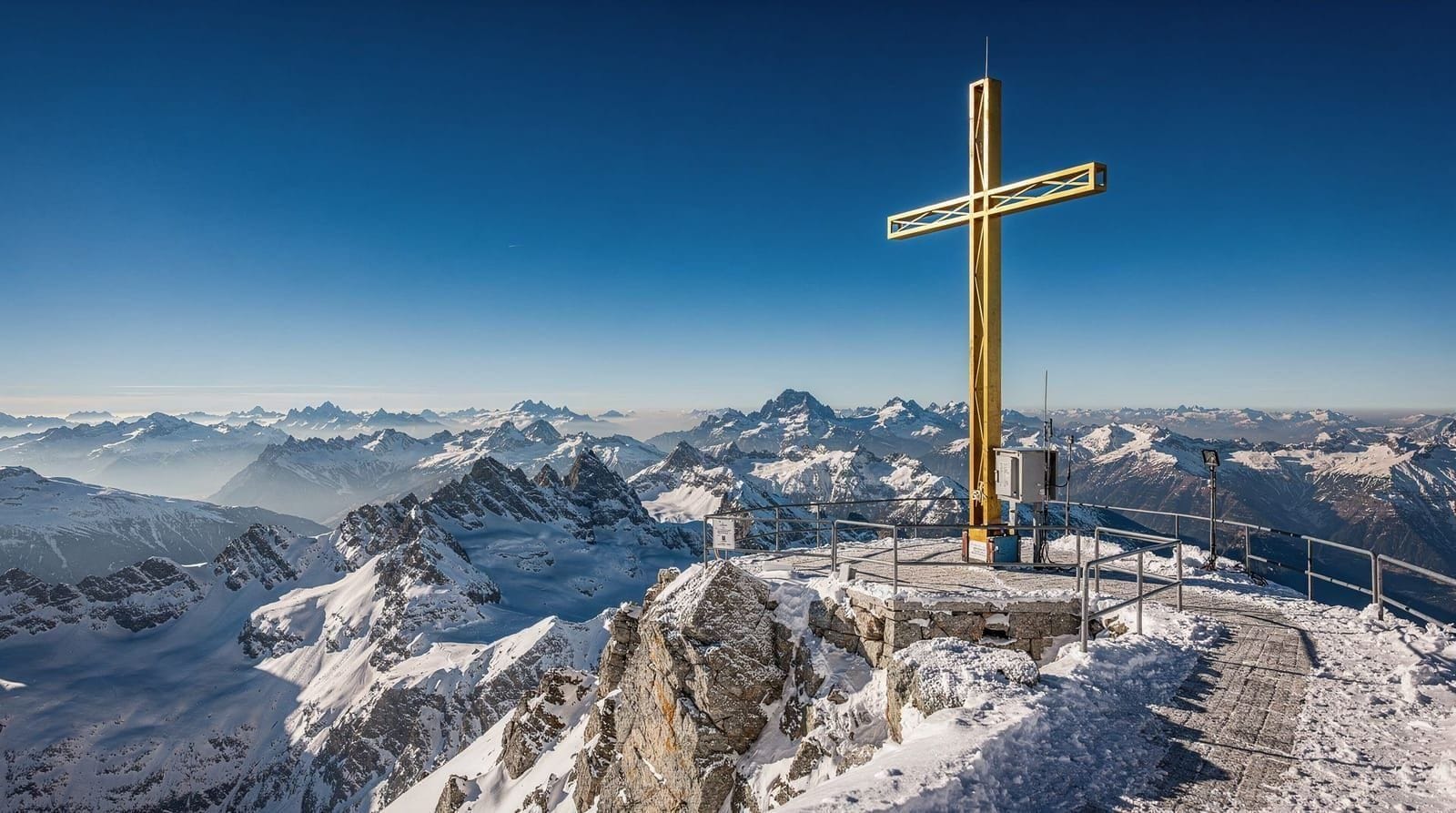
The summit cross — erected in 1851, the golden cross at the highest point is the obligatory photograph. The cross is visible from the viewing terrace above the restaurant level.
The viewing terraces — on a clear day, the 360° panorama extends from the Black Forest in the west to the Dolomites in the south, and on exceptional days to the Apennines and Prague. Binoculars are available to rent at the summit. On cloudy days, the view is zero — check the summit webcam (zugspitze.de) before departing.
The glacier — the Zugspitzplatt glacier is one of the few remaining Bavarian glaciers. It has retreated dramatically since the 1980s. Walking on the glacier surface (where permitted) is a striking experience.
Restaurants: There are two restaurants on the summit — one on each national side. The Austrian Panoramarestaurant is generally considered the better option; expect €15–20 for a hot main course at 2,962 metres. Meals are not included in any standard guided tour.
The meteorological station — Zugspitze has had a continuous meteorological observation record since 1900 and is the primary German climate reference station for alpine environments. The station building is visible from the viewing terrace.
Going independently: the full logistics
If you are comfortable with German railways and planning, the independent option is both feasible and cheaper:
-
Munich Hauptbahnhof → Garmisch-Partenkirchen: BOB/BRB train, approximately 1 hour 20 minutes. Departs every hour. A Bayern-Ticket (€29 for the first person + €8 each additional person) covers the train in both directions for up to 5 people.
-
Garmisch-Partenkirchen → Zugspitzplatt: Zugspitzbahn cog railway from Garmisch station, approximately 75 minutes. The Zugspitzbahn is a private railway not covered by Bayern-Ticket or Deutschlandticket — a separate ticket is required. Prices 2026: approximately €67 round-trip for the full Zugspitze experience (including Eibsee Cable Car).
-
At the summit: 2–3 hours. Return by same route or via Eibsee Cable Car to Eibsee (bus shuttle back to Garmisch).
Total independent cost per person: approximately €29 (Bayern-Ticket single person) + €67 (Zugspitzbahn) = ~€96. Guided tours typically cost €90–120 per person and save the logistical planning, not money.
The Zugspitze day trip guide has full independent transport schedules and the Garmisch hiking guide is useful if you want to combine the summit visit with an afternoon walk in the valley.
Zugspitze vs Nebelhorn: is the highest peak the right choice?
The Zugspitze is Germany’s highest mountain, but it isn’t automatically the best Alpine day trip for everyone. Our Zugspitze vs Nebelhorn guide compares the two honestly — Nebelhorn, further southwest near Oberstdorf, is less crowded and arguably has better hiking options, though it lacks the “highest point in Germany” claim. If your priority is the view rather than the record, it’s worth reading before booking. More broadly, our best Alpine views near Munich guide and Bavarian Alps cable cars guide cover the wider set of options, including routes that skip the crowds entirely.
Who should book a guided tour
Book a guide if:
- You are unfamiliar with German train systems and the BOB railway schedule intimidates you
- You are visiting July–August and want pre-booked cable car slots
- You want contextual commentary on the Alpine landscape and Garmisch’s history during the drive
- You prefer the security of a fixed programme over independent navigation
Go independently if:
- You have a Bayern-Ticket or Deutschlandticket and enjoy train travel
- You want flexibility at the summit — more time, different routes, a stop in Garmisch for lunch
- You are travelling as a couple or solo (guided tours become significantly cheaper per person in groups of 4+)
Weather reality check
This is the honest section that most tour review pages omit. The Zugspitze summit is in cloud approximately 200 days per year. The mountain generates its own weather. On a forecast “sunny” day in Munich, the Zugspitze summit can be zero visibility. On a forecast overcast day, the summit can be above the clouds.
Before booking any Zugspitze tour — guided or independent — check zugspitze.de/en/weather for the summit webcam and 3-day forecast. For guided tours, check the cancellation policy: a 48-hour free cancellation window is the minimum acceptable. Tours offering 24-hour or same-day cancellation are preferable.
The best months for summit visibility are May, June, September, and October. July and August are the busiest months and have afternoon thunderstorm risk. Do not plan a summit visit if afternoon thunderstorms are forecast.
Seasonal visibility guide
| Season | Visibility odds | Notes |
|---|---|---|
| May–June | Good | Fewer crowds, some snow possible at summit |
| July–August | Variable | Busiest months, afternoon thunderstorm risk |
| September–October | Good | Considered the best window overall |
| November–April | Poor to variable | Winter sports focus; check closures and dress for far colder conditions |
Planning the rest of an Alpine-focused trip
If the Zugspitze is the highlight of a wider Bavarian Alps trip, pace matters more than trying to add extra stops the same day — see the honest note above on why combining it with Neuschwanstein doesn’t work well. For a longer visit, our Munich to Garmisch day trip guide covers what else the town offers beyond the cable car, and the best day trips from Munich guide helps rank Zugspitze against Salzburg, Neuschwanstein and the other major options. Winter visitors focused on skiing rather than the summit view should check the Munich skiing day trips guide instead, since the Zugspitze’s ski season logistics differ from the summer sightseeing trip reviewed here. For a multi-day itinerary that includes a Zugspitze day without over-scheduling, see Munich in 4 days.
Frequently asked questions about this tour
How do you get to the Zugspitze from Munich?
By train from Munich Hauptbahnhof to Garmisch-Partenkirchen (1 hour 20 minutes on the BOB), then the Zugspitzbahn cog railway from Garmisch to the summit (75 minutes). Total journey approximately 2 hours 45 minutes each way.
What is the price of the Zugspitze summit ticket in 2026?
The standard round-trip ticket costs approximately €67 for adults and €42 for children in summer 2026.
Is the Zugspitze worth visiting in summer?
Yes, but check the summit webcam at zugspitze.de before booking. In clear weather, the 360° view extends to six countries. In cloud, you see nothing. Summit visibility cannot be guaranteed.
How cold is it at the Zugspitze summit?
At 2,962 metres, the summit is typically 10–15°C colder than Munich. Average summit temperatures in summer are 3–8°C with wind chill. Bring a windproof jacket regardless of Munich weather.
Can I do the Zugspitze and Neuschwanstein on the same day?
Not advisably. Both require 2–3 hours at site plus significant travel. Combining them means rushing both experiences.
What is included in a guided Zugspitze day tour?
Return transport from Munich by van or bus, the cog railway and cable car tickets to the summit, guide commentary during the journey, and free time at the summit. Lunch and drinks are not included.
Do I need to book the Zugspitze in advance?
In summer, yes. Summit tickets can sell out, particularly the cable car slots from Eibsee. Book at zugspitzbahn.de at least a week ahead for July–August visits, or use a guided tour with pre-booked slots.
Is the Zugspitze or Neuschwanstein the better single day trip from Munich?
They serve different interests — Zugspitze is a mountain and viewpoint experience, Neuschwanstein is a castle and architecture experience. Both are full-day commitments and shouldn’t be combined; choose based on what you’d rather spend the day looking at.
What should I do if the summit is in cloud on the day?
Check zugspitze.de/en/weather the morning of your visit. If the summit webcam shows zero visibility and it’s a guided tour, ask about the cancellation policy — a 48-hour window is standard. If going independently, consider postponing to a clearer forecast day rather than paying for a viewless trip.